Vibration and light exposure are more important than many realize when it comes to storing wine. Vibrations can disturb sediments and disrupt the delicate aging process, subtly changing flavors and aromas. Light, especially UV rays, can break down chemical compounds, leading to spoilage and premature aging. To keep your wine at its best, opt for coolers with anti-vibration and light-protection features. If you want to protect your collection, understanding these factors is key.
Key Takeaways
- Vibration disrupts wine sediments and aging processes, potentially altering flavor and aroma over time.
- Anti-vibration features in coolers help preserve wine quality by minimizing bottle movement.
- Light exposure, especially UV rays, can degrade wine compounds and spoil taste.
- UV-protected glass or tinted doors shield bottles from harmful light, maintaining flavor integrity.
- Proper vibration and light control are essential for long-term wine preservation and optimal aging.
When it comes to storing wine properly, many people focus on temperature and humidity, but vibration and light are just as essential—and often overlooked. You might already know that maintaining a consistent temperature is crucial, but what often goes unnoticed are temperature fluctuations that can harm your wine over time. Sudden changes in temperature can cause the liquid inside your bottles to expand and contract, risking deterioration of the wine’s flavor and aroma. That’s why choosing a wine cooler with reliable temperature regulation is vital, ensuring your wine stays at a steady, optimal temperature. Alongside temperature, humidity control plays a significant role in preserving your wine’s quality. Too little humidity can cause corks to dry out, letting air seep in and oxidize the wine, while excessive humidity can promote mold growth. A good wine cooler maintains a stable humidity level, typically around 60-70%, protecting the labels and corks from damage and keeping your wine in pristine condition.
Beyond temperature and humidity, vibration is a factor that many don’t consider. Every time you move or shake a wine cooler, vibrations ripple through the storage space. These vibrations disturb the delicate sediments in wine, preventing them from settling properly and potentially disrupting the aging process. Over time, constant vibrations can lead to subtle changes in flavor and aroma, diminishing the wine’s overall quality. The best wine coolers are designed to minimize vibrations, often with specialized anti-vibration technology, so your wine ages gracefully without interference. Vibration control is essential because it directly impacts how well your wine ages over time. Additionally, anti-vibration technology can help preserve the wine’s integrity by reducing the effects of external disturbances. Ensuring your wine cooler employs vibration reduction features can make a noticeable difference in the long-term preservation of your bottles. Proper insulation and design can further enhance vibration damping, helping your wine maintain its optimal aging environment. It’s also important to consider how shock absorption can protect your bottles from external impacts, further safeguarding your investment.
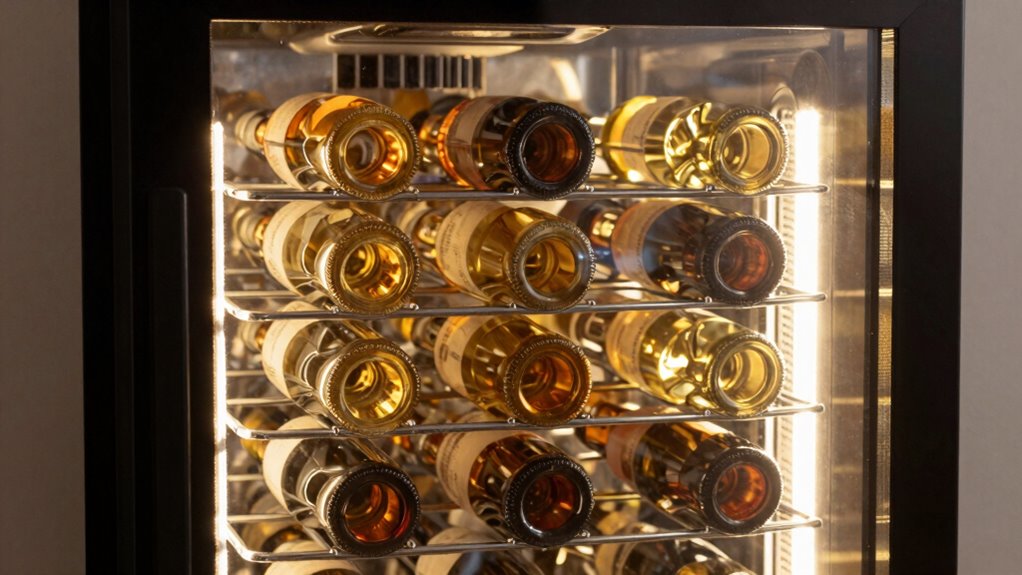
Light exposure is another often underestimated threat. Ultraviolet light, especially, can break down wine’s chemical compounds, leading to “lightstruck” flavors that spoil the wine’s taste. When selecting a wine cooler, look for models with tinted glass or UV-protected doors to shield your bottles from harmful light. Keeping your wine in darkness not only preserves its flavor profile but also prevents premature aging caused by light exposure.
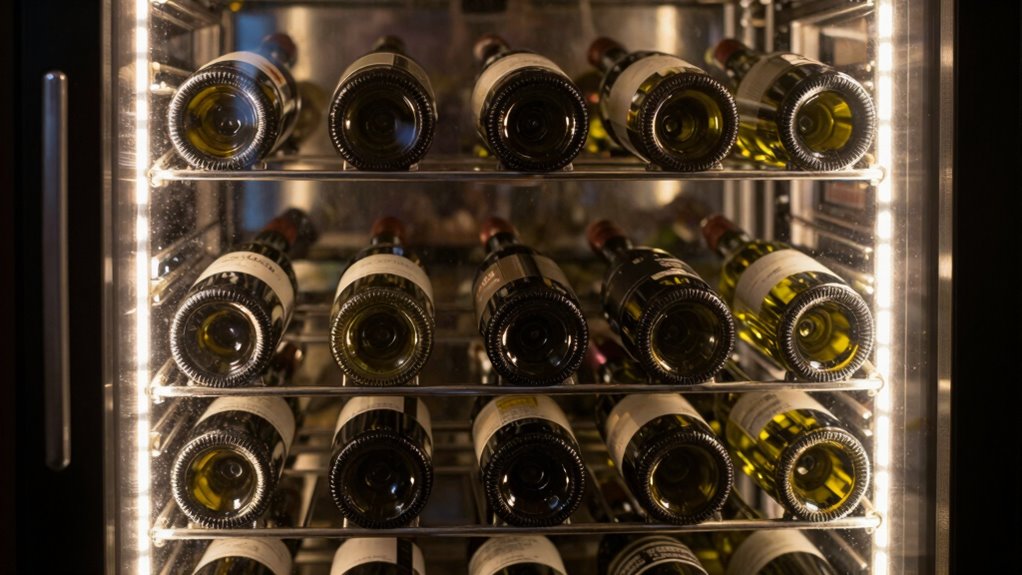
wine cooler with anti-vibration technology
As an affiliate, we earn on qualifying purchases.
As an affiliate, we earn on qualifying purchases.
Frequently Asked Questions
Can Wine Coolers Be Used for Aging All Types of Wine?
You can use wine coolers for aging some types of wine, but not all. They’re great for wine preservation at stable bottle temperatures, especially for short to medium-term storage. However, for long-term aging, especially with fine wines, traditional cellars or wine cabinets with controlled humidity and minimal vibration are better. Wine coolers work well for everyday drinking wines, but they might not provide the ideal environment for aging high-quality or delicate wines.
How Does Humidity Affect Wine Storage in Coolers?
Humidity controls in wine coolers are like the faithful guardians of your wine’s health. If the humidity’s too low, your bottles can dry out; if it’s too high, mold might creep in. Maintaining ideal humidity levels helps prevent mold and cork damage, ensuring your wine ages perfectly. Proper humidity control creates a stable environment, so your wine stays fresh, protected, and ready to enjoy whenever you open it.
Are There Specific Brands Known for Minimal Vibration?
You’ll want to look for brands known for vibration reduction, like Wine Enthusiast and Kalamera, which prioritize smooth operation to protect your wine. These brands also minimize light exposure, helping preserve your bottles’ quality. Check reviews for quiet, stable models featuring advanced vibration dampening and UV-protected lighting. Investing in such a cooler guarantees your wines stay undisturbed and properly stored, maintaining their flavor and aroma over time.
What’s the Best Placement for a Wine Cooler in a Home?
You should place your wine cooler in a spot with stable temperature and low noise levels, ideally away from direct sunlight and heat sources. Choose a location that minimizes vibrations, such as an interior wall or a dedicated wine cellar. Avoid placing it near appliances or heavy foot traffic, as vibrations and fluctuations in temperature can harm your wine’s quality. Proper placement guarantees consistent temperature stability and quiet operation, preserving your wine’s flavor.
Do LED Lights Impact Wine Quality Over Time?
You might worry that LED lights could cause wine degradation over time, but they generally don’t harm your wine. Imagine a friend notices her LED-lit wine cooler’s light hasn’t affected her bottles after years—proof that LED lighting is low heat and low UV, reducing the risk of wine quality deterioration. So, in your wine cooler, LED lights won’t impact wine quality if used properly, making them a safe lighting choice.
Conclusion
You might think wine coolers are just about temperature, but vibration and light actually play a bigger role than most realize. Some experts believe these factors can spoil your wine faster than heat fluctuations. So, next time you pick a cooler, consider those hidden details. It’s not just about keeping wine cold—protecting its quality might depend on minimizing vibrations and light exposure. Don’t overlook these factors if you truly want your wine to age perfectly.