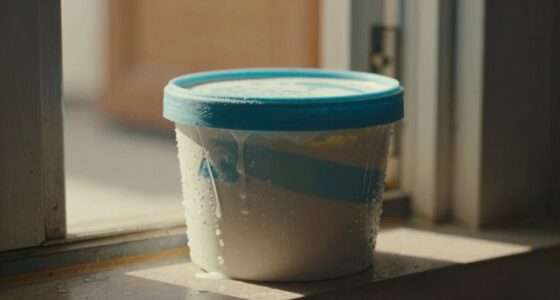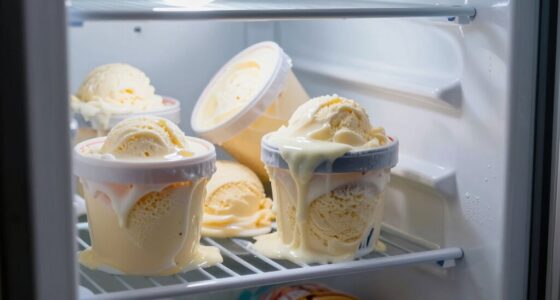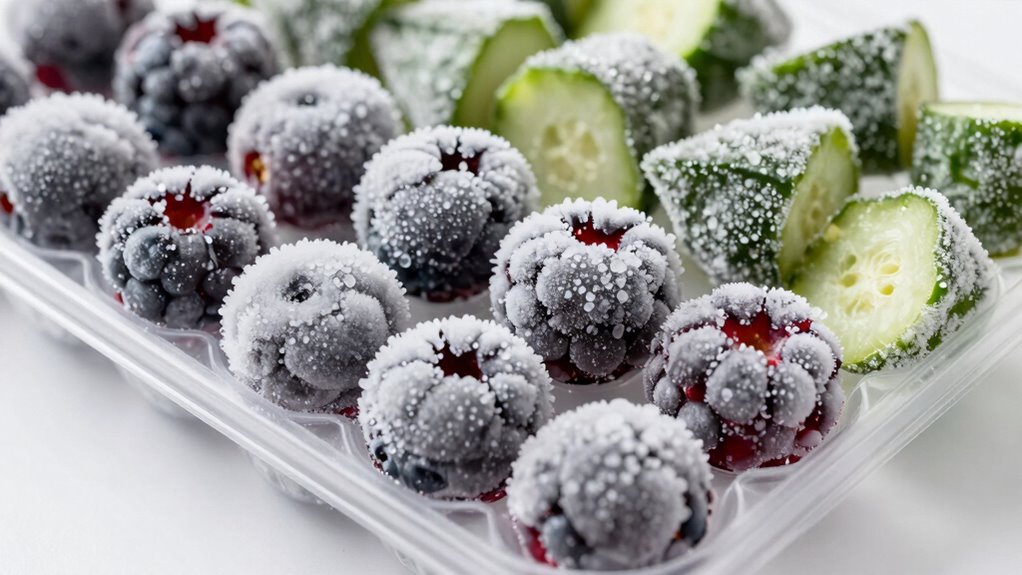

Blast freezing cools food rapidly, forming tiny ice crystals that help lock in its natural texture, flavor, and moisture, so your food stays firm and fresh. In contrast, regular freezing cools more slowly, allowing larger ice crystals to develop, which can puncture cell walls and lead to softer, mushier textures once thawed. If you want to protect your food’s quality, understanding these methods makes all the difference—keep going to learn more.

Get baking supplies delivered free with Prime
- Fast, free delivery on millions of items
- Prime Video, Amazon Music and more included
- Member-only deals all year
Key Takeaways
- Blast freezing creates tiny ice crystals, preserving cellular structure and resulting in firmer, more natural textures.
- Regular freezing forms larger ice crystals, which can damage cell walls and cause softer, mushier textures upon thawing.
- Rapid freezing maintains food’s original firmness and juiciness, while slower freezing often leads to moisture loss and sogginess.
- Freeze speed directly impacts texture, with blast freezing better at preventing cellular damage and preserving food quality.
- Choosing blast freezing over regular freezing ensures better texture retention, especially for delicate items like seafood and berries.

Freezing is a common way to preserve food, but the method you choose can considerably affect its texture once thawed. When it comes to freezing techniques, blast freezing and regular freezing stand out for their impact on food quality. Blast freezing uses rapid freezing methods, often employing cryogenic technology, which cools food quickly to very low temperatures. This sudden drop in temperature prevents the formation of large ice crystals that can damage cell walls. In contrast, regular freezing cools food at a slower pace, allowing larger ice crystals to develop, which can puncture cells and lead to a softer, mushier texture after thawing.
With blast freezing, you benefit from a process called rapid freezing. By quickly lowering the temperature, you lock in the food’s original texture, flavor, and nutritional value more effectively. Cryogenic technology, which involves the use of supercooled gases like liquid nitrogen or carbon dioxide, accelerates this process even further. This technique is especially valuable when preserving delicate items like seafood, berries, or prepared meals, where maintaining a firm, fresh texture is essential. Because the freezing occurs so rapidly, the water inside the cells doesn’t have time to form large, damaging ice crystals. Instead, tiny crystals form, which minimally disrupts cell structure and helps retain the food’s original consistency once thawed.
In comparison, regular freezing methods, such as those used in household freezers, typically take longer. This slower process allows bigger ice crystals to develop, which can rupture cell walls and cause moisture loss. When you thaw food frozen by regular methods, you might notice a soggier or more watery texture, especially in meats and fruits. The difference becomes more pronounced with larger or more delicate foods, where texture preservation is critical. While regular freezing is convenient and accessible, it’s less effective at protecting the food’s structural integrity. Proper freezing techniques can make a significant difference in preserving quality.
Therefore, if maintaining a high-quality texture is your priority, blast freezing with cryogenic technology offers a significant advantage. It preserves the food’s original firmness, juiciness, and overall appearance better than traditional methods. Whether you’re preserving seafood, baked goods, or fresh produce, rapid freezing ensures that the thawed product remains as close to its fresh state as possible. Understanding the importance of freezing speed and technique helps you choose the right method for your needs, ensuring better quality and less waste.
As an affiliate, we earn on qualifying purchases.
Frequently Asked Questions
How Long Can You Store Blast Frozen Foods?
You can typically store blast frozen foods for up to 12 months without significant quality loss. This method preserves the food’s freshness, texture, and flavor better than regular freezing. To maximize storage duration and quality preservation, keep your freezer at a consistent 0°F (-18°C) and guarantee the packaging is airtight. Proper storage ensures you enjoy your frozen foods at their best, whether you’re cooking today or months from now.
Does Blast Freezing Affect Nutritional Content?
Think of blast freezing as a time capsule for your food’s nutrients. It preserves nutritional content by locking in vitamins and minerals quickly, minimizing nutrient loss. You’ll find it’s like capturing a snapshot of freshness, so your food retains more nutritional value than regular freezing. This rapid process helps maintain vitamin preservation, ensuring that when you enjoy your meals, they’re as nutritious as when freshly prepared.
Can Regular Freezing Cause Freezer Burn?
Yes, regular freezing can cause freezer burn. When moisture escapes from your food, it leads to freezer burn, which results in dry, tough spots. This moisture loss creates dehydration on the food’s surface, affecting texture and flavor. To prevent this, make certain your food is tightly wrapped and sealed properly before freezing. Proper packaging minimizes moisture loss and keeps your food fresh and tasty longer.
Is Blast Freezing Suitable for All Food Types?
Blast freezing is suitable for most food types, but it’s especially beneficial for delicate items like seafood, fruits, and vegetables, as it helps preserve their food texture and freezing compatibility. You should consider blast freezing when you want to maintain quality and minimize ice crystal formation. However, some foods with high water content or specific textures may not benefit as much, so it’s best to assess each item’s freezing needs.
How Does Freezing Speed Impact Food Safety?
Freezing speed considerably impacts food safety by enhancing freezing efficiency, which helps prevent the growth of foodborne pathogens. When you freeze food quickly, you minimize ice crystal formation, reducing cell damage and bacterial survival. This rapid process ensures that harmful microbes are effectively halted, keeping your food safer for longer. So, faster freezing means better protection against foodborne illnesses, maintaining both safety and quality in your stored foods.
Conclusion
In the battle between blast freezing and regular freezing, the choice creates a clear culinary contrast. Blast freezing brings brilliance by preserving texture, tenderness, and taste, while regular freezing can compromise quality. By understanding these differences, you can decide which method suits your needs. So, select smartly, savor the sensation, and say goodbye to soggy, soupy surprises. With the right technique, your food stays fresh, firm, and fabulous every time.
Fall Picks
fall essentials
As an affiliate, we earn on qualifying purchases.