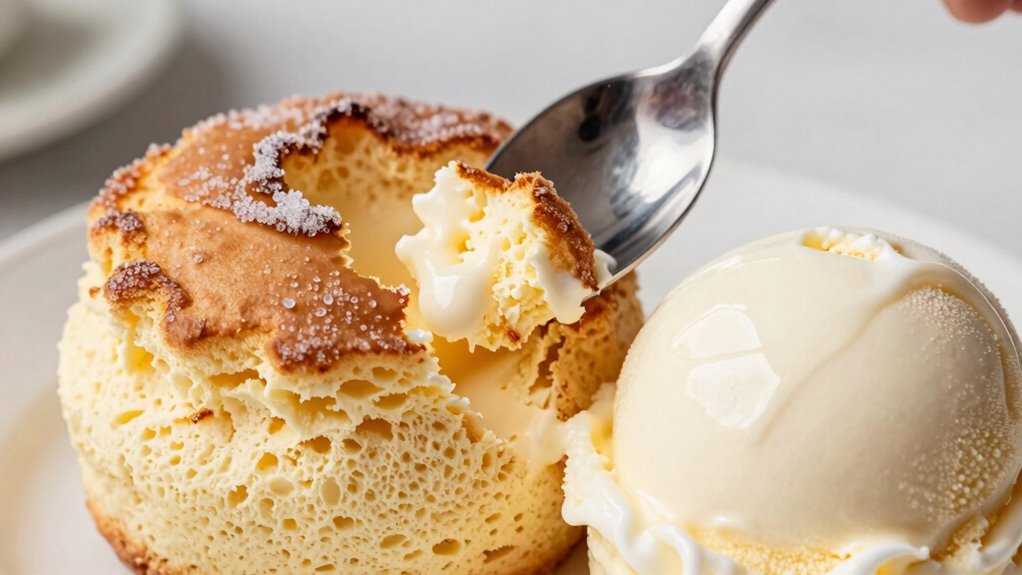

A frozen soufflé is a delicate, airy dessert that depends on carefully folded-in air and a fragile structure, unlike dense, high-fat ice cream. It remains soft and melt-in-your-mouth due to its careful balance of whipped egg whites and a smooth base. Its fragile nature means it requires gentle freezing and handling to prevent collapsing. If you want to discover what makes it so unique and how it’s made, keep exploring further.

Get baking supplies delivered free with Prime
- Fast, free delivery on millions of items
- Prime Video, Amazon Music and more included
- Member-only deals all year
Key Takeaways
- Frozen soufflé relies on delicate air-filled structure, not just solid freezing, making it more fragile than ice cream.
- It is crafted by folding whipped egg whites into a rich base, creating a soft, airy texture that persists after freezing.
- Its exterior forms a thin, frozen shell while the interior remains tender and mousse-like, unlike the uniform firmness of ice cream.
- Precise handling and freezing techniques are essential to preserve its delicate structure and prevent collapse.
- The high air content and contrast of textures give frozen soufflé a unique, melt-in-your-mouth experience, differing from the uniformity of ice cream.
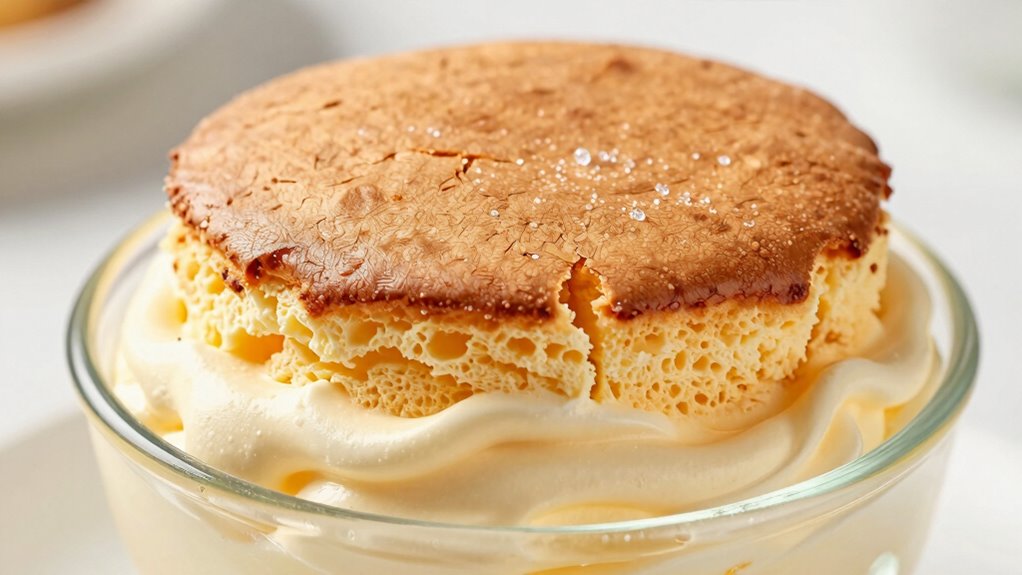
Frozen soufflé behaves quite differently from ice cream because its delicate structure relies on specific ingredients and techniques that prevent it from simply freezing solid. Unlike ice cream, which becomes firm and scoopable due to the high fat and sugar content, a frozen soufflé maintains a soft, airy texture that feels almost melt-in-your-mouth. The key lies in its unique preparation techniques, which focus on creating a balance of stability and delicate fluffiness. You need to carefully fold whipped egg whites into a rich base, incorporating air that gives the soufflé its signature lightness. This process creates a texture contrast—crisp on the outside but tender and airy on the inside—that’s impossible to achieve with traditional frozen desserts.
Frozen soufflé’s delicate, airy texture and crisp exterior make it a unique, sophisticated frozen treat that requires careful technique.
Because of this fragile structure, you can’t just toss a soufflé into the freezer and expect it to turn into a typical frozen treat. Instead, the preparation involves carefully controlling the freezing process and serving temperature. Once assembled, the soufflé is placed in the freezer, but it’s often served slightly softened to preserve its tender interior. The techniques used during preparation—such as gentle folding and specific ingredient ratios—are essential in maintaining this delicate balance. These methods help trap air within the mixture, giving it that light, souffle-like consistency even after freezing.
Additionally, the air content, carefully incorporated during whipping and folding, is crucial in maintaining the soufflé’s airy texture after freezing. You’ll find that the texture contrast is what makes a frozen soufflé so special. The crisp exterior, formed by the outer layer of frozen, slightly hardened surface, contrasts beautifully with the soft, almost mousse-like interior. This interplay of textures engages your senses differently than the uniformly firm texture of ice cream. When you bite into it, you’ll notice how the initial crunch quickly gives way to a melt-in-your-mouth softness. This contrast is a direct result of the precise preparation techniques used, which ensure the soufflé retains its airy quality despite freezing.
In essence, a frozen soufflé isn’t just frozen food; it’s a carefully crafted dessert that balances delicate airiness with structure. Its behavior differs from ice cream because the techniques employed during preparation—whisking, folding, and precise freezing—are designed to preserve its fragile, luscious texture. You’ll need to handle it with care, serving it at just the right moment to enjoy the full spectrum of its contrasting textures. That’s what makes a frozen soufflé a truly unique and sophisticated frozen treat—more than just ice cream’s chilled cousin.
As an affiliate, we earn on qualifying purchases.
Frequently Asked Questions
Can You Refreeze a Frozen Soufflé After Thawing?
Refreezing a frozen soufflé after thawing isn’t recommended for safety and texture reasons. Refreezing safety can be compromised because bacteria may grow during the thawing process. Additionally, the soufflé’s delicate structure won’t hold up well, leading to a degraded texture. For best results, only freeze what you plan to serve immediately. If you must refreeze, do so quickly and guarantee proper handling to minimize quality loss.
How Long Can a Frozen Soufflé Be Stored?
You can store a frozen soufflé for about 2 to 3 months, but for ideal texture preservation and flavor retention, try to consume it sooner. Over time, it may lose its delicate rise and develop ice crystals, impacting its quality. Keep it tightly wrapped in an airtight container to prevent freezer burn. Proper storage guarantees you enjoy its light, airy texture and rich flavor when you’re ready to indulge.
Is a Frozen Soufflé Suitable for Special Diets?
A frozen soufflé can suit certain special diets if you make appropriate ingredient substitutions, but it depends on your dietary restrictions. For example, you can swap dairy for plant-based alternatives or use gluten-free ingredients. Always check labels and adapt recipes accordingly. Keep in mind, some ingredients might not freeze well, so plan ahead and experiment to guarantee your frozen soufflé fits your dietary needs.
What Are Common Recipes for Homemade Frozen Soufflé?
Imagine crafting a delicate ballet of flavors—your homemade frozen soufflé. Combine whipped egg whites with your favorite sweet or savory ingredients, fold gently for texture preservation, then freeze. Popular recipes include chocolate and coffee, or lemon and vanilla. To enhance flavor, add a splash of liqueur or a hint of zest before freezing. This process guarantees your soufflé maintains its airy texture and vibrant taste, delighting every bite.
How Does Freezing Affect the Flavor of a Soufflé?
Freezing can impact your soufflé’s flavor and texture. While it helps with flavor preservation, it may also cause some flavor loss or dullness over time. The process can lead to texture alteration, making it denser or icier, which might diminish the delicate, airy quality you expect. To enjoy the best flavor and texture, try consuming your frozen soufflé within a few days and store it properly to minimize quality changes.
Conclusion
So, next time you indulge in a frozen soufflé, remember it’s not just ice cream in disguise. Its delicate structure is like a whispered secret—fragile and fleeting, demanding gentle handling. Embrace its unique personality, and savor each spoonful before it melts away. After all, isn’t life a bit like that—beautifully fleeting, meant to be enjoyed in the moment? Cherish the magic, for it’s gone in a heartbeat.
Halloween Picks
halloween
As an affiliate, we earn on qualifying purchases.