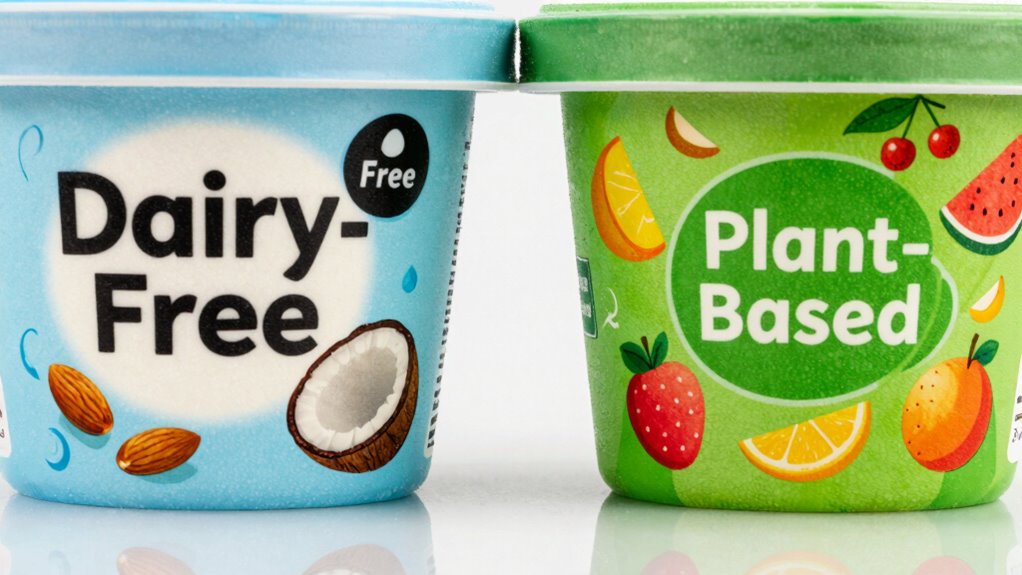

Dairy-free frozen desserts don’t contain dairy ingredients like milk or butter, making them suitable for those with lactose intolerance or dairy allergies. Plant-based options, on the other hand, are made entirely from plant-derived ingredients like coconut or almond milk, often aligning with vegan choices. While all plant-based desserts are typically dairy-free, not all dairy-free options are plant-based. To understand more about labels, ingredients, and certifications, keep exploring what sets these options apart.

Get baking supplies delivered free with Prime
- Fast, free delivery on millions of items
- Prime Video, Amazon Music and more included
- Member-only deals all year
Key Takeaways
- Dairy-free labels indicate absence of dairy ingredients but may still contain animal-derived products like eggs or honey.
- Plant-based labels use only plant-derived ingredients, often mimicking dairy flavors, and are suitable for vegans.
- Not all dairy-free products are vegan; some may contain eggs, honey, or other animal-derived components.
- Plant-based frozen desserts typically emphasize whole plant ingredients, appealing to health and environmental concerns.
- Certification labels confirm whether a product is vegan, allergen-free, or meets specific ethical standards.
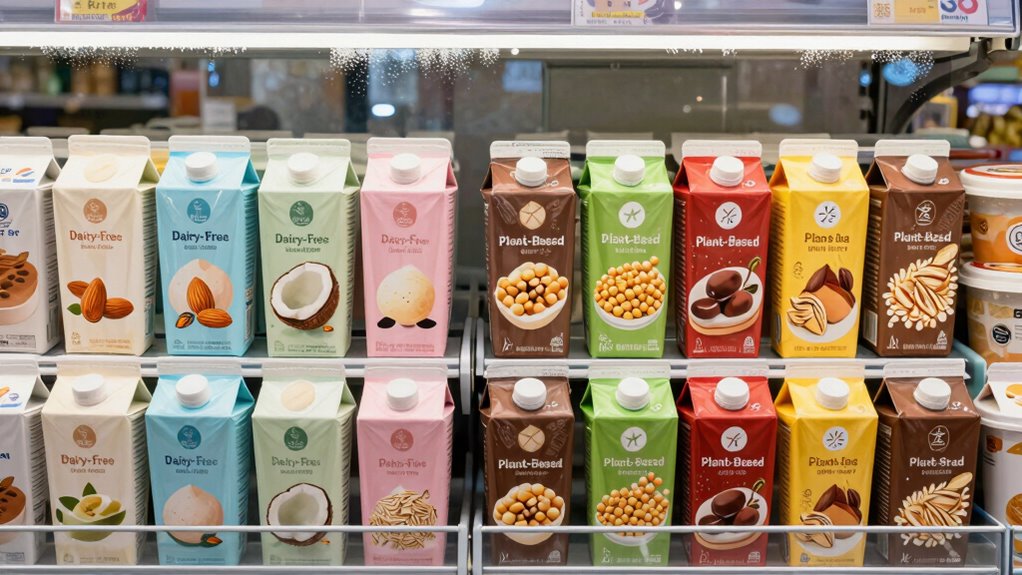
When you’re browsing frozen desserts, you might notice labels like “dairy-free” and “plant-based” and wonder what sets them apart. Both labels aim to appeal to health-conscious, ethical, or allergy-sensitive consumers, but they mean different things. Understanding these differences helps you make informed choices, especially when it comes to vegan certification and allergen warnings.
A “dairy-free” label indicates that the product contains no dairy ingredients, such as milk, cream, or butter. This label primarily targets people with lactose intolerance or dairy allergies, guaranteeing they can enjoy a frozen treat without adverse reactions. However, dairy-free doesn’t necessarily mean vegan. Some dairy-free desserts might still contain other animal-derived ingredients like eggs or honey. If you’re committed to a vegan lifestyle, look for a vegan certification—an official mark that confirms no animal products are used. Vegan-certified products have undergone rigorous checks, giving you confidence that the product aligns with your ethical and dietary values.
On the other hand, “plant-based” suggests that the product is made entirely from plant-derived ingredients. These desserts often mimic traditional dairy flavors using ingredients like coconut, almond, soy, or cashew milk. The plant-based label appeals to those seeking healthier options or reducing their environmental impact, as plant-based foods typically have a lower carbon footprint. While many plant-based desserts are also vegan, it’s not a guarantee. Some might include additives or flavorings derived from animals, so checking for vegan certification is advisable if you want to guarantee no animal products are involved. Vegan certification helps consumers identify genuinely cruelty-free options.
Additionally, certification labels play a crucial role in confirming the vegan status of a product, helping consumers make reliable choices. Allergen warnings are vital on both types of labels. Even if a dessert is labeled dairy-free or plant-based, it may still contain common allergens like nuts, soy, or gluten. Manufacturers are required to highlight potential cross-contamination or presence of allergens clearly on the packaging. If you have allergies, always read the allergen warnings carefully. For those with severe allergies, choosing products with dedicated manufacturing lines or explicit allergen-free certifications can provide extra peace of mind. Recognizing allergen-free certifications can further assist allergy-sensitive consumers in making safer choices.
As an affiliate, we earn on qualifying purchases.
Frequently Asked Questions
Are Dairy-Free and Plant-Based Desserts Always Vegan?
Dairy-free and plant-based desserts aren’t always vegan. Dairy alternatives like coconut or almond milk can contain non-vegan additives, and some desserts might include honey or other animal-derived ingredients. When choosing a vegan option, you need to check labels carefully for plant-based ingredients and certifications. Not all dairy-free desserts are necessarily vegan, so always read the ingredient list to verify it aligns with vegan principles.
Can Dairy-Free Desserts Contain Animal-Derived Ingredients?
Imagine a clear stream, pure and inviting; dairy-free desserts can still contain animal-derived ingredients, like stabilizers or additives, that tarnish their clarity. You might find dairy free additives sourced from animals, making the product not fully vegan. Always check labels, as some dairy-free options include animal-derived stabilizers, so they aren’t entirely free from animal products. Your choice can reflect your values—seek transparency to keep the purity you desire.
Do Plant-Based Desserts Necessarily Exclude All Dairy?
No, plant-based desserts don’t necessarily exclude all dairy, but they primarily use plant-based ingredients and often have dairy-free certifications. Some plant-based options might contain dairy if they aren’t certified or labeled as dairy-free, so it’s vital to verify the packaging. Usually, plant-based desserts avoid animal-derived ingredients, but always read labels carefully to guarantee they align with your dietary preferences and avoid dairy.
Are Dairy-Free Options Suitable for Those With Nut Allergies?
Dairy-free options might seem safe for nut allergies, but you should be cautious. Nut allergy considerations are vital because some products may contain nuts or trace amounts due to cross-contamination risks during manufacturing. Always check labels carefully and look for allergen warnings. Contact manufacturers if you’re unsure, as even dairy-free doesn’t guarantee safety for nut allergies. Being vigilant helps prevent allergic reactions and guarantees your safety.
How Do Labeling Laws Differ Between Regions?
Did you know that labeling laws vary markedly worldwide? In the U.S., regional regulations and strict labeling standards ensure clarity on ingredients, but in the EU, laws emphasize transparency and consumer protection differently. Regional regulations dictate how plant-based and dairy-free labels are used, affecting product marketing and safety. You should always check local labeling standards to understand ingredient claims and avoid confusion, especially when choosing dairy-free or plant-based frozen desserts.
Conclusion
Understanding the difference between dairy-free and plant-based frozen desserts helps you make better choices for your health and ethics. Dairy-free simply excludes dairy, while plant-based often means the product is entirely made from plants. Think of it as choosing between a path that avoids only dairy or one that’s entirely green and rooted in plants. By knowing this, you can navigate the frozen aisle with confidence and pick options that truly align with your lifestyle and values.
Halloween Picks
halloween
As an affiliate, we earn on qualifying purchases.