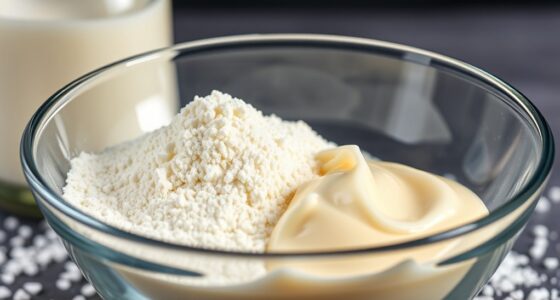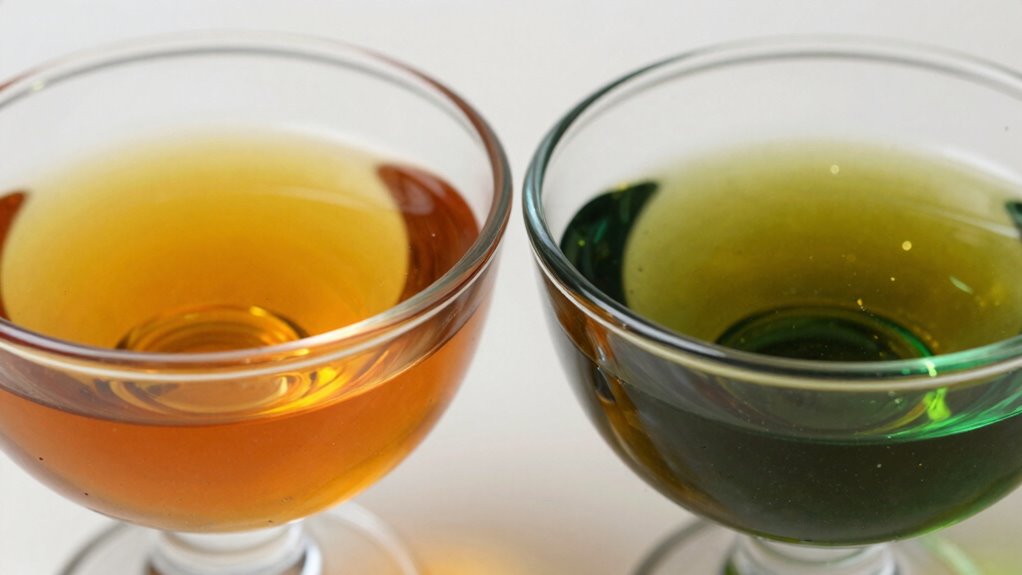

Flavor oils usually work better in cold desserts because they’re more concentrated and provide vibrant, lasting flavors that don’t fade with temperature. Extracts, which rely on alcohol-based solutions, tend to diminish or lose potency when chilled, making them less reliable for frozen treats. Choosing between them depends on your desired flavor strength and longevity. Keep going to discover how to select the perfect flavoring for your chilled creations.
Key Takeaways
- Flavor oils are more concentrated and deliver immediate, vibrant flavors suitable for cold desserts.
- Extracts contain alcohol, which diminishes in cold environments, reducing flavor impact.
- Flavor oils blend smoothly and maintain intensity in frozen treats, unlike extracts that weaken when chilled.
- Oils provide longer-lasting, bold flavors, whereas extracts tend to fade in cold temperatures.
- Using flavor oils ensures consistent, potent flavor without dilution or loss during freezing.
What’s the Difference Between Flavor Oils and Extracts for Cold Desserts?
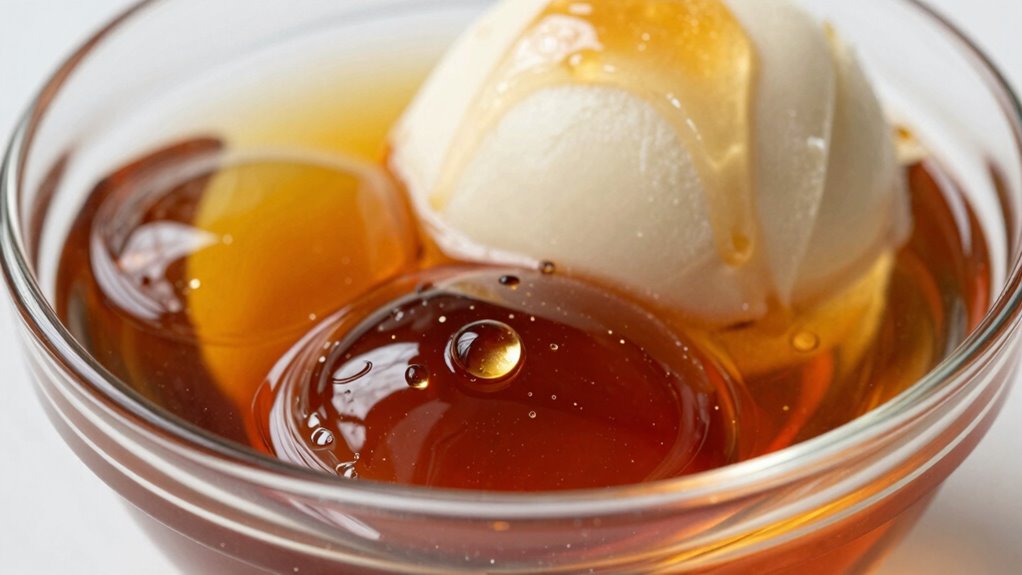
When it comes to flavoring cold desserts, understanding the difference between flavor oils and extracts is essential. Flavor potency varies markedly between the two; oils tend to be more concentrated, offering a stronger, more immediate flavor. Extracts, on the other hand, are usually less intense but develop flavor through alcohol-based solutions, which can influence their strength. Storage considerations also differ: flavor oils should be kept in airtight containers away from light and heat to preserve their potency, while extracts typically last longer if stored properly in cool, dark places. Knowing these differences helps you choose the right ingredient for your frozen treats, ensuring the flavor remains vibrant and fresh without overuse or spoilage.
Do Flavor Oils Provide More Potent and Vibrant Flavors in Frozen Treats?
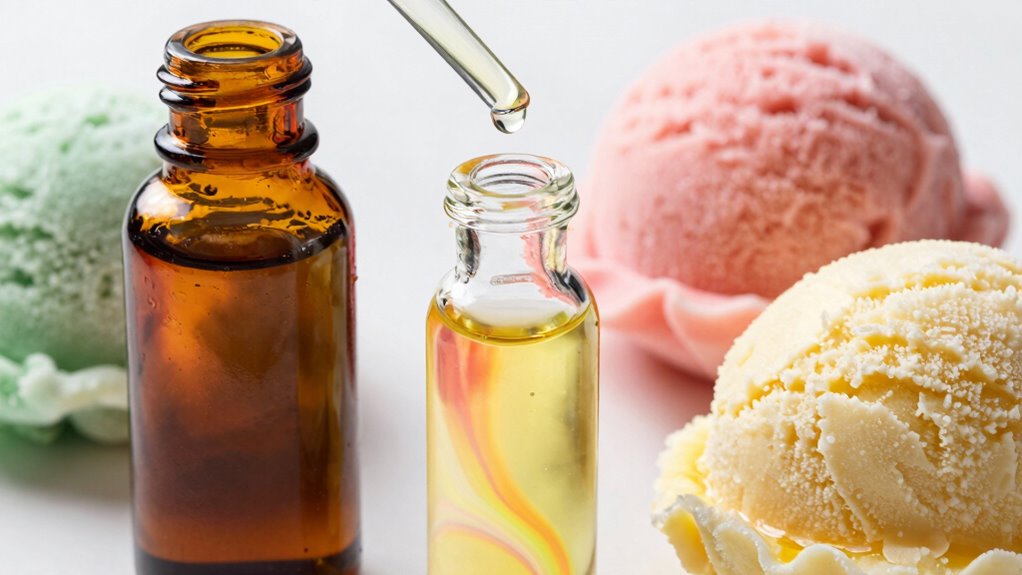
Flavor oils generally deliver more potent and vibrant flavors in frozen treats because they are highly concentrated and designed to provide a strong, immediate punch of flavor. This high flavor intensity means you can achieve bold tastes without needing large amounts, helping maintain the desired texture. Because they are oil-based, flavor oils blend smoothly, enhancing the overall texture of your dessert. You’ll notice a sharper, more pronounced flavor that stands out even after freezing. This makes flavor oils ideal for creating eye-catching, flavorful frozen treats that excite the palate. Their concentrated nature allows you to control the vibrancy of the flavor, ensuring your dessert remains both rich in taste and pleasing in texture. Additionally, the efficiency of concentration in flavor oils means less product is needed, making them a cost-effective choice for vibrant flavoring.
What Are the Pros and Cons of Using Flavor Oils in Chilled Desserts?
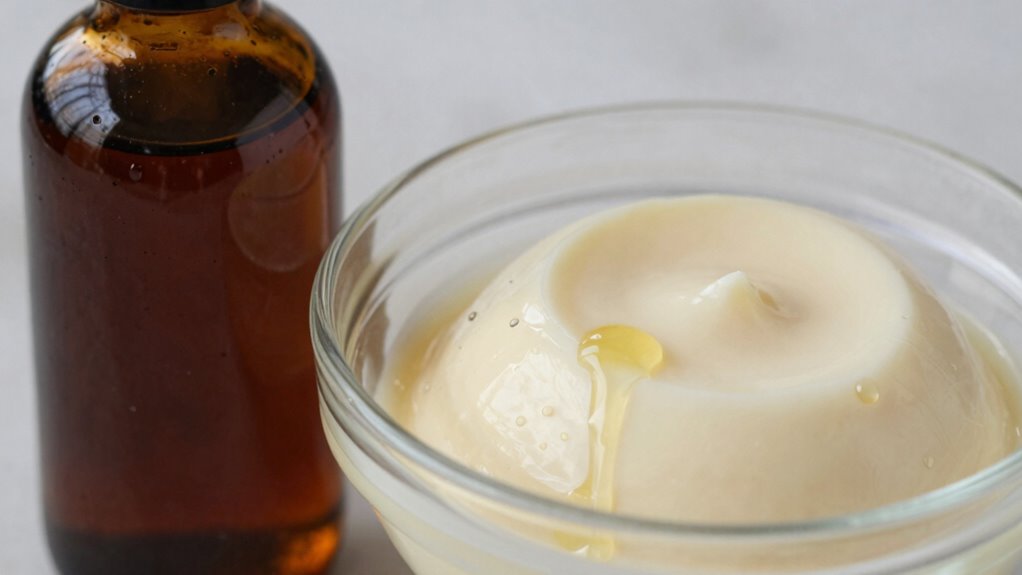
Using flavor oils in chilled desserts offers several advantages, but it also comes with some drawbacks. One major benefit is their high potency, allowing you to achieve vibrant flavors with just a small amount. They also typically have good shelf stability, making them ideal for long-term storage without losing flavor quality. Additionally, flavor oils are generally compatible with dairy, so you can incorporate them into creamy desserts like ice creams and mousses without curdling or separation. However, a downside is that some flavor oils may not distribute evenly, especially if not properly emulsified, leading to inconsistent taste. Also, because they’re concentrated, overuse can result in an overpowering flavor. Overall, flavor oils can enhance your chilled desserts, but you need to use them carefully to avoid potential drawbacks.
Why Do Extracts Sometimes Fall Short in Cold Dessert Applications?
While flavor oils can deliver intense, vibrant tastes in chilled desserts, extracts often struggle to achieve the same effectiveness in cold applications. The primary reason is their alcohol content, which can cause the flavor to diminish more quickly when cooled. Alcohol acts as a solvent, helping extract and preserve flavor compounds, but in cold environments, it evaporates or dulls, reducing flavor intensity. Additionally, extracts tend to have limited flavor longevity once chilled, as the cold can mute or mask their subtle notes. This means your dessert might lack the bold, lasting taste you desire. Moreover, the refresh rates of projectors can influence how well visual details are preserved in different settings, similar to how temperature affects flavor stability. The passive voice often makes descriptions less direct and can impact the clarity of flavor descriptions. Because extracts are often formulated with alcohol, their flavor potency can be compromised in refrigerated or frozen desserts, making them less reliable for sustained flavor. Furthermore, the solvent properties of alcohol can cause flavor compounds to dissipate more rapidly in cold conditions, diminishing overall taste. Ultimately, the alcohol-based nature of extracts makes them less reliable for maintaining strong, vibrant flavors in cold desserts compared to flavor oils. To improve cold dessert flavoring, it’s important to choose appropriate flavoring methods that maintain their potency under refrigeration.
Which Flavoring Is Best for Your Favorite Cold Dessert?

Choosing the right flavoring for your cold dessert depends on the desired intensity and longevity of the taste. If you want bold, long-lasting flavors, dairy flavorings or citrus infusions using flavor oils work best. They blend seamlessly without overpowering the dessert’s texture. For subtle, fresh notes, extracts may be sufficient, but they often fade quickly in cold applications. Consider these options:
- Use dairy flavorings for rich, creamy flavor profiles in ice creams and mousses.
- Incorporate citrus infusions with flavor oils for vibrant, zesty accents.
- Opt for extracts when you want delicate hints that won’t dominate your dessert’s flavor.
- To ensure your flavorings maintain their potency, understanding product stability in cold environments is essential.
- Additionally, selecting appropriate flavoring types can help your dessert achieve the perfect balance between flavor strength and longevity. This is especially important given the challenges of flavor retention in cold desserts, which can affect the overall taste experience.
- Being aware of the influence of temperature on flavor stability can guide you in choosing the most effective flavoring method for your cold treats.
- Incorporating the right type of flavoring can also enhance the overall sensory experience and ensure your dessert tastes as intended from first bite to last.
Frequently Asked Questions
Are Flavor Oils Safe to Consume in Large Quantities?
Flavor oils are generally safe if used in moderation, but you shouldn’t consume them in large quantities. For cooking safety, always follow recommended consumption limits, as concentrated oils can cause irritation or adverse reactions if overused. Keep in mind that excessive intake may lead to health issues, so use flavor oils sparingly and carefully, especially in cold desserts where their potency can be more pronounced.
How Do Shelf Lives Differ Between Flavor Oils and Extracts?
Flavor oils generally have a longer shelf life due to their higher oil content and better shelf stability, making them less prone to spoilage. Extracts, however, are more sensitive to preservation factors like exposure to light, heat, and air, which can degrade their potency over time. To guarantee freshness, store both in cool, dark places, but be aware that flavor oils tend to last longer than extracts.
Can Flavor Oils Be Used in Baking Alongside Cold Desserts?
Did you know flavor oils are 30% more potent than extracts? Yes, you can use flavor oils in baking alongside cold desserts, but confirm their compatibility for the best cold dessert enhancement. Flavor oil compatibility depends on the recipe, so start with small amounts to avoid overpowering. They add vibrant, lasting flavor, making your cold treats more aromatic and delicious, especially when combined thoughtfully with your baked goods.
Do Flavor Oils Dissolve Better Than Extracts in Frozen Treats?
Flavor oils tend to dissolve less effectively than extracts in frozen treats due to solubility differences. Extracts, being alcohol-based, blend more smoothly into cold desserts, ensuring even flavor distribution. Additionally, flavor stability favors extracts because they retain their taste better at low temperatures, whereas flavor oils can sometimes separate or become less potent when frozen. So, if you’re aiming for consistent flavor, extracts are your best bet.
Are There Any Allergies Associated With Specific Flavor Oils?
Yes, some flavor oils can cause allergies. You should always check ingredient labels carefully and consider allergy testing before use. Certain oils, like citrus or nut-based ones, are more likely to provoke sensitivities. If you’re concerned about allergies, consult with a healthcare professional and review product labels thoroughly to avoid any adverse reactions. Being cautious helps ensure your cold desserts are safe for everyone.
Conclusion
Choosing between flavor oils and extracts is like selecting the brightest paint for your masterpiece. Flavor oils offer vibrant, potent notes that cut through the chill, ensuring your cold desserts burst with flavor. While extracts can fade in colder temps, oils stay bold and true. So, next time you’re crafting frozen treats, remember: the right flavoring can turn a simple scoop into a symphony of taste, painting your dessert with the vivid colors of flavor.