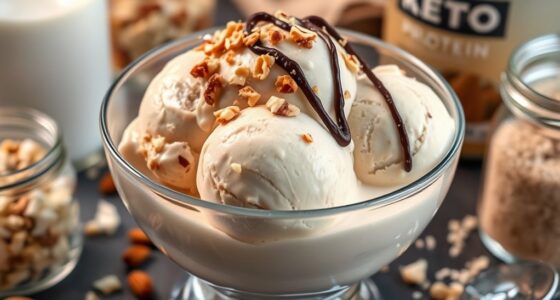
When comparing ice cream, gelato, and sorbet, you’ll notice differences in ingredients, texture, and flavor. Ice cream is rich and fluffy because it’s whipped with air, while gelato is denser and silkier with less air. Sorbet is dairy-free, with a crisp, icy texture highlighting strong fruit flavors. Each offers a unique experience, making it worth exploring what sets them apart—if you stick around, you’ll discover even more details.

Get baking supplies delivered free — and shop member deals
- Fast, free delivery on millions of items
- Access to Prime Big Deal Days deals on October 6–7
- Prime Video, Amazon Music and more included
Key Takeaways
- Ice cream contains more cream and air, making it lighter and fluffier, while gelato is denser with less air for a silkier texture.
- Sorbet is dairy-free, made from fruit juice or puree, and has a smooth, icy consistency, unlike the creamy textures of ice cream and gelato.
- Ice cream is churned quickly, incorporating more air, whereas gelato is churned slowly for a richer, denser mouthfeel.
- Flavors in gelato are more vibrant and natural, highlighting ingredients, while ice cream offers a broader, often more complex flavor spectrum.
- Sorbet is ideal for palate cleansing and light consumption, whereas ice cream and gelato are more indulgent treats for satisfying cravings.

When choosing a frozen treat, it’s easy to get confused by the differences between ice cream, gelato, and sorbet. Each offers a unique experience, and understanding their texture differences and flavor profiles can help you pick the perfect one for any mood or occasion.
Ice cream is the most familiar of the three. It’s typically made with a combination of cream, milk, sugar, and often egg yolks, which give it a rich, smooth texture. The texture differences are noticeable—ice cream tends to be airy and fluffy because of the air whipped into it during churning, known as overrun. This makes it light on the palate despite its richness. When it comes to flavor profiles, ice cream offers a broad spectrum, from chocolate and vanilla to more complex concoctions like cookies and cream or caramel swirl. Its creamy base enhances the depth of flavors, making each spoonful indulgent and satisfying.
Ice cream’s airy, fluffy texture and rich flavors make it a classic favorite for any occasion.
Gelato, on the other hand, offers a different sensory experience. It’s made with more milk and less cream, and it’s churned at a slower speed, which incorporates less air. As a result, gelato has a denser, creamier consistency than ice cream, with less of that fluffy texture. Its texture differences create a silkier mouthfeel, allowing the flavors to come forward more intensely. Because of the lower fat content and minimal air, gelato tends to have a richer, more concentrated flavor profile. You’ll notice that the flavor profiles of gelato are often more vibrant and authentic, highlighting the natural ingredients like fresh fruit or high-quality chocolate. This makes gelato a favorite if you want a more intense, true-to-ingredient taste experience.
Sorbet is quite different from both ice cream and gelato. Made primarily from fruit juice or puree, sugar, and water, it’s dairy-free and has a smooth, icy texture. The texture differences in sorbet are noticeable—it’s colder and more invigorating, with a crisp, melt-in-your-mouth feel that’s less creamy and more icy. Its flavor profile is usually tart, bright, and intensely fruity, making it perfect for cleansing your palate or enjoying as a light, revitalizing treat. Since it lacks dairy, sorbet’s flavors are sharper and more pronounced, emphasizing the natural taste of the fruit. It’s also a popular choice for those seeking a dairy-free dessert option. Its flavors are sharper and more pronounced, emphasizing the natural taste of the fruit. It’s an excellent choice if you’re looking for something light, tangy, and full of fruit-forward flavors.
As an affiliate, we earn on qualifying purchases.
Frequently Asked Questions
Which Dessert Has the Highest Fat Content?
When comparing fat content, ice cream generally has the highest due to its rich cream and milk ingredients. Gelato contains less fat because it uses more milk and less cream, while sorbet has virtually no fat since it’s made from fruit and sugar. The fat content variation mainly depends on ingredient variations, with ice cream’s higher fat level providing a creamier texture, making it the fattiest of these desserts.
Are There Health Benefits to Choosing One Over the Others?
Thinking about your dessert choices is like picking a star from the sky. When you choose gelato or sorbet, you often get fewer fats and dairy, which can be better if you’re seeking dairy alternatives. These options also offer nutritional advantages, like fewer calories or less sugar, making them a smarter choice for health-conscious folks. So, choosing the right dessert can support your wellness goals while satisfying your sweet tooth.
How Do Storage Requirements Differ Among Them?
You should consider storage methods and preservation techniques when handling these frozen treats. Ice cream needs airtight containers and consistent freezing temperatures to prevent ice crystal formation. Gelato, with its lower fat content, benefits from rapid freezing to maintain its smooth texture. Sorbet requires airtight storage to prevent freezer burn, but it’s more sensitive to temperature fluctuations. Proper storage guarantees your dessert stays fresh, creamy, and delicious longer.
Can They All Be Dairy-Free?
You can find dairy-free options for ice cream, gelato, and sorbet, using alternative ingredients like coconut milk, almond milk, or soy-based products. Sorbet is naturally dairy-free, making it a great choice if you’re avoiding dairy. For dairy-free gelato and ice cream, look for brands that specifically label their products as vegan or dairy-free, so you can enjoy your favorite frozen treats without dairy.
Which Is the Most Popular Globally?
You might wonder which treat is most popular worldwide. Generally, ice cream wins in popularity due to its rich flavor profiles and smooth, creamy texture differences that appeal universally. People love its variety of flavors and indulgent feel. Gelato, with its denser texture and intense flavors, is also growing in popularity, especially in Europe. Sorbet’s lighter, dairy-free option appeals to health-conscious consumers but isn’t as widely favored globally.
Conclusion
So, next time you indulge, remember: you’ve been choosing between a frosty treat, a creamy delight, or a fruit-only freezer surprise. Ironically, despite all the differences, they all promise to cool you down and satisfy your sweet tooth. So go ahead, savor your “obvious” choice—just don’t be surprised if you find yourself pondering whether it’s really the best option. After all, in the world of frozen desserts, confusion is part of the fun!
Fall Picks
fall essentials
As an affiliate, we earn on qualifying purchases.