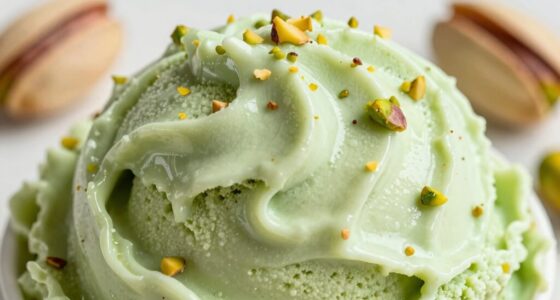
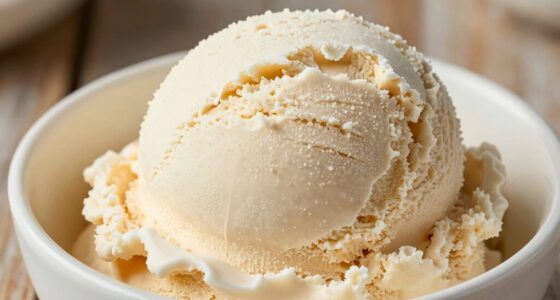
To make high-protein, keto-friendly ice creams, you’ll need dairy alternatives like coconut or almond milk, combined with protein powders or collagen for creaminess and added nutrition. Using keto-friendly sweeteners such as erythritol or monk fruit helps keep carbs low. Common challenges include avoiding icy or grainy textures, which you can fix with stabilizers like xanthan gum and thorough blending. Keep experimenting with ingredients to perfect your flavor and texture—more tips await as you continue exploring.

Get baking supplies delivered free with Prime
- Fast, free delivery on millions of items
- Prime Video, Amazon Music and more included
- Member-only deals all year
Key Takeaways
- Use dairy alternatives like coconut, almond, or cashew milk to create low-carb, creamy ice cream bases suitable for keto diets.
- Incorporate natural flavorings and keto-friendly sweeteners such as erythritol or monk fruit to enhance taste without increasing carbs.
- Add protein powders, collagen, or egg yolks to boost protein content and improve texture and mouthfeel.
- Use stabilizers like xanthan or guar gum to prevent ice crystal formation and maintain a smooth, creamy consistency.
- Proper chilling and thorough blending are essential to achieve optimal texture and prevent graininess or iceiness.

If you’re craving ice cream but want to stick to a high-protein or keto diet, you’ll be pleased to know there are delicious options that fit your nutritional goals. One of the key challenges in crafting these ice creams is finding the right ingredients that provide satisfying flavor and texture without overloading on carbs or sugar. Traditional dairy-heavy recipes often rely on milk, cream, and sugar, which can quickly derail your diet. To overcome this, many makers turn to dairy alternatives like coconut milk, almond milk, or cashew cream, which are naturally lower in carbs and calories but still deliver a rich, creamy base. These alternatives not only help keep the product keto-friendly but also lend themselves well to flavor enhancement, allowing you to customize your ice cream with various extracts, spices, or sweeteners without sacrificing taste.
Flavor enhancement is essential when creating high-protein and keto-friendly ice creams. Since you’re reducing sugar and traditional dairy, the natural flavor profiles can sometimes fall flat or taste bland. That’s why incorporating natural flavorings like vanilla bean, cocoa powder, or fruit extracts becomes pivotal. Additionally, using ingredients like erythritol, monk fruit, or stevia can help sweeten your ice cream without adding carbs. These sweeteners also blend well with dairy alternatives, creating a smooth, indulgent texture that mimics traditional ice cream. To further boost flavor, some recipes include flavor enhancers like salt or natural acids such as lemon juice, which can intensify sweetness and overall taste without adding sugar.
Another challenge in developing high-protein, keto-friendly ice cream is maintaining the proper texture. Without the usual dairy and sugar, ice cream can become icy or grainy. To combat this, many recipes incorporate protein powders, collagen peptides, or egg yolks, which add richness and improve mouthfeel. Stabilizers like guar gum or xanthan gum can also help create a smoother, creamier consistency by preventing ice crystals from forming. When working with dairy alternatives, it’s important to blend ingredients thoroughly and chill the mixture well before freezing to achieve the best results.
Products Worth Considering

Ninja CREAMi 7-in-1 Ice Cream Maker, NC301

KitchenAid Artisan 5-Quart Tilt-Head Stand Mixer, Almond Cream

Instant Pot Pro 8-Quart 10-in-1 Electric Pressure Cooker, Black
As an affiliate, we earn on qualifying purchases.
Frequently Asked Questions
How Do High-Protein Ice Creams Affect Digestion?
High-protein ice creams can slow down your digestion rate because proteins take longer to break down than carbs or fats. This might make you feel fuller longer but can also impact your gut health if consumed excessively. You may notice more digestion effort or bloating, especially if your gut isn’t used to high protein intake. Moderation helps support a balanced digestion rate and promotes better gut health over time.
Can Keto Ice Creams Be Suitable for Lactose Intolerant Individuals?
Imagine you’re in a sci-fi movie—keto ice creams can be perfect for lactose intolerant folks. You should look for dairy-free options or lactose alternatives, as many keto ice creams now use coconut milk, almond milk, or other plant-based ingredients. These dairy-free options let you enjoy ice cream without the tummy trouble, making them suitable for your dietary needs while still satisfying your sweet tooth.
What Natural Sweeteners Are Best for Keto Ice Cream?
You should consider natural sweetener options like stevia, erythritol, monk fruit, or xylitol for keto ice cream. These sugar alternatives offer sweetness without spiking your blood sugar levels, making them ideal for a keto diet. Stevia and monk fruit are especially popular because they’re natural and low-calorie. When choosing, guarantee they don’t have added fillers or artificial ingredients, so your ice cream stays healthy and delicious.
How Long Does Homemade Keto Ice Cream Typically Last?
Imagine your homemade keto ice cream as a delicate treasure, best enjoyed soon. Typically, it lasts about 1 to 2 months in the freezer, but the storage duration depends on proper airtight packaging and freezer conditions. To guarantee its quality, consume within the ideal freezer lifespan, as extended storage may lead to texture changes or freezer burn. For the best experience, savor it within this timeframe.
Are There Any Common Allergens in High-Protein Keto Ice Creams?
You should be aware that high-protein keto ice creams often contain common allergens like dairy, which can trigger dairy allergies, and nuts, which may affect those with nut sensitivities. Always check ingredient labels carefully, especially if you have allergies or sensitivities. Some recipes use alternative ingredients like coconut milk or seeds to reduce allergen risks. When in doubt, choose brands that specify allergen-free options to keep your treats safe.
Conclusion
Creating high-protein and keto ice creams is like crafting a delicate symphony—balancing ingredients and challenges to produce a harmonious treat. With careful selection and innovative solutions, you can enjoy indulgent, low-carb delights without sacrificing health. Embrace the journey as an artful dance, blending flavors and textures to perfect your frozen masterpiece. Ultimately, your dedication turns a simple dessert into a masterpiece—a cool, satisfying crescendo in your healthy lifestyle.