To make sorbet that isn’t icy, focus on balancing sugar, fruit, alcohol, and stabilizers to control how ice crystals form. Use proper freezing techniques, like quick freezing and consistent temperature, and guarantee ingredients are well chilled before churning. Smooth blending, gentle churning, and resting the sorbet before serving help maintain a velvety texture. Want to discover more tips to perfect your sorbet’s consistency? Keep exploring these techniques for a smooth, scoopable treat.

Get baking supplies delivered free with Prime
- Fast, free delivery on millions of items
- Prime Video, Amazon Music and more included
- Member-only deals all year
Key Takeaways
- Balance sugar and fruit ratios to lower freezing point and inhibit large ice crystal formation.
- Use stabilizers like guar gum or xanthan gum to create a network that traps moisture and prevents ice growth.
- Churn quickly and consistently during freezing to produce small, velvety ice crystals.
- Incorporate a small amount of alcohol to keep the sorbet soft without compromising texture.
- Properly chill ingredients beforehand and rest the sorbet before serving for a smooth, scoopable finish.
As an affiliate, we earn on qualifying purchases.
Why Does My Sorbet Turn Icy and How Can I Prevent It?
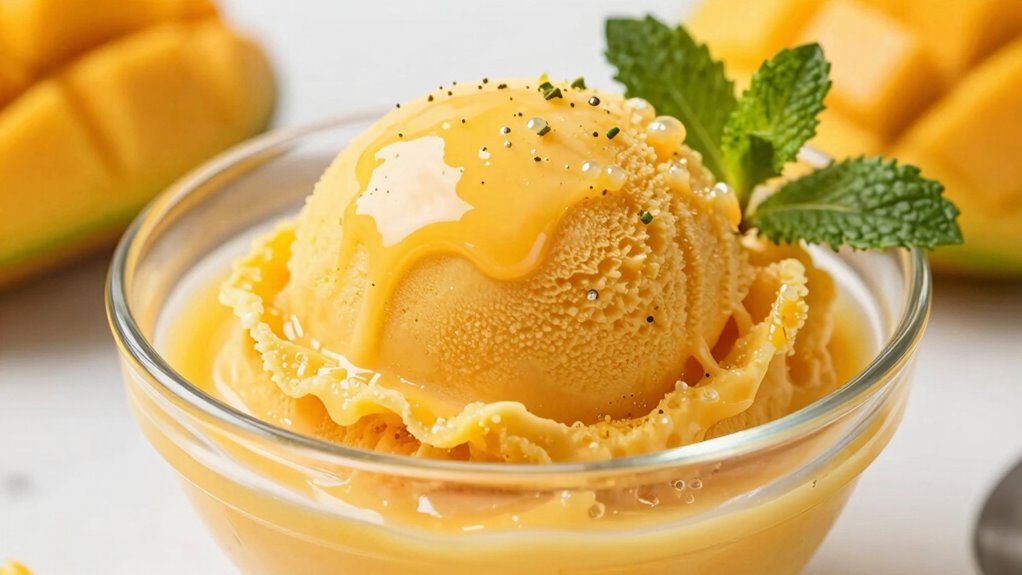
When your sorbet turns icy, it’s usually because it contains too much water or isn’t churned enough during freezing. Fruit acidity plays a key role here; higher acidity helps prevent large ice crystals from forming by lowering the freezing point of water. Additionally, sugar crystallization can cause icy textures if not balanced correctly. Sugar binds with water, reducing ice crystal growth, so proper sugar levels are essential. Without enough sugar, water tends to freeze into large, gritty crystals, ruining the smoothness. Using ripe, acid-rich fruits naturally helps maintain creaminess. Incorporating controlled sugar levels and ensuring consistent churning during freezing also help prevent ice crystal formation. By balancing fruit acidity and sugar, you can considerably reduce ice formation and achieve a silky, scoopable sorbet.
How Do Sugar and Fruit Ratios Affect Sorbet’s Creaminess?
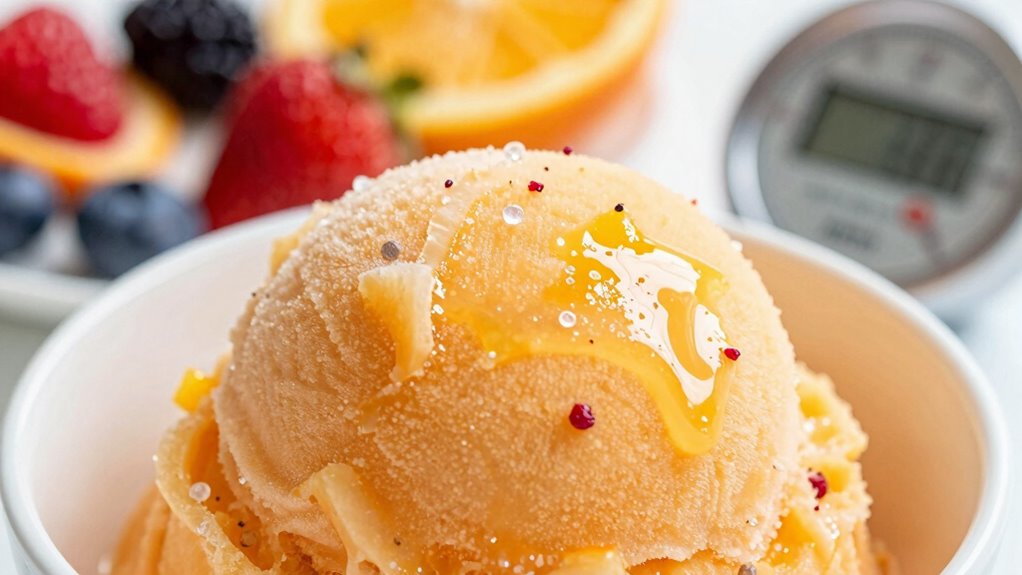
The key to achieving a creamy, smooth sorbet lies in balancing sugar and fruit ratios carefully. Your sugar ratios directly influence the sorbet’s texture, as too much sugar can inhibit proper freezing, while too little can lead to icy results. Proper fruit balance ensures the natural sugars and flavors develop correctly, contributing to creaminess rather than iciness. When you adjust sugar ratios, you control how much the mixture depresses freezing point, preventing large ice crystals from forming. Incorporating the right amount of fruit ensures a harmonious blend of sweetness and acidity, which enhances smoothness. Additionally, understanding the contrast ratio of your freezer can help you maintain the ideal environment for a velvety texture. Pay close attention to your fruit balance; it’s the foundation for a luscious, velvety sorbet that’s enjoyable with every spoonful.
How Alcohol and Stabilizers Help Keep Your Sorbet Smooth?
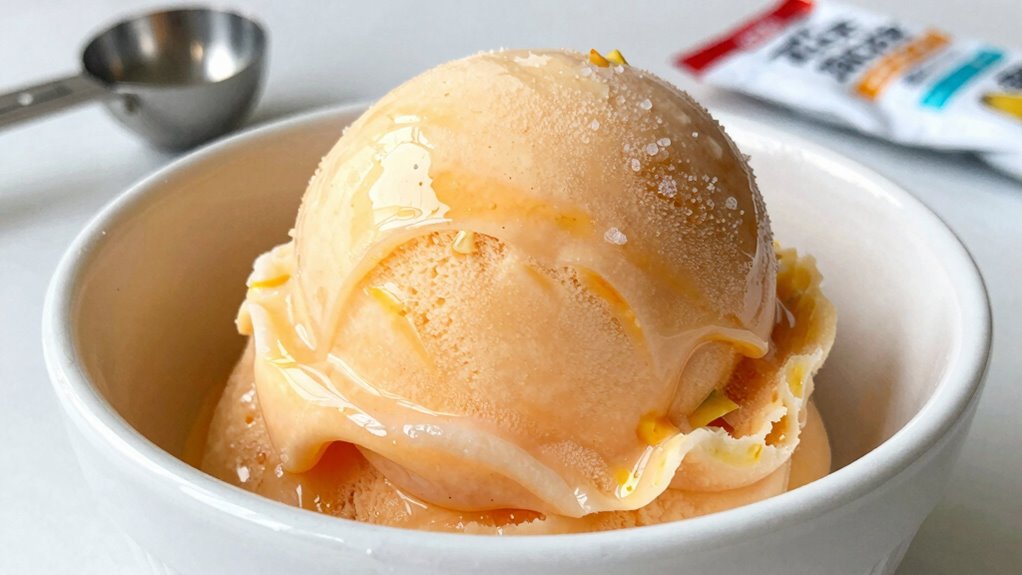
Adding alcohol lowers the freezing point of your sorbet, helping it stay soft and scoopable. Stabilizers prevent large ice crystal formation, keeping the texture smooth. When you find the right balance between alcohol and stabilizers, your sorbet stays deliciously creamy without turning icy. Incorporating deep product research into your ingredient choices ensures optimal texture and flavor. Understanding ice crystal formation can further refine your technique for perfect sorbet consistency, especially when applying backyard transformation techniques to create a cozy and inviting setting for enjoying your homemade treats. Additionally, familiarity with Bitcoin News Day concepts can inspire innovative approaches to ingredient sourcing and preservation methods, highlighting the importance of quality control in achieving the perfect texture.
Alcohol Lowers Freezing Point
Alcohol can substantially lower the freezing point of your sorbet, preventing it from becoming too icy and maintaining a smooth, scoopable texture. The alcohol effects on the freezing point help keep your dessert soft enough to enjoy easily. Since alcohol molecules disrupt ice crystal formation, your sorbet stays smoother. Be mindful, though: too much alcohol can make the mixture too soft. Here are some key points:
- Small amounts of alcohol are enough to impact the freezing point
- Different spirits have varying alcohol effects
- Higher alcohol content lowers the freezing point more
- Balance is essential to avoid a slushy texture
- Combining alcohol with stabilizers enhances results
- Understanding how alcohol influences the freezing point helps you craft a perfectly textured sorbet every time. Additionally, knowing how wave and wind affect the environment can help you better understand how external factors may influence your ingredients and process. Recognizing the importance of battery reconditioning warranties ensures you make informed decisions when using reconditioned ingredients or equipment, ultimately contributing to a better dessert outcome. Incorporating sugar and stabilizers can further improve the texture by controlling ice crystal growth and maintaining smoothness.
Stabilizers Prevent Ice Crystals
Stabilizers play a crucial role in preventing large ice crystals from forming in your sorbet, ensuring it stays smooth and scoopable. Different stabilizer types, like guar gum, xanthan gum, or pectin, help inhibit ice crystal formation by interfering with water molecules. They create a network that traps moisture and reduces the chance of crystal growth during freezing. Without stabilizers, your sorbet can become icy and gritty, especially if left in the freezer for too long. By incorporating the right stabilizer, you improve texture and maintain a velvety consistency. Proper stabilizer use is essential, as overuse can negatively impact flavor or texture. When combined with proper churning and chilling, stabilizers are key to achieving that perfect, smooth sorbet every time. Additionally, understanding how freezing temperature affects ice crystal growth can help optimize your recipe for a consistently creamy result. Temperature control techniques can further enhance the smoothness of your sorbet by minimizing unwanted crystal formation.
Proper Balance Ensures Smoothness
To keep your sorbet smooth and scoopable, finding the right balance between stabilizers and alcohol is essential. Proper ingredient harmony enhances texture improvement, preventing ice crystals from forming and ensuring a silky finish. Adding alcohol lowers the freezing point, helping your sorbet stay soft and easier to serve. Stabilizers work alongside alcohol to control crystal growth and improve mouthfeel. Keep these tips in mind:
- Use just enough alcohol to avoid overpowering flavors
- Incorporate stabilizers for consistent texture
- Balance sweetness with acidity for flavor harmony
- Avoid overmixing, which can break down texture
- Chill ingredients thoroughly before freezing
This balanced approach helps you achieve a luscious, smooth sorbet that’s pleasing to the palate and effortlessly scoopable.
Mastering Freezing Techniques for Velvety, Scoopable Sorbet
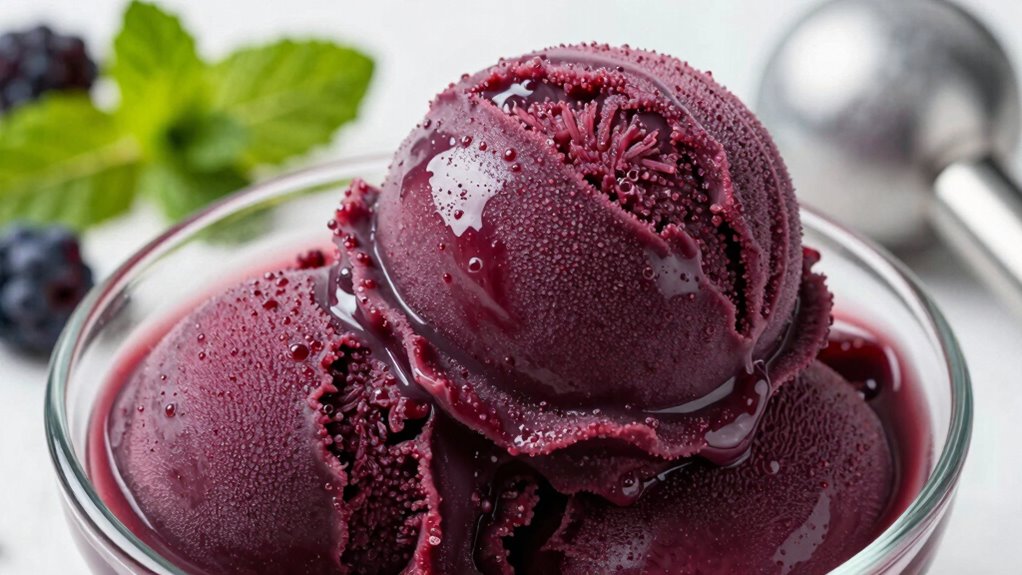
Achieving the perfect sorbet texture begins with mastering freezing techniques that prevent ice crystals from forming large, gritty particles. To do this, focus on maintaining fruit purity and controlling sugar crystallization. Rapid freezing traps smaller ice crystals, resulting in a velvety, scoopable consistency. Use an ice cream maker for even freezing, or periodically stir your mixture during the first few hours if freezing manually. The key is to minimize large crystals while ensuring the sugars don’t recrystallize. Proper fabric selection for your storage containers can also help maintain optimal temperature control. Here’s a visual to emphasize this point:
| Freezing Method | Effect on Texture |
|---|---|
| Fast Freezing | Smaller ice crystals, velvety |
| Slow Freezing | Larger crystals, icy texture |
| Stirring | Interrupts crystal growth |
| Sugar Content | Prevents recrystallization |
| Temperature | Maintains smoothness |
Why Chill and Rest Your Sorbet Before Serving?
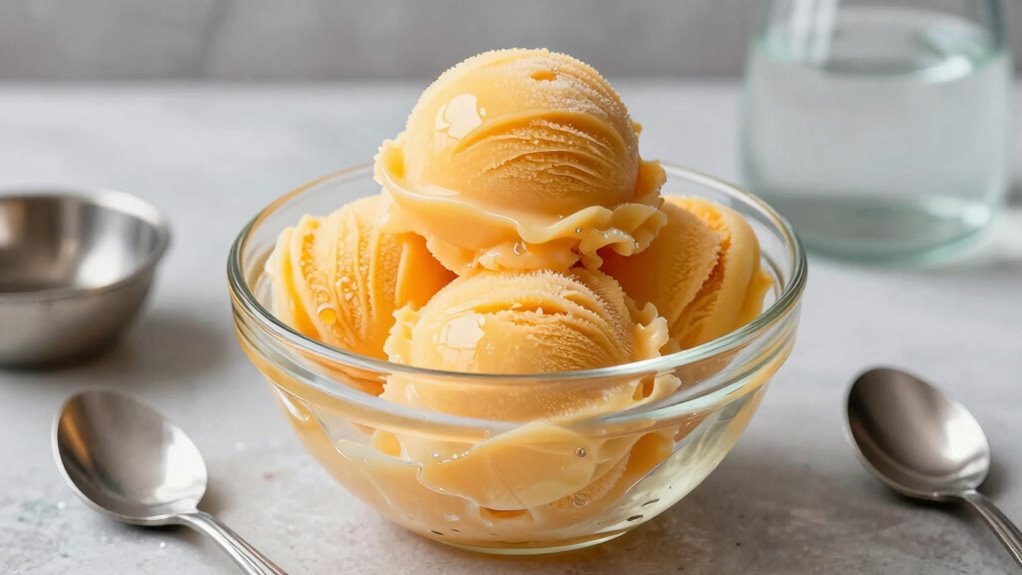
Chilling your sorbet helps it develop a smoother, more enjoyable texture. Resting it allows the flavors to meld and become more pronounced. By giving your sorbet time, you’ll enjoy a better overall eating experience. Additionally, proper temperature control can help prevent the formation of ice crystals, ensuring your sorbet remains creamy rather than icy. Implementing proper mixing techniques during the freezing process can further improve texture by preventing large ice crystal formation. Maintaining consistent freezing temperature is also crucial to achieving the ideal sorbet consistency. Monitoring freezing environment conditions can help maintain optimal texture and prevent unwanted ice formation. Understanding the role of air incorporation during freezing can also contribute to a lighter, more velvety sorbet texture.
Chilling Enhances Texture
Once your sorbet has finished churning, letting it rest in the freezer allows the texture to improve considerably. Chilling helps the ice crystals settle, creating a smoother, more enjoyable texture contrast that’s key to a perfect sorbet. Resting also enhances flavor pairing by allowing the fruit flavors to meld and deepen. During this period, your sorbet becomes firmer, making it easier to scoop and serve elegantly.
To maximize this effect, keep these tips in mind:
- Avoid opening the container frequently to prevent melting
- Cover tightly to prevent freezer burn
- Let the sorbet sit at room temperature for a few minutes before serving
- Use a metal spoon for easier scooping
- Store at consistent freezer temperatures for optimal texture
Resting Improves Flavor
After your sorbet has rested in the freezer, its flavors have time to meld and deepen, making each spoonful more vibrant and balanced. Resting allows the subtle nuances from your ingredient sourcing to develop fully, enhancing the overall flavor profile. Proper resting time also improves flavor pairing, as the ingredients harmonize better, creating a more cohesive taste experience. When you chill the sorbet before serving, it helps the flavors settle and intensify, rather than tasting raw or overly icy. This step ensures that your sorbet isn’t just invigorating but also rich and well-rounded. Incorporating smart technology into your home freezer can further optimize the resting process, ensuring consistent temperature and quality. Maintaining a steady temperature prevents ice crystal formation, which can compromise the texture of your sorbet. Taking the extra time to rest your sorbet ultimately rewards you with a more flavorful, enjoyable dessert that highlights the quality and balance of your ingredients.
Techniques for Blending and Churning Perfectly Smooth Sorbet
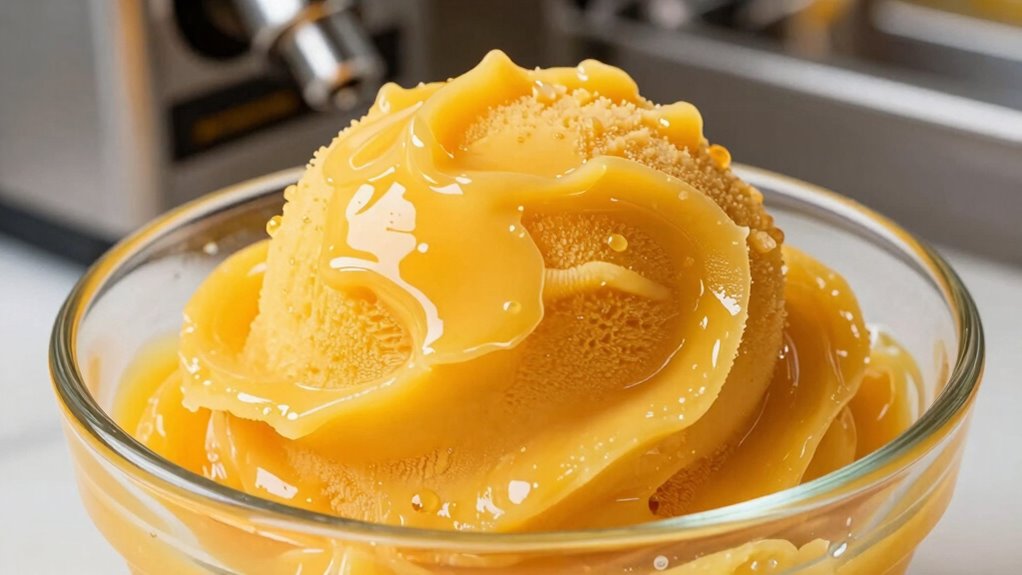
Achieving a perfectly smooth sorbet relies on effective blending and churning techniques that evenly incorporate air and prevent ice crystal formation. Start by blending your fruit purees thoroughly with the right sugar ratios to guarantee ideal texture. When churning, use a high-quality ice cream maker to create consistent movement, avoiding large ice crystals. Keep these tips in mind:
- Use chilled ingredients for smoother results
- Don’t overfill your churn to allow proper aeration
- Pulse gently to maintain a velvety texture
- Adjust sugar ratios to balance sweetness and freezing point
- Chill your mixture thoroughly before churning
These techniques help you achieve a silky, smooth sorbet by properly combining fruit purees and controlling the freezing process. Proper blending and churning are key to avoiding icy textures.
Common Mistakes That Make Sorbet Icy: And How to Fix Them
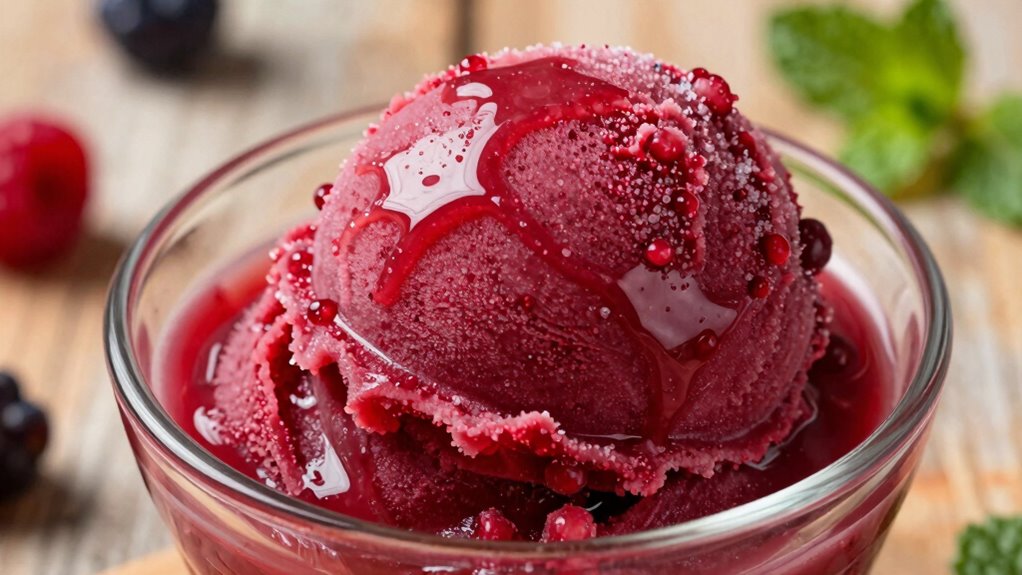
Despite careful blending and churning, common mistakes can still lead to icy sorbet. One mistake is overfreezing or not allowing enough air incorporation, resulting in a dense, icy texture. To remedy this, consider adding a small amount of fruit pectin, which helps improve texture by stabilizing the mixture and reducing ice crystal formation. Another mistake is neglecting proper sugar balance; too little sugar can cause quick freezing, making the sorbet icy. Additionally, rushing the process without enough churning time can prevent proper air incorporation, leading to a dense consistency. To avoid this, ensure you churn the mixture thoroughly and evenly, and incorporate ingredients like fruit pectin where appropriate. These steps help create a smooth, scoopable sorbet without unwanted ice crystals.
How to Experiment With Flavors and Add-Ins for Better Texture and Taste
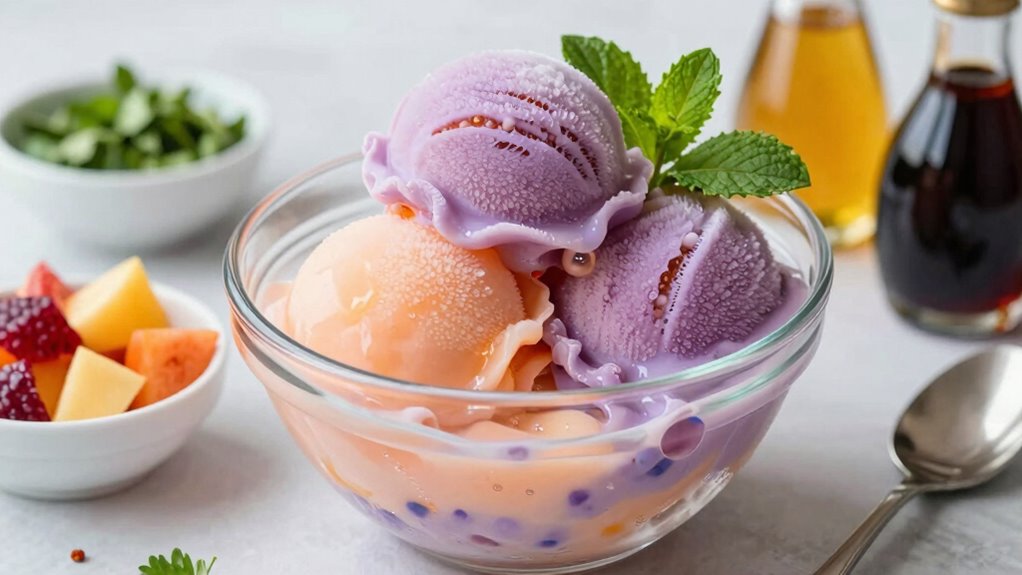
Experimenting with flavors and add-ins can elevate your sorbet from simple to spectacular, but doing so thoughtfully guarantees you don’t compromise its texture. To enhance taste, try fruit infusions by soaking fresh or dried fruits in your base before freezing. Spice pairings can add depth—think cinnamon with apple or ginger with citrus. When adding mix-ins, keep them small or finely chopped to prevent icy pockets. Consider these tips:
- Use natural fruit infusions for subtle flavor boosts
- Pair spices thoughtfully to complement fruit profiles
- Incorporate small pieces of fruit or herbs for texture
- Avoid heavy or sugary mix-ins that can cause ice formation
- Balance flavors to prevent overpowering the fruit base
Frequently Asked Questions
Can I Make Sorbet Without a Machine?
Yes, you can make sorbet without a machine. Simply blend your fruit pairing with a bit of sugar and lemon juice for flavor and texture enhancement. Pour the mixture into a shallow dish, then freeze. Every 30 minutes, stir vigorously to break up ice crystals until you get a smooth, scoopable texture. This method gives you control over the texture and allows you to customize flavors easily.
What Are the Best Fruits for Smooth Sorbet Texture?
You’d think bananas and berries would make perfect sorbet, right? Ironically, they’re actually ideal because their fruit fiber and natural sweetness help create a smooth, creamy texture. Fruits like peaches, mangoes, and melons also work well, blending effortlessly into a silky consistency. Steer clear of overly watery fruits, which can turn your sorbet icy. Choose these fruits for a luscious, velvety finish that’s just as delightful as it sounds.
How Does Overfreezing Affect Sorbet Quality?
Overfreezing can seriously impact your sorbet’s quality, leading to texture deterioration. When you freeze it too long, ice crystals grow larger, making your sorbet icy and grainy instead of smooth. This freezing impact reduces the creamy, velvety feel you want. To avoid this, monitor your sorbet closely, and don’t leave it in the freezer beyond the most favorable time. Proper storage ensures your dessert stays perfectly silky and enjoyable.
Can I Use Artificial Sweeteners in Sorbet Recipes?
Yes, you can use artificial sweeteners in sorbet recipes. They’re a safe sugar substitute option for reducing calories and sugar content. Just make certain you choose an artificial sweetener with good safety ratings and follow the recommended amounts, as some can affect texture or freezing points. Keep in mind, natural alternatives like honey or agave can also work if you prefer less processed options. Experiment to find the perfect balance for your taste.
How Long Does Homemade Sorbet Typically Last in the Freezer?
You’ll find that homemade sorbet typically lasts about 2 to 4 weeks in your freezer if stored properly. To extend its storage duration, use airtight containers and cover the surface with plastic wrap before sealing. Keep in mind, freezer tips like avoiding temperature fluctuations help prevent ice crystals. So, when your craving hits, enjoy your sorbet within this window for the best texture and flavor.
Conclusion
Now that you’ve uncovered the secrets to silky, scoopable sorbet, you’re the artist painting a masterpiece of flavor and texture. Think of your freezer as your canvas, and each technique as a brushstroke—balancing sweetness, chilling just right, and experimenting with flavors. With patience and practice, your sorbet will dance on your taste buds like a graceful ballerina, melting away icy frustrations and revealing the luscious, velvety perfection that’s all yours to create.
Halloween Picks
halloween
As an affiliate, we earn on qualifying purchases.