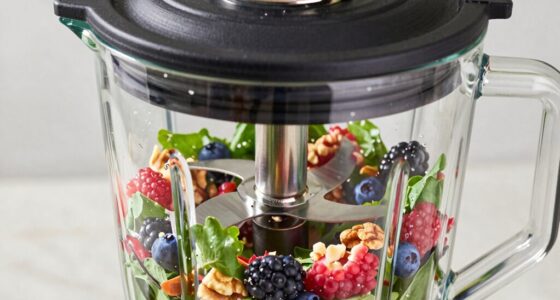
To make smooth fruit purees without heating, start by choosing ripe, fresh fruits and soften firmer ones by soaking or mashing. Use gentle blending at low speed, gradually increasing to avoid froth and chunks. Add small amounts of liquid, like juice or water, to help blades move effortlessly. Pulsing and scraping down sides ensure even texture. If you want even silkier purees, straining can help. Keep these tips in mind to preserve flavor and nutrients.
Key Takeaways
- Use ripe, soft fruits for natural smoothness, avoiding the need for heating to soften them.
- Blend at low speed and gradually increase to prevent froth and maintain a fresh flavor.
- Add small amounts of liquid gradually to facilitate blending without thinning the puree excessively.
- Pre-soften firmer fruits by soaking or mashing before blending to achieve smooth textures without heat.
- Strain the purees through a fine sieve to remove pulp or fibrous bits, ensuring a silky, heat-free texture.

Have you ever wondered how to achieve perfectly smooth fruit purees at home? It’s easier than you might think, especially if you focus on the right techniques to maintain the fruit’s natural texture and flavor. The key to a smooth fruit puree lies in understanding fruit texture and mastering blending techniques. When you work with fresh, ripe fruit, you’re already off to a good start, but how you blend it makes all the difference in achieving that silky consistency you desire.
First, pay attention to the fruit’s texture before blending. Softer fruits like berries, peaches, or ripe mangoes naturally break down more easily, resulting in smoother purees. For firmer fruits such as apples or pears, consider pre-softening them by soaking or mashing slightly before blending. This step helps reduce the effort needed and prevents the blender from overworking the fruit, which can lead to a grainy or uneven texture. When you blend, start at a low speed, gradually increasing as the mixture begins to break down. This slow start allows the blades to gently process the fruit without forcing air into the mixture, which can create a frothy or uneven consistency.
Start blending at low speed, gradually increasing to keep purees smooth and prevent frothy textures.
Using the right blending technique is essential. You want to pulse the fruit in short bursts rather than continuously blending at high speed. Pulsing helps you control the texture, giving you more precision to achieve that perfectly smooth consistency. If your blender has a tamper, use it to push the fruit toward the blades, ensuring even blending without over-processing. Also, don’t hesitate to stop blending occasionally and scrape down the sides of your container. This ensures all fruit gets evenly processed, preventing chunks or streaks in your puree. Additionally, maintaining a consistent blending technique can help prevent over-processing and preserve the fruit’s natural flavor and nutrients.
Another tip is to add small amounts of liquid, like water, juice, or a splash of fruit nectar, during blending. This not only helps the blades move smoothly but also contributes to a more homogeneous texture. Be cautious with the amount—adding too much can thin your puree excessively, so add just enough to facilitate blending. If you want extra silkiness, you might strain the puree through a fine mesh sieve after blending. This extra step removes any remaining pulp or fibrous bits, giving you an ultra-smooth result.
Frequently Asked Questions
What Fruits Are Best Suited for Raw Purees?
You should choose fruits with soft textures and vibrant flavors for raw purees. Berries like strawberries, blueberries, and raspberries work well because they blend smoothly and retain their flavor. Ripe peaches, mangoes, and bananas are also excellent, as their natural softness helps create silky purees without heating. These fruits preserve their fresh flavor and texture, making your purees delicious and full of natural taste.
Can I Use a Blender Instead of a Food Processor?
You can definitely use a blender instead of a food processor for making fruit purees. Blenders excel at creating smooth textures quickly, giving you good puree texture control. However, a food processor might handle chunkier textures better. If your goal is a very fine, silky puree, a blender is usually the better choice. Just make sure to pulse and stop frequently to avoid over-blending and to achieve your desired consistency.
How Do I Prevent Oxidation During Blending?
To prevent oxidation during blending, you should work quickly and use minimal exposure to air. Add a splash of lemon juice or ascorbic acid to your fruit to help with oxidation prevention and keep the color vibrant. Cover the blender with a lid or plastic wrap immediately after blending to reduce air contact. Stir gently and serve promptly to preserve the fruit’s natural color and freshness.
Are There Any Tools That Help Achieve Ultra-Smooth Purees?
Imagine holding a sleek, high-powered blender that instantly turns your fruit into a silky puree. Yes, tools like immersion blenders and food processors help you achieve ultra-smooth textures effortlessly. They’re safe to use and prevent oxidation, preserving flavor variations. Just make certain you follow safety guidelines, like avoiding overfilling, to keep your blending smooth and your kitchen safe. This way, you get perfect purees every time.
How Long Can I Store Raw Fruit Purees Safely?
You can store raw fruit purees safely for up to 24-48 hours in the refrigerator. To maximize preservation, use airtight storage containers to prevent oxidation and contamination. For longer storage, consider freezing the purees in small portions, which keeps their freshness and flavor intact. Always check for signs of spoilage before use, and avoid leaving purees at room temperature for extended periods to prevent bacteria growth.
Conclusion
By mastering these gentle blending techniques, you’ll keep your fruit purees smooth and vibrant without heating, preserving their natural essence. Think of your blender as a gentle artist, crafting a silky masterpiece with care and finesse. When you avoid heat, you prevent the delicate flavors from fading like a sunset slipping behind the horizon. So, embrace these methods and let your fruit purees shine with freshness, turning simple ingredients into a symphony of flavor that delights every time.