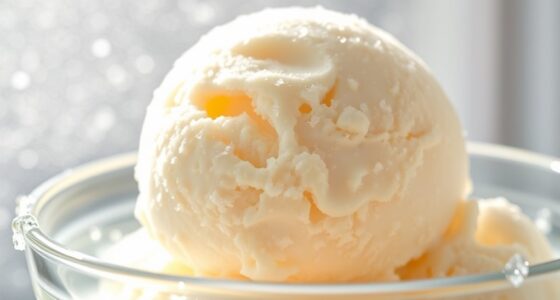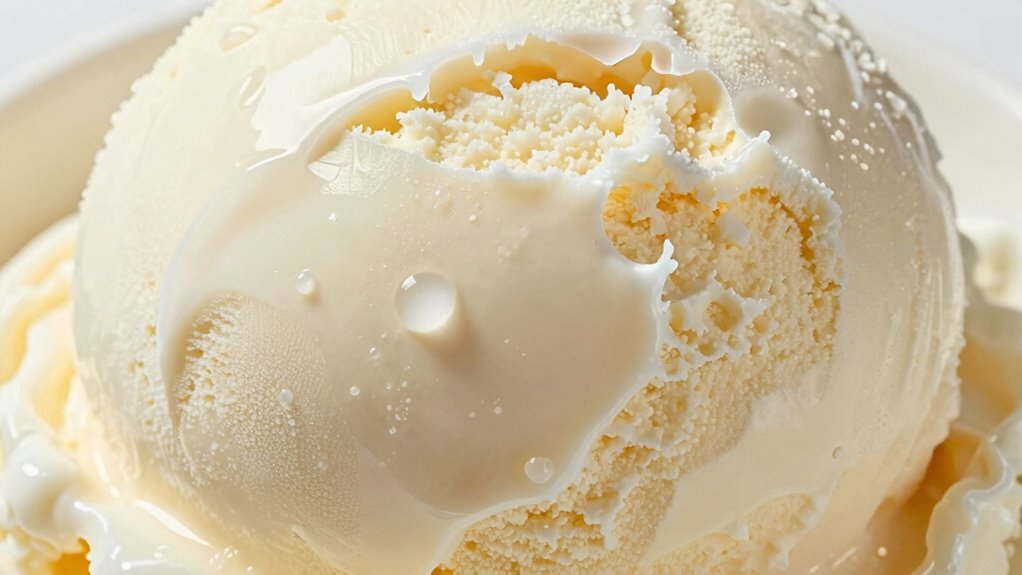

Waxy coatings on ice cream happen because of ingredients like stabilizers, emulsifiers, and natural thickeners, which can create an uneven film if used excessively or if the formula isn’t balanced. Fats, emulsifiers, and stabilizers influence texture and can lead to waxiness when overused or mixed improperly. Storage conditions, like temperature fluctuations and exposure to air, also cause fats to recrystallize, increasing waxy residue. To learn how to keep your ice cream smooth and creamy, keep exploring these factors.
Get ready for Prime Big Deal Days — try Prime free
Exclusive member deals on October 6–7, plus fast free delivery. Cancel anytime.
As an affiliate, we earn on qualifying purchases.
Key Takeaways
- Excessive stabilizers and emulsifiers can create a waxy film on ice cream’s surface.
- Poor ingredient quality or high levels of synthetic additives contribute to waxy coatings.
- Temperature fluctuations during storage cause fats and sugars to recrystallize, leading to waxiness.
- Improper storage, such as frequent freezer openings and exposure to air, promotes waxy residue formation.
- Choosing natural, minimally processed ice cream and proper storage practices reduces the likelihood of waxy coatings.
As an affiliate, we earn on qualifying purchases.
Why Does Some Ice Cream Leave a Waxy Residue?

Have you ever noticed a waxy film on certain ice cream brands? That residue can affect the ice cream’s mouthfeel, making it feel slick or greasy instead of smooth. When ice cream leaves a waxy coating, it often results from ingredients like fats or emulsifiers that don’t blend well, creating an uneven surface. This coating can hinder flavor release, making the ice cream taste dull or muted. The waxy layer creates a barrier that prevents your taste buds from fully experiencing the flavors inside. As a result, you might notice less richness or a less satisfying sensation. This waxy residue isn’t just unpleasant; it also impacts the overall enjoyment of your ice cream experience by changing how it feels and how flavors are delivered. Additionally, the type of stabilizers and emulsifiers used can influence the formation of this waxy film, affecting the texture and mouthfeel of the ice cream ingredients. Sometimes, improper storage conditions can also contribute to the development of this waxy coating, further affecting quality. Proper storage and understanding of ice cream ingredients can help prevent this undesirable texture.
How Fats and Emulsifiers Affect Ice Cream’s Texture and Finish
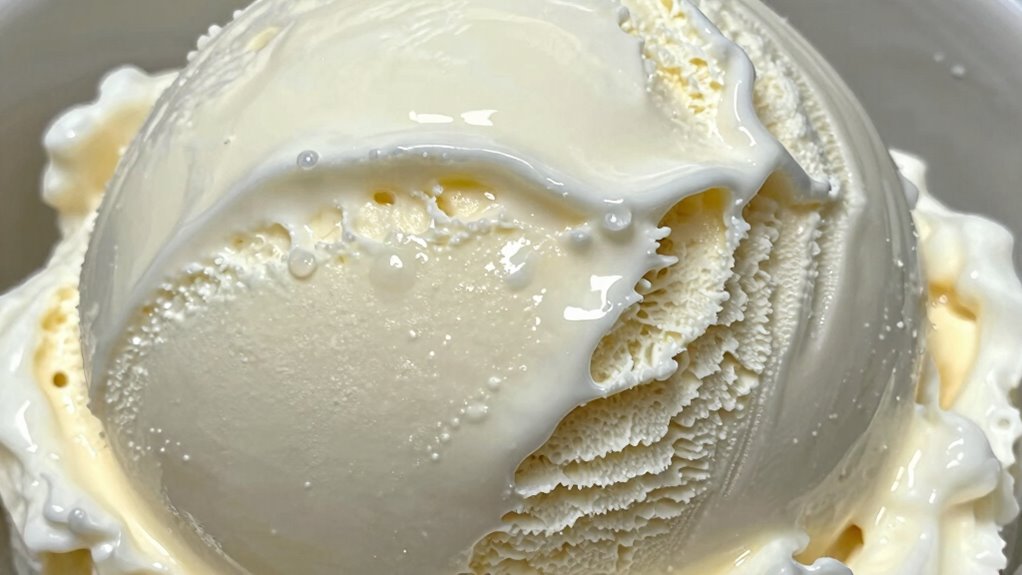
Fats play a key role in giving ice cream its smooth, creamy texture, and adjusting their levels can change how rich or light it feels. Emulsifiers help blend fats and liquids, creating a stable, velvety finish that enhances mouthfeel. Understanding how these ingredients work together allows you to perfect the consistency and shine of your ice cream.
Fat Content and Texture
The fat content in ice cream plays a crucial role in determining its texture and overall finish. Higher ice cream fat levels create a richer, creamier texture, enhancing the smoothness you experience. When fat is balanced properly, it forms a stable network that prevents ice crystals from becoming too large, resulting in a luxurious cream texture. Conversely, low-fat options may feel lighter but can feel icier or less velvety. Key factors include:
- The proportion of milk fat influences mouthfeel and richness
- Excessive fat can lead to a waxy or greasy finish
- Proper emulsification ensures even distribution of fats for smoothness
- Fat interacts with sugars and proteins to create a cohesive texture
- Achieving the right balance results in a luxurious, melt-in-your-mouth experience
- Emulsifiers help stabilize fat and water mixtures, impacting the final texture.
- Texture stability is also affected by the manufacturing process, including churning and freezing techniques, which influence the final mouthfeel.
- The manufacturing process plays a vital role in how fats are distributed and stabilized within the ice cream matrix.
- Additionally, understanding how emulsification techniques are applied during production can significantly reduce the likelihood of a waxy coating forming.
Role of Emulsifiers
Emulsifiers play a vital role in ensuring that fats and water-based ingredients in ice cream mix thoroughly, creating a smooth and uniform texture. They help prevent separation, giving your ice cream a consistent finish. Emulsifiers also influence how artificial flavors disperse evenly, enhancing taste without clumping or unevenness. Additionally, they contribute to the preservative effects by stabilizing the mixture and extending shelf life. This stabilization reduces the likelihood of waxy coatings forming on the surface, leading to a more appealing appearance. Without proper emulsifiers, ice cream can develop a greasy or waxy residue, especially as fats separate over time. Proper formulation of emulsifiers is crucial, as it impacts the overall ice cream stability and quality. Moreover, the interaction between fats and emulsifiers determines the final texture, ensuring a delightful mouthfeel. Hence, emulsifiers are essential for maintaining both the texture and visual quality of your favorite frozen treat.
Which Ingredients Contribute to Waxy Coatings?

Have you ever wondered which ingredients give ice cream its waxy coating? Certain components can contribute to this texture, especially natural thickeners and stabilizer additives. These ingredients help improve consistency but can also lead to a waxy residue if used excessively.
Consider these factors:
- Natural thickeners like guar gum or carrageenan, which add viscosity. Thickening agents play a crucial role in modifying texture and mouthfeel.
- Stabilizer additives such as cellulose or gelatin, preventing ice crystal formation. These stabilizers ensure a smooth texture but may cause a waxy film if overused.
- Emulsifiers that help blend fats and water but may create a waxy film if overused. The emulsification process is key to understanding how these ingredients interact during production.
- Fat content variations influencing texture and coating formation.
- Processing techniques that affect ingredient interactions, impacting waxiness.
- The presence of free floating ingredients or particles can also influence the perception of waxy coatings on the ice cream surface.
- Additionally, the interaction between emulsifiers and other ingredients during processing can contribute to the formation of a waxy residue. Understanding the role of emulsifiers in ice cream production is essential for controlling texture and appearance.
How Storage Conditions and Temperature Fluctuations Cause Waxy Residues
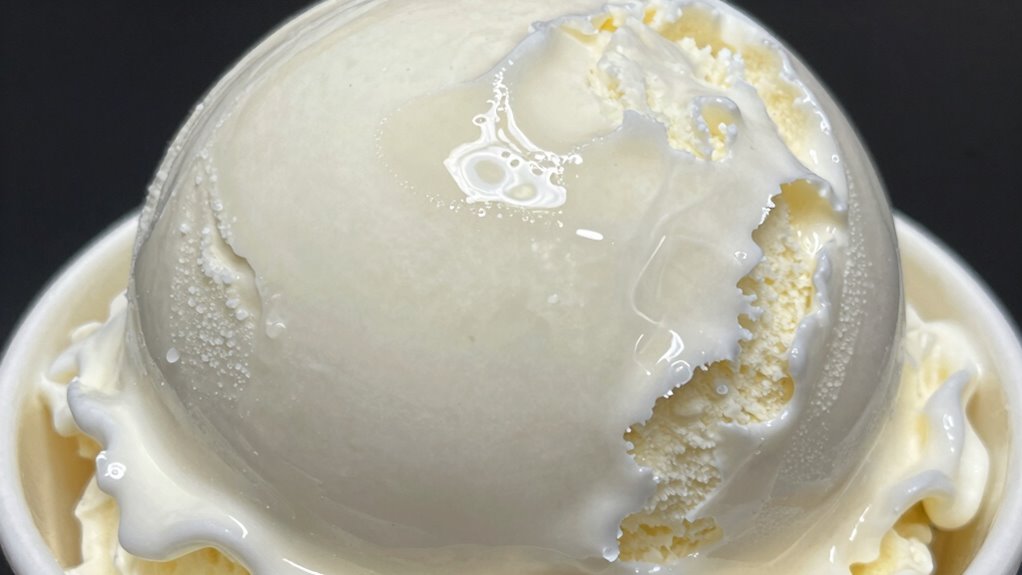
Temperature fluctuations during storage can markedly impact the formation of waxy residues on ice cream. When ice cream experiences inconsistent temperatures, it causes the fat and sugar components to separate and recrystallize, leading to a waxy coating. Poor ice cream packaging that doesn’t seal tightly allows moisture and air to enter, accelerating these changes. Effective cold chain management ensures steady temperatures, minimizing these effects. If ice cream repeatedly melts and refreezes, the surface becomes rough, and waxy residues are more likely to develop. Maintaining consistent storage temperatures prevents fat migration and reduces the chance of waxy coatings. Proper handling and reliable packaging are vital for preserving ice cream quality and preventing unwanted waxy residues caused by temperature fluctuations. Understanding storage conditions is essential for maintaining the quality of perishable foods like ice cream. Additionally, temperature control techniques can be employed to further stabilize storage environments and protect ice cream’s texture and appearance. For example, implementing reliable refrigeration systems can help maintain optimal temperatures consistently. Ensuring optimal storage environments also involves monitoring air circulation, which helps prevent temperature inconsistencies and spoilage.
Tips for Choosing Ice Creams Less Likely to Leave a Waxy Coating

When selecting ice creams less likely to develop a waxy coating, pay attention to their ingredient lists. Opt for products with minimal or natural flavor additives, as synthetic additives can contribute to residue formation. Choose brands that use high-quality packaging materials, such as cardboard or biodegradable containers, which reduce chemical interactions. Look for ice creams with fewer stabilizers and emulsifiers, often linked to waxy films. Check ingredient labels for natural fats and simpler formulations, indicating less processing. Additionally, research the manufacturer’s reputation for quality control, and prefer those transparent about their ingredients and packaging choices. By making informed selections, you can enjoy smoother, residue-free ice cream with less risk of a waxy coating.
How to Prevent Waxy Residues and Enjoy Smooth, Melting Ice Cream

To prevent waxy residues, focus on proper storage by keeping your ice cream at consistent, cold temperatures. Choosing high-quality ice cream also makes a difference, as better ingredients reduce waxy coatings. By storing and selecting your ice cream wisely, you can enjoy smooth, melting textures every time. Additionally, understanding ingredient quality can help you select products that are less likely to develop a waxy coating.
Proper Storage Techniques
Ever wondered why your ice cream sometimes develops a waxy coating instead of remaining smooth and creamy? Proper storage techniques can prevent this. First, choose the right ice cream packaging—airtight containers minimize exposure to air, which can cause waxy residue. Use storage container materials like glass or high-quality plastic that won’t react with the ice cream’s fats. Keep your freezer at a consistent temperature, ideally around -18°C (0°F). Avoid frequent opening, which causes temperature fluctuations. When storing, ensure the surface is sealed tightly, and consider wrapping the container with plastic wrap to prevent moisture loss. Additionally, always store ice cream away from strong-smelling foods to prevent odor absorption. Implementing these steps helps maintain smooth texture and prevents waxy coatings.
Choosing Quality Ice Cream
Choosing high-quality ice cream is the first step to preventing waxy residues and enjoying a smooth, melt-in-your-mouth experience. Look for brands that offer artisan flavors, which often use natural ingredients and minimal additives, reducing the chances of a waxy coating. If you prefer dairy alternatives, select options made with high-quality plant-based ingredients like coconut, almond, or cashew milk, as these tend to have fewer stabilizers and emulsifiers. Reading ingredient labels carefully helps you avoid products with unnecessary thickeners or artificial preservatives that can contribute to a waxy film. Opting for small-batch or artisanal ice creams usually guarantees better quality and texture. Additionally, understanding how vetted deals buy can impact ice cream storage and transport can help you choose products that are less likely to develop undesirable coatings. Proper storage conditions, such as maintaining consistent refrigeration temperatures, also play a crucial role in preserving ice cream quality. By choosing wisely, you’ll enjoy a creamier, smoother ice cream that melts perfectly without leaving behind unwanted residues.
Common Mistakes That Lead to Waxy Ice Cream and How to Avoid Them

One common mistake that causes ice cream to become waxy is overmixing the mixture before freezing. Overmixing can break down fats and emulsify ingredients improperly, leading to a waxy coating. To prevent this, pay attention to your ingredients and process. Here are some key tips:
Overmixing ice cream causes waxy texture by breaking fats and emulsifiers improperly.
- Use high-quality ice cream flavoring to avoid artificial additives that can contribute to waxiness.
- Maintain the proper serving temperature; too warm, and fats won’t emulsify correctly.
- Avoid excessive churning, which can destabilize the mixture.
- Incorporate stabilizers sparingly to improve texture without causing waxiness.
- Chill the mixture thoroughly before freezing to promote even freezing and texture stability.
- Exploring crochet styles for locs can inspire creative and protective ways to handle your ingredients for better texture.
Frequently Asked Questions
Does the Type of Dairy Used Influence Waxy Residue Formation?
Yes, the type of dairy used influences waxy residue formation. Dairy fat and milk composition vary depending on the milk source, affecting the ice cream’s texture and surface. Higher fat content and specific milk proteins can create a smoother, less waxy finish. When you choose different dairy types, like cream or skim milk, it changes how the ice cream interacts with air and freezing, impacting the waxy coating’s development.
Can Adding Preservatives Increase the Likelihood of a Waxy Coating?
Adding preservatives can increase the likelihood of coating formation on your ice cream. Preservative effects often slow down spoilage but can also alter the ice cream’s surface, making a waxy or filmy layer more prone to develop. These additives may interact with fats and proteins, encouraging a coating to form over time. So, if you notice a waxy film, preservatives might be a contributing factor, especially in processed or store-bought varieties.
How Does Aging Ice Cream Impact Its Surface Texture?
Aging ice cream is like a neglected garden—crystals grow and surface texture changes. As it ages, ice cream undergoes crystallization, making it grainy, and freezer burn effects can cause a dry, tough surface. You’ll notice it becomes less smooth and more icy over time. To prevent this, keep your ice cream well-sealed and consume it fresh, preserving that creamy texture you love.
Are Vegan or Plant-Based Ice Creams Less Prone to Waxy Coatings?
Vegan or plant-based ice creams are generally less prone to waxy coatings because they use plant-based textures and emulsification techniques that create smoother, more stable surfaces. These methods reduce the need for artificial stabilizers or coatings that can cause a waxy film. By focusing on natural ingredients and advanced emulsification, you can enjoy a creamier, more satisfying texture without the unwanted waxy residue.
What Role Do Artificial Flavors Play in Creating a Waxy Finish?
Did you know that about 80% of artificial flavoring involves chemical compounds? These artificial flavors can sometimes contribute to a waxy finish on ice cream because they contain ingredients that interact with fats and sugars, forming a coating. When you consume ice cream with artificial flavors, you’re often ingesting these chemical compounds, which can create a film on the surface, especially if the formulation isn’t carefully balanced.
Conclusion
To avoid that waxy film, think of your ice cream like a delicate dance—each ingredient and temperature step choreographs a smooth performance. By choosing quality flavors, storing it properly, and paying attention to ingredients, you can prevent it from turning into a stubborn waxy coat. When you master these moves, your ice cream will melt like a whisper on your tongue, revealing its true, luscious personality—smooth, sweet, and free from unwanted residue.
Fall yard work Picks
leaf blowers
As an affiliate, we earn on qualifying purchases.