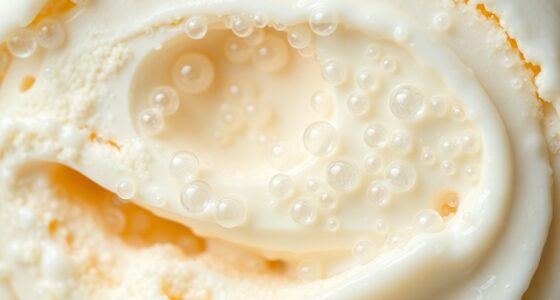
Waxy taste in frozen desserts often sneaks in because of low-quality ingredients and too many artificial additives. When cheap fats, stabilizers, or artificial flavors are used, they can overshadow natural flavors and create that greasy, waxy feeling. Poor ingredient choices also interfere with texture and taste after freezing. If you want to avoid this, it’s important to know which ingredients can make or break the flavor—find out more to get the full picture.

Get baking supplies delivered free with Prime
- Fast, free delivery on millions of items
- Prime Video, Amazon Music and more included
- Member-only deals all year
Key Takeaways
- Low-quality fats and stabilizers can produce a waxy flavor during freezing.
- Excess artificial additives may overpower natural ingredients, creating a waxy or greasy aftertaste.
- Poor ingredient quality disrupts natural flavor profiles, leading to a waxy mouthfeel.
- Artificial flavorings and stabilizers are often overused, contributing to an artificial, waxy taste.
- Insufficient focus on ingredient quality and sourcing results in undesirable, waxy flavors in frozen desserts.
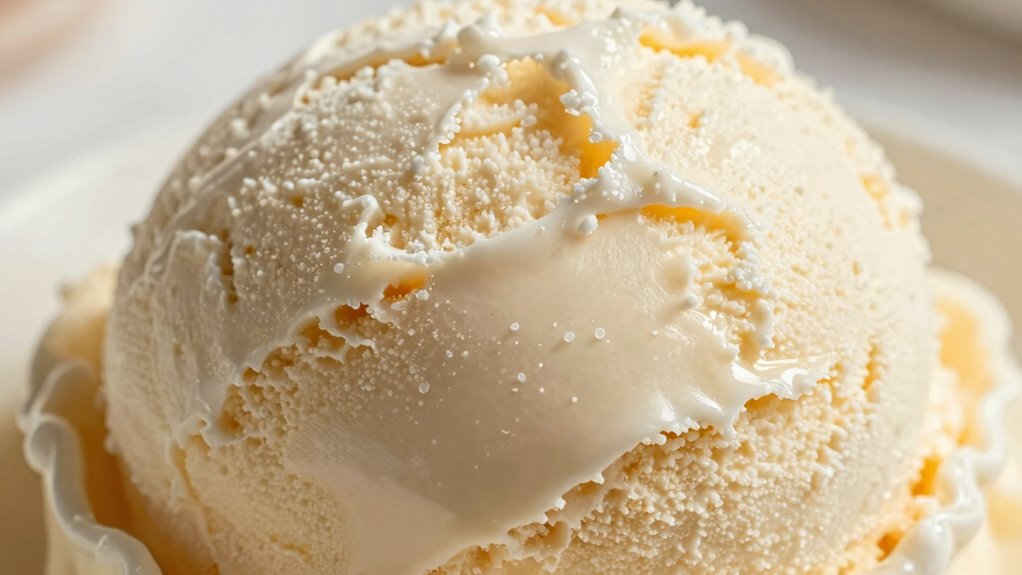
If you’ve ever taken a bite of frozen dessert only to be hit with an unexpectedly waxy taste, you’re not imagining things. That waxy flavor often comes down to the ingredients used and how they interact during freezing. Many people assume the issue is simply a matter of poor quality, but it’s more nuanced. The sneaky reason behind that waxy flavor is often tied to how manufacturers prioritize flavor enhancement and ingredient quality, sometimes at the expense of a clean, natural taste.
When a frozen dessert contains lower-quality fats, stabilizers, or artificial additives, it can create that greasy or waxy sensation on your palate. These ingredients are added to improve texture, extend shelf life, or boost sweetness without adding more real flavors. However, if these additives aren’t of high quality or are used excessively, they can interfere with the natural flavor profile, leaving behind a lingering waxy aftertaste. It’s a tricky balance—companies want to make their product appealing and cost-effective, but often, cutting corners on ingredient quality leads to that undesirable mouthfeel.
Flavor enhancement plays a huge role here. Artificial flavorings and synthetic stabilizers are commonly used to mask blandness or to make the dessert seem richer. But if these enhancements are not carefully balanced or are of inferior quality, they can make the dessert taste artificial or waxy. Instead of highlighting the natural flavors of the ingredients—like real cream, fruit, or cocoa—they tend to overpower or distort them, leaving a greasy or waxy feeling that’s hard to ignore. Additionally, poor-quality ingredients can sometimes release undesirable flavors during freezing, contributing to that waxy sensation. The use of artificial additives can further exacerbate this issue when not managed properly.
You might also notice that some frozen desserts labeled as “premium” or “natural” tend to avoid these issues because they focus on ingredient quality. They use real, high-quality fats and fewer artificial additives, resulting in a cleaner, more authentic flavor. These products tend to melt smoothly and taste fresher because they don’t rely heavily on flavor enhancement techniques that compromise ingredient integrity. Consumers increasingly favor sustainable sourcing and transparency, which encourages manufacturers to use better ingredients that are both environmentally friendly and high in quality.
In the end, the waxy taste isn’t just about how the dessert is made; it’s about what’s used to make it. When ingredient quality is prioritized and flavor enhancement is achieved through natural means, you’re less likely to encounter that unfortunate waxy aftertaste. Additionally, consumer awareness about biodiversity and sustainable sourcing can encourage manufacturers to use better ingredients that are both environmentally friendly and high in quality. When ingredient quality is prioritized and flavor enhancement is achieved through natural means, you’re less likely to encounter that unfortunate waxy aftertaste. Instead, you enjoy a frozen treat that genuinely satisfies your palate, with flavors that are rich, true, and delightful—without that sneaky, waxy surprise.
high quality frozen dessert ingredients
As an affiliate, we earn on qualifying purchases.
As an affiliate, we earn on qualifying purchases.
Frequently Asked Questions
What Ingredients Cause a Waxy Texture in Frozen Desserts?
You’ll notice that ingredient additives like certain stabilizers and emulsifier effects can cause a waxy texture in frozen desserts. These additives are meant to improve texture and prevent ice crystal formation, but when used excessively, they can create an unnatural, waxy mouthfeel. To avoid this, check labels for high levels of stabilizers or emulsifiers, and opt for products with simpler, more natural ingredient lists to enjoy a creamier, more authentic taste.
Can Storage Methods Affect the Waxiness of Frozen Treats?
Yes, storage methods can influence the waxiness of frozen treats. Proper packaging impact helps prevent moisture loss and freezer burn, which can alter texture and flavor enhancement, making desserts taste waxy. Keep your frozen desserts airtight and at consistent temperatures to maintain their quality. Avoid frequent temperature fluctuations, as they can cause ice crystals to form and degrade texture, leading to that unwanted waxy feel.
Are Certain Brands More Prone to Tasting Waxy?
Yes, certain brands are more prone to tasting waxy because they often use ingredient substitution to cut costs or improve shelf life, which can affect flavor enhancement. You might notice a waxy taste in some store brands or cheaper options, as they may replace natural fats or flavorings with artificial ingredients. To avoid this, choose higher-quality brands that prioritize authentic ingredients, ensuring a richer, more natural flavor profile.
How Can I Tell if a Frozen Dessert Is Excessively Waxy?
You can tell if a frozen dessert is excessively waxy by paying attention to flavor profiles and texture comparisons. Waxy desserts often have a dull, artificial taste and a slick, greasy feeling on your tongue. They may also feel overly smooth or plasticky compared to natural, creamy textures. If the flavor seems muted or the texture feels inconsistent—like rubbery or overly slick—you’re likely experiencing a waxy finish.
Does Adding Toppings Improve the Waxy Taste?
Adding toppings can help mask the waxy flavor in frozen desserts, making them more enjoyable, but they don’t necessarily improve the texture. Think of it as a bit of flavor masking—covering up the waxiness with something sweet or crunchy. While toppings add flavor and texture enhancement, they might not eliminate the waxy taste entirely. For the best experience, choose high-quality, less-waxy frozen desserts rather than relying solely on toppings.
Conclusion
Just like a painter’s brush can subtly alter a masterpiece, the ingredients in frozen desserts shape every bite. When waxiness sneaks in, it’s as if a hidden shadow dims the vibrant flavors you crave. Knowing what to watch for is your secret toolkit, transforming each scoop into a vivid, delightful experience. So next time you indulge, remember—choosing the right ingredients is like wielding a magic wand, ensuring your dessert remains a true work of art, free of unwanted shadows.
Columbus Day / Indigenous Peoples' Day Picks
long weekend sales
As an affiliate, we earn on qualifying purchases.