
Your soft serve’s smooth texture depends heavily on your feed system rather than just your recipe. A properly functioning feed system guarantees consistent ingredient delivery, ideal aeration, and stable performance, all of which directly impact mouthfeel and taste. Neglecting maintenance or misadjusting components can cause texture issues like ice crystals or foamy texture. To achieve perfect softness and creaminess, focusing on your feed system’s setup and upkeep is key—more details ahead will help you improve even further.

Get baking supplies delivered free with Prime
- Fast, free delivery on millions of items
- Prime Video, Amazon Music and more included
- Member-only deals all year
Key Takeaways
- The feed system controls ingredient delivery and aeration, directly influencing soft serve’s texture and mouthfeel.
- Proper maintenance of feed components ensures consistent ingredient flow and prevents texture fluctuations.
- Accurate calibration of the feed system optimizes aeration, balancing creaminess and volume.
- Equipment adjustments and monitoring help maintain ideal texture beyond recipe formulation.
- Technological advancements in feed system management enhance overall product quality and consistency.
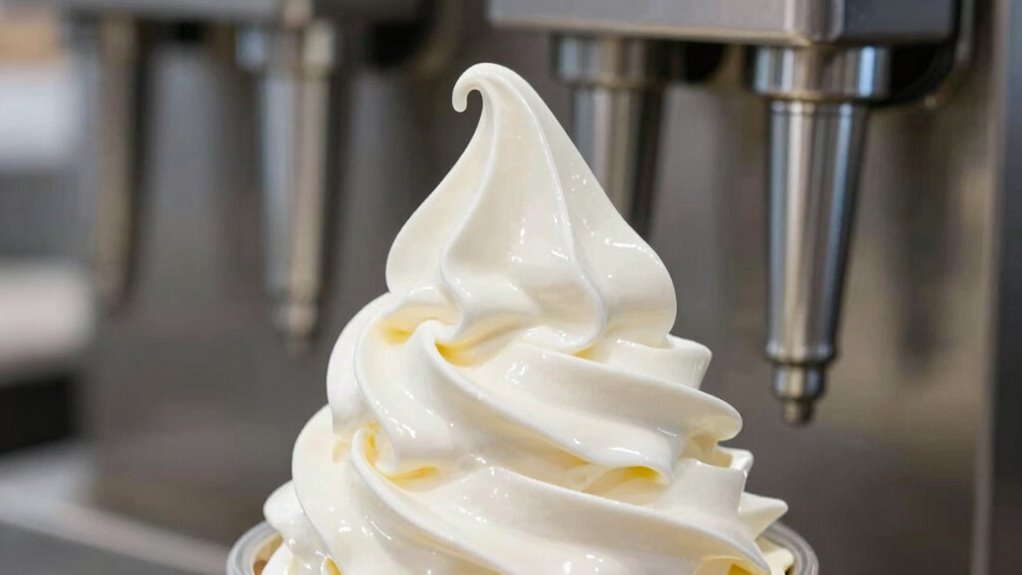
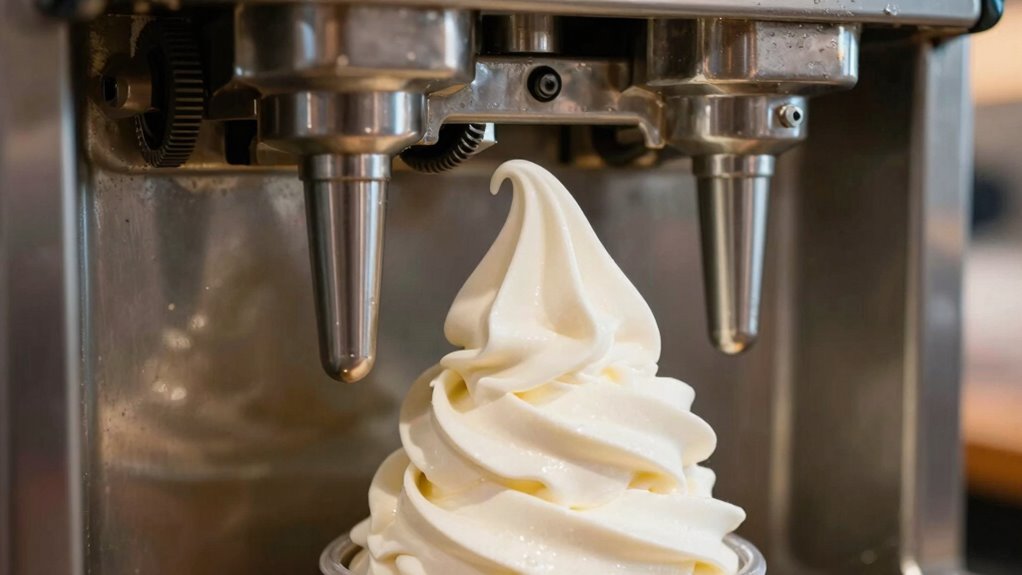
Achieving the perfect soft serve texture hinges on understanding the feed system and recipe formulation. While many focus solely on the ingredients, it’s crucial to realize that the machinery’s design and operation play a critical role in delivering that smooth, creamy consistency customers love. The feed system is the backbone of this process, controlling how ingredients are delivered and mixed. When functioning correctly, it guarantees the mixture is consistently aerated, which directly impacts flavor enhancement and the overall mouthfeel. If the feed system isn’t fine-tuned, even the best recipe can fall flat, resulting in a product that’s either too icy or too runny. Proper equipment maintenance is essential to keep the feed system operating at peak performance. Regular cleaning prevents build-up that can disrupt the flow of ingredients, while timely inspections help identify worn or damaged parts before they cause inconsistencies. For example, worn augers or blades can alter the amount of air incorporated into the mixture, affecting the texture and flavor perception. When equipment runs smoothly, it maintains the correct mix of air and flavor compounds, delivering a consistently delightful experience with every serving. Neglecting maintenance can lead to fluctuations in texture, which might seem minor but profoundly impact customer satisfaction. The feed system also influences flavor enhancement by ensuring ingredients are properly combined and aerated. Proper aeration adds volume and lightness, making the soft serve feel rich and indulgent without being overly dense. If the feed system isn’t calibrated correctly, the mixture might not incorporate enough air, resulting in a product that tastes flat or heavy. Conversely, over-aeration can produce a foamy texture that lacks the desired creaminess. Fine-tuning the feed system, along with precise recipe formulation, allows you to achieve that perfect balance, highlighting flavors and creating a memorable treat. Additionally, understanding how the feed system design interacts with other components can help optimize performance. An awareness of equipment maintenance best practices also plays a vital role in sustaining optimal operation. Regularly monitoring machine performance ensures that any issues are caught early before they impact the quality of the soft serve. Consistent calibration and adjustment of the feed system are essential for maintaining desired texture and flavor consistency. Moreover, staying informed about industry standards and technological advancements can provide insights into improving your equipment’s efficiency. Ultimately, the soft serve’s quality hinges on more than just the recipe written on paper. It depends on how well the feed system is designed, maintained, and operated. Regular equipment maintenance ensures the machinery functions at its best, supporting consistent flavor enhancement and texture. When you understand and refine these factors, you’re better equipped to produce soft serve that’s irresistibly smooth, flavorful, and satisfying every time. This holistic approach—combining proper feed system management with carefully crafted recipes—makes all the difference in achieving the ideal soft serve texture your customers keep coming back for.
soft serve ice cream machine feed system
As an affiliate, we earn on qualifying purchases.
As an affiliate, we earn on qualifying purchases.
Frequently Asked Questions
How Does Ambient Temperature Affect Soft Serve Texture?
Ambient temperature markedly impacts your soft serve texture by causing temperature fluctuations that can make the ice cream too soft or too hard. When it’s too warm, your equipment calibration might need adjustment to maintain consistency. Conversely, cooler temperatures help stabilize the feed system, ensuring a smooth texture. You should monitor environmental conditions regularly and fine-tune your equipment to keep the soft serve perfectly creamy, regardless of outside temperature changes.
Can Different Ice Cream Flavors Require Different Feed System Settings?
Yes, different ice cream flavors can require different feed system settings to achieve ideal texture and flavor customization. You should adjust the feed system calibration based on each flavor’s consistency, fat content, and mix viscosity. Proper calibration ensures smooth dispensing and prevents clogging or air bubbles. By tailoring the feed system to each flavor, you maintain consistent quality and enhance the customer experience.
What Maintenance Is Needed for Optimal Feed System Performance?
To keep your feed system performing at its best, you need to regularly calibrate it to guarantee proper consistency and flow. Additionally, nozzle cleaning is essential to prevent clogs and maintain smooth operation. You should check for wear and tear, clean parts thoroughly, and recalibrate as needed, especially when switching flavors or after extended use. These maintenance steps help preserve the quality of your soft serve and extend your equipment’s lifespan.
How Does Storage Temperature Influence Soft Serve Consistency?
Storage temperature directly impacts your soft serve’s consistency, flavor stability, and texture enhancement. Keep the mix at the recommended temperature to prevent ice crystal formation, which can cause a gritty texture. Proper storage guarantees your soft serve remains smooth, creamy, and flavorful. If it’s too cold or warm, you risk compromising quality. Regularly monitor and maintain ideal storage conditions to deliver the best possible soft serve experience to your customers.
Are There Specific Feed System Features for Low-Fat or Dairy-Free Options?
Imagine a smooth swirl of dairy-free ice cream, perfectly creamy and inviting. You’ll need alternative feed systems designed for dairy-free compatibility, featuring gentle, specialized augers and nozzles that handle plant-based ingredients without clogging. These systems guarantee consistent texture and flavor, even with low-fat or dairy-free options. By choosing the right feed system, you give your customers a delicious, allergy-friendly treat that looks and feels just as indulgent.
Conclusion
Remember, mastering soft serve texture isn’t just about the recipe; it’s like tuning an instrument—your feed system is the strings that set the tone. When you fine-tune this vital component, the creamy symphony flows effortlessly, turning each cone into a silky melody. So, don’t just follow a recipe blindly—think of your feed system as the heartbeat that keeps your soft serve alive and luscious. With the right rhythm, every scoop becomes a masterpiece.
Halloween Picks
halloween
As an affiliate, we earn on qualifying purchases.