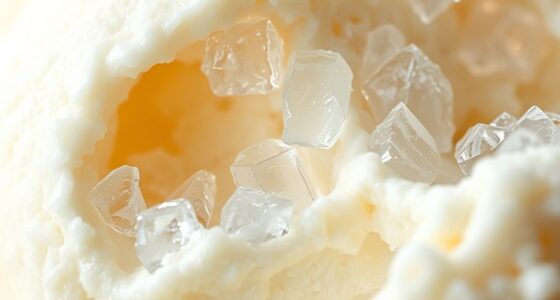
Coconut fat can make plant-based ice cream feel heavy because it’s high in saturated fat, which adds richness and a dense, melt-in-the-mouth texture. This fat coats your mouth thoroughly, creating a substantial and often overpowering sensation that can overshadow other flavors. Excessive coconut fat may cause the ice cream to become overly rich and sluggish. To discover ways to balance this, keep exploring how processing methods and ingredient choices influence texture and lightness.

Get baking supplies delivered free with Prime
- Fast, free delivery on millions of items
- Prime Video, Amazon Music and more included
- Member-only deals all year
Key Takeaways
- Coconut fat’s high saturated fat content contributes to a dense, rich, and heavy mouthfeel in plant-based ice cream.
- Its solid state at room temperature can create a thick, greasy texture that feels overwhelming.
- Excessive coconut fat can lead to a feeling of fullness and sluggishness after consumption.
- Processing methods influence how coconut fat impacts the ice cream’s creaminess versus heaviness.
- Balancing coconut fat with lighter ingredients helps prevent an overly heavy, dense texture.

Have you ever wondered what gives plant-based ice cream its rich, creamy texture? The answer often lies in dairy alternatives like coconut fat. Coconut fat is a popular ingredient because it mimics the mouthfeel and richness of traditional dairy fat, making plant-based options more appealing to those craving indulgence. But while it creates that luscious, smooth consistency, it can also contribute to a heavier, sometimes overwhelming experience. That’s because coconut fat has a high fat content, which considerably influences the overall texture and feeling in your mouth.
Dairy alternatives like coconut milk and coconut cream are favored in plant-based ice creams because they naturally contain a substantial amount of fat. This fat is what helps replicate the luxurious feel of dairy-based ice cream. However, coconut fat is unique compared to other plant-based fats. It’s mostly saturated fat, which solidifies at room temperature and melts when warmed, giving the ice cream that firm yet melt-in-your-mouth quality. But this high saturated fat content can also make the ice cream feel dense and heavy, especially if used excessively or not balanced with other ingredients. You might notice that some coconut-based ice creams leave you feeling more full or sluggish after eating, which is partly due to the richness and heaviness coconut fat imparts. Incorporating balance and moderation can help create a more harmonious texture and reduce the feeling of heaviness.
Additionally, processing methods can influence how coconut fat reacts in the final product, affecting both texture and perceived heaviness. The heaviness isn’t just about taste; it’s about how your body perceives the fat content. Coconut fat’s rich, creamy texture can dominate the palate, overshadowing the flavor nuances of other ingredients like fruits, nuts, or cocoa. Because of its high fat content, it tends to coat your mouth thoroughly, making each spoonful feel more substantial. While that can be delightful for those seeking decadence, it can also become too much for some, especially if the ice cream is loaded with coconut fat without enough balancing elements like water, air, or lower-fat ingredients. Additionally, the presence of saturated fats can influence how your body processes the product, contributing to feelings of heaviness. Incorporating healthy fats in moderation can help mitigate this effect without sacrificing creaminess.
In essence, coconut fat’s ability to provide creaminess is a double-edged sword. It creates that indulgent, satisfying texture that many associate with premium ice cream, but it can also make the product feel overly heavy if not carefully managed. As a consumer, understanding this helps you pick options that strike the right balance for your preference. For manufacturers, it’s about finding the sweet spot—using enough coconut fat to achieve that signature creaminess without overwhelming the palate or the body with excessive richness.
plant-based ice cream coconut fat reduction
As an affiliate, we earn on qualifying purchases.
As an affiliate, we earn on qualifying purchases.
Frequently Asked Questions
Does Coconut Fat Affect the Freezing Point of Plant-Based Ice Cream?
Yes, coconut fat affects the freezing point of plant-based ice cream. Its high fat composition, especially saturated fats, lowers the freezing point, making the ice cream softer and more scoopable. Coconut fat’s unique melting properties also influence texture, preventing it from becoming too hard. When formulating your ice cream, consider how coconut fat’s impact on the freezing point can alter creaminess and mouthfeel.
Are There Healthier Alternatives to Coconut Fat for Creaminess?
Yes, you can choose healthier alternatives to coconut fat for creaminess. Dairy substitutes like cashew or almond milk, combined with plant-based emulsifiers such as lecithin or gellan gum, can create a rich, smooth texture without the heaviness of coconut fat. These options provide a lighter, nutritious boost to your ice cream, making it better for your health while still delivering that satisfying creaminess you crave.
How Does Coconut Fat Impact the Flavor Profile of Plant-Based Ice Cream?
Sure, coconut fat brings that tropical flair, filling your ice cream with a rich coconut flavor that’s both bold and unmistakable. Its fat consistency adds a luxurious creaminess, making every spoonful feel indulgent. But beware—this flavor can dominate, overshadowing subtler notes. So, if you crave a more balanced taste, consider milder alternatives. Coconut’s impact is powerful, but it’s all about how much of that flavor you want to invite into your frozen treat.
Can the Heaviness Caused by Coconut Fat Be Reduced Without Affecting Texture?
You can reduce the heaviness caused by coconut fat by employing emulsification techniques that improve fat distribution, making the ice cream feel lighter. Additionally, using flavor masking ingredients can help hide the richness without altering the texture. Incorporating light, airy stabilizers or whipping the mixture slightly can also enhance creaminess while keeping the heaviness at bay. These methods allow you to achieve a balanced, enjoyable plant-based ice cream.
Is Coconut Fat Suitable for Those With Nut Allergies?
In the era of the internet, you’d think coconut fat was a safe bet, but if you have a nut allergy, it’s not always suitable. Coconut isn’t a tree nut, but cross reactivity can occur, causing allergic reactions in some individuals. Always check labels and consult your allergist before trying products with coconut fat. Better to be safe than sorry, especially if your immune system is sensitive to nuts.
Conclusion
So, next time you indulge in plant-based ice cream, pay attention to the coconut fat. It might seem innocent, but it’s quietly influencing how heavy and rich it feels on your palate. Could there be a way to enjoy that creamy texture without the weight? The secret lies in understanding coconut fat’s role—are you ready to uncover the surprising balance that could change your entire experience? The answer might just be closer than you think.
Columbus Day / Indigenous Peoples' Day Picks
long weekend sales
As an affiliate, we earn on qualifying purchases.