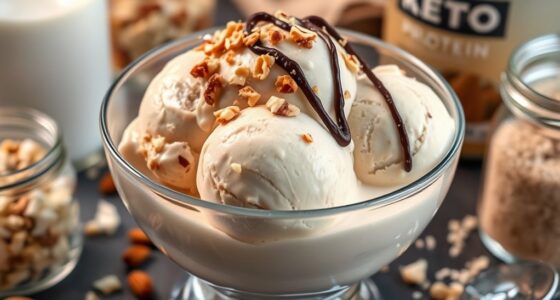
Fermented milk and kefir are classic bases for making ice cream that boost flavor and health benefits. They add natural tanginess, creamy texture, and a boost of probiotics that support gut health. Fermentation breaks down lactose and proteins, making the ice cream easier to digest and more nutritious. Using these traditional ingredients creates a delicious, nourishing treat with a unique flavor profile. Keep exploring to discover how these bases can elevate your frozen desserts.

Get baking supplies delivered free — and shop member deals
- Fast, free delivery on millions of items
- Access to Prime Big Deal Days deals on October 6–7
- Prime Video, Amazon Music and more included
Key Takeaways
- Kefir is a traditional fermented milk product rich in probiotics, ideal as a healthful ice cream base.
- Fermentation enhances milk’s digestibility and nutrient bioavailability, making kefir a nourishing ingredient.
- Using kefir in ice cream adds natural tanginess and creaminess, creating unique flavor profiles.
- Fermented milk bases like kefir support gut health while providing a functional, probiotic-rich dessert option.
- Incorporating kefir leverages traditional fermentation benefits, blending health and flavor in ice cream recipes.

Ever wondered why fermented milk products like kefir have become popular health staples? It’s because they pack a punch when it comes to probiotic benefits, offering your gut a boost that’s hard to match. The magic starts with the fermentation process, during which beneficial microorganisms transform the milk into a tangy, nourishing beverage. This fermentation isn’t just about flavor; it fundamentally enhances the nutritional profile of the milk, making it easier to digest and enriching it with live probiotics. These friendly bacteria help balance your gut flora, improving digestion, supporting immune function, and even potentially reducing inflammation. When you incorporate kefir into your diet, you’re not only enjoying a creamy, tangy drink but also tapping into a long-standing tradition of healthful eating.
The fermentation process is quite fascinating. It involves introducing specific bacteria and yeast cultures to milk, which then multiply and produce lactic acid. This acid gives kefir its distinctive sourness and creates an environment inhospitable to harmful bacteria. The result is a product loaded with probiotics, which are live microorganisms that confer health benefits when consumed in adequate amounts. Unlike regular milk, kefir undergoes this natural fermentation, resulting in a beverage that’s not just more digestible but also richer in nutrients. The process helps break down milk proteins and lactose, making kefir suitable for many people who are lactose intolerant. Plus, the fermentation process enhances the bioavailability of vitamins and minerals, such as B vitamins, calcium, and magnesium, further boosting its nutritional value.
In terms of culinary uses, fermented milk like kefir has a versatile role in creating traditional bases for ice cream. Its tangy flavor adds a unique depth to frozen desserts, and the fermentation process lends a natural creaminess that reduces the need for added fats or thickeners. When used as a base, kefir imparts a slight sourness that balances sweetness beautifully, resulting in a more complex flavor profile. The probiotics in kefir also contribute to the overall healthfulness of the ice cream, transforming a simple treat into a functional food. You can experiment with kefir in recipes, blending it with fruits, honey, or spices to craft revitalizing, probiotic-rich ice creams that are both delicious and beneficial for your gut health.
As an affiliate, we earn on qualifying purchases.
Frequently Asked Questions
How Does Fermentation Affect Ice Cream Shelf Life?
Fermentation improves ice cream shelf life by enhancing preservation through microbial stability. When you incorporate fermented milk or kefir, the natural probiotics outcompete spoilage organisms, slowing down deterioration. This process extends freshness and prevents souring or mold growth. You can enjoy longer-lasting ice cream while benefiting from the added flavors and health perks fermentation provides, making your treat both delicious and safer to store.
Can Fermented Milk Be Used in Vegan Ice Cream Recipes?
Yes, you can use fermented milk in vegan ice cream recipes by leveraging plant-based alternatives that mimic dairy, like coconut milk or cashew cream, combined with fermentation techniques. For example, imagine creating a coconut yogurt base fermented with probiotics, then blending it into your vegan ice cream. This approach adds tangy flavor and improves texture, showcasing how fermentation can enhance plant-based desserts for a richer, dairy-free experience.
What Are the Best Flavor Pairings With Kefir-Based Ice Cream?
You’ll love pairing kefir-based ice cream with fresh fruit like berries, peaches, or mango for a sweet, tangy contrast. Spice combinations like cinnamon, cardamom, or ginger enhance its flavor, adding warmth and depth. Consider mixing in crushed nuts or honey for extra texture. These pairings highlight kefir’s tang while balancing sweetness, creating a delicious, invigorating treat your taste buds will enjoy.
Are There Any Allergen Concerns With Fermented Milk Ice Creams?
Like a ticking time bomb, allergen concerns with fermented milk ice creams can surprise you. If you’re lactose intolerant or allergic to dairy, you might experience discomfort. Always check allergen labeling carefully—fermented dairy still contains milk proteins that can trigger reactions. While some fermented milk products are lower in lactose, they aren’t completely free of allergens, so it’s wise to be cautious before indulging.
How Does Fermentation Influence the Nutritional Content of Ice Cream?
Fermentation boosts the nutritional content of ice cream by increasing microbial diversity and enhancing nutrients. You’ll notice improved digestibility, as beneficial microbes break down complex proteins and fats. Plus, fermentation can produce B vitamins and bioactive compounds, making your ice cream more nutritious. So, by choosing fermented bases, you enjoy a richer, more healthful treat that supports your gut health and provides added nutrient benefits.
Conclusion
By now, you realize that fermented milk and kefir are truly the superheroes of ice cream bases, transforming simple desserts into extraordinary treats. With their rich probiotics and tangy flavor, they can elevate your ice cream game to legendary status—almost like creating a dessert masterpiece that’ll blow everyone’s mind. So, don’t hold back—embrace these traditional ingredients and unleash your inner artisan. Your taste buds will thank you for the delicious revolution you’re about to start!
Fall Picks
fall essentials
As an affiliate, we earn on qualifying purchases.