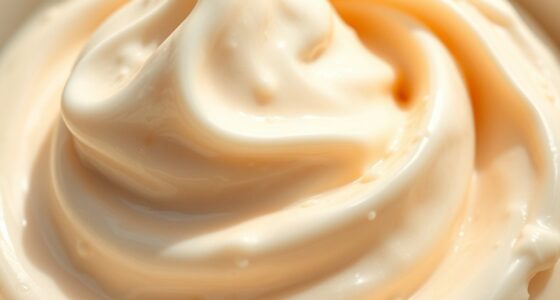
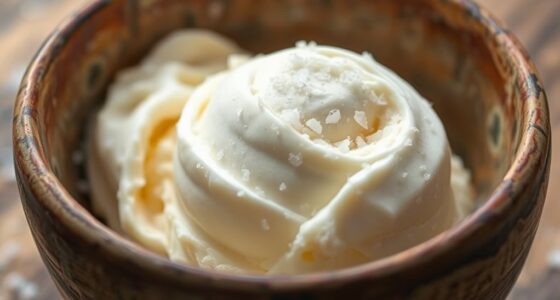
Soft serve’s creamy texture and uniform flavor come from careful mix ratios and clever machine design. By controlling ingredient proportions and adjusting the machinery’s air incorporation and temperature, you can achieve the perfect balance of fluffiness and richness. The machine’s settings influence how much air is whipped into the mix and how it’s cooled, ensuring consistent quality each time. Keep exploring to discover how these factors work together for your ideal soft serve.
Key Takeaways
- Precise mix ratios and ingredient control ensure consistent flavor and texture in soft serve.
- Air incorporation during freezing creates a light, fluffy texture and influences product volume.
- Temperature regulation prevents over-hardening or overly soft soft serve, maintaining quality.
- Machine design, including adjustable overrun and temperature settings, affects softness and creaminess.
- Versatility in equipment allows quick flavor adjustments and customization for various preferences.

Have you ever wondered what makes soft serve ice cream so smooth and creamy? It all comes down to the unique way it’s made and the design of the machines that produce it. Soft serve’s appealing ice cream texture is the result of carefully controlled ingredients, mix ratios, and machine technology. When you’re enjoying that velvety consistency, remember that the right balance of air incorporation and temperature plays a key role in achieving that signature creaminess. The process involves whipping air into the mixture as it’s frozen, which not only creates that light, fluffy feel but also helps with flavor distribution, allowing for a more uniform taste experience. This is why soft serve is often seen as more indulgent compared to traditional ice cream.
Soft serve’s smoothness comes from air, temperature control, and precise mix ratios for perfect texture and flavor.
Flavor customization is another vital aspect that the equipment and mix ratios influence. Because soft serve machines blend flavors directly into the mix, they can easily adapt to a range of tastes—whether you prefer classic vanilla, chocolate, or more inventive options like swirls or fruit blends. The ability to tweak the mix ratios allows operators to adjust the richness and sweetness, ensuring each serving matches customer preferences. Furthermore, the machines are designed to maintain consistency in texture and flavor with each batch, thanks to precise control over ingredients and temperature.
The design of soft serve machines is engineered to optimize both the texture and flavor customization capabilities. These machines typically feature a chilled cylinder where the mixture is continuously agitated and whipped with air, creating that distinctive soft, airy consistency. They have adjustable settings for controlling the amount of air (overrun) and temperature, which directly impact the ice cream texture. A higher overrun results in a lighter, more voluminous product, while a lower overrun produces a denser, richer feel. Precise temperature control prevents the mixture from freezing too hard or becoming too soft, ensuring a perfect scoop every time. Additionally, the choice of machine design influences how well the equipment performs over time and its ease of cleaning.
Understanding how mix ratios and machine design work together reveals why soft serve is so versatile and appealing. Whether you’re crafting a classic vanilla or experimenting with new flavors, the equipment allows for quick adjustments to meet your desired texture and taste profile. This synergy between ingredients and technology is what makes soft serve a popular choice for ice cream shops, concessions, and even home machines. The result is a smooth, creamy treat you can personalize to your liking, with consistent quality and delightful flavor every time.
Frequently Asked Questions
How Does Temperature Affect Soft Serve Consistency?
Temperature control directly impacts your soft serve’s texture consistency. If the temperature is too high, the ice cream becomes too soft and loses its firmness. Too low, and it hardens, making it difficult to serve smoothly. Maintaining a precise temperature guarantees your soft serve stays creamy and easy to dispense. Consistent temperature regulation helps you achieve the ideal texture, keeping your soft serve appealing and perfect every time.
Can Soft Serve Be Made With Dairy-Free Ingredients?
Yes, you can turn soft serve into a dairy-free delight, like painting a picture with vibrant colors. Using dairy alternatives like almond, soy, or coconut milk, you create vegan options that mimic traditional soft serve. Just remember, these plant-based ingredients may require adjustments in mix ratios and machine settings to achieve the same smooth, creamy texture you love. Experimenting helps you craft delicious dairy-free soft serve every time.
What Maintenance Is Required for Soft Serve Machines?
You need to regularly perform cleaning protocols on your soft serve machine to prevent buildup and guarantee quality. This includes cleaning the nozzles, drip trays, and internal components after each use. Additionally, you should regularly check and calibrate the machine to maintain proper texture and consistency. Proper maintenance keeps your machine running smoothly, extends its lifespan, and ensures you serve delicious, consistent soft serve every time.
How Long Can Soft Serve Be Stored Before Serving?
Imagine you’re a time traveler in the 21st century, and you wonder how long soft serve can last before serving. Typically, you should store it for no more than 24 hours in a refrigerator to prevent spoilage risks. Beyond that, the quality diminishes, and bacteria can develop. Always keep it chilled and use it within this timeframe to guarantee freshness and safety for your guests.
Are There Health Benefits Associated With Soft Serve?
Soft serve offers some health benefits due to its nutritional content, such as calcium and vitamin D, which support bone health. However, it also contains added sugars and fats, so moderation is key. If you choose lower-fat or reduced-sugar options, you can enjoy soft serve as an occasional treat without compromising your health. Being mindful of portion sizes helps you balance indulgence with your overall nutrition goals.
Conclusion
Now that you know the importance of proper mix ratios and machine design, you’re better equipped to make delicious soft serve. Remember, achieving the perfect texture involves precise measurements and reliable equipment. Did you know that the global soft serve market is expected to reach $7.2 billion by 2025? With this growth, understanding these fundamentals puts you ahead in creating high-quality treats. Keep experimenting, and you’ll master soft serve in no time!