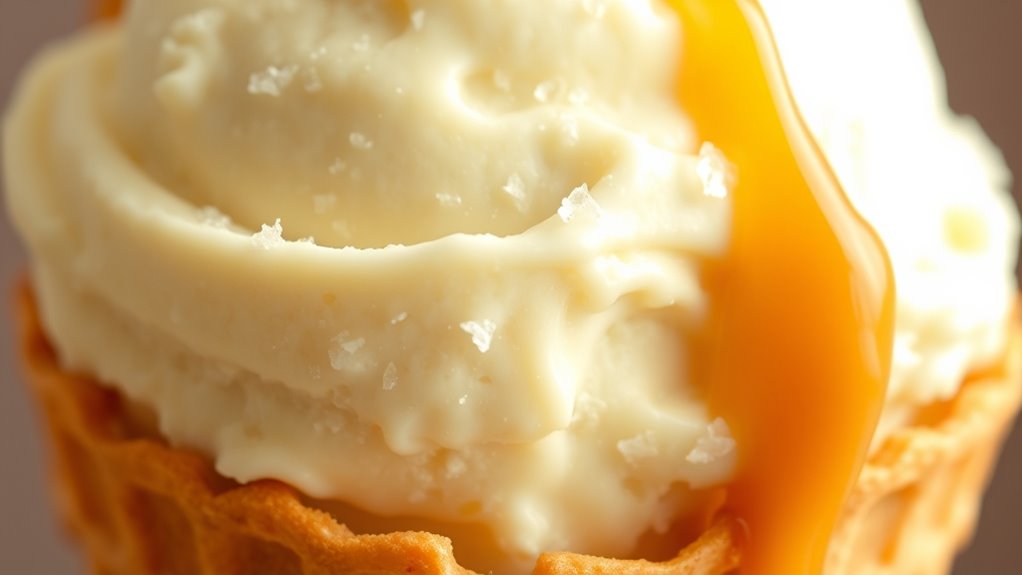

To serve ice cream with the best texture and flavor, aim for a temperature around 6°F to 10°F (-14°C to -12°C). This range keeps it firm yet creamy, enhancing taste without melting too quickly. If it’s too cold, flavors can dull; if too warm, it melts fast and loses structure. Using a chilled scoop and timing your servings helps manage this. Keep exploring to discover more tips for perfect ice cream serving.
Key Takeaways
- Serve ice cream at 6°F to 10°F (-14°C to -12°C) for optimal firmness and flavor.
- Allow 5-10 minutes at room temperature to soften before serving.
- Use a chilled scoop to maintain ideal serving temperature during scooping.
- Store in the coldest part of the freezer to prevent premature melting.
- Avoid extended exposure to room temperature to preserve texture and prevent melting.
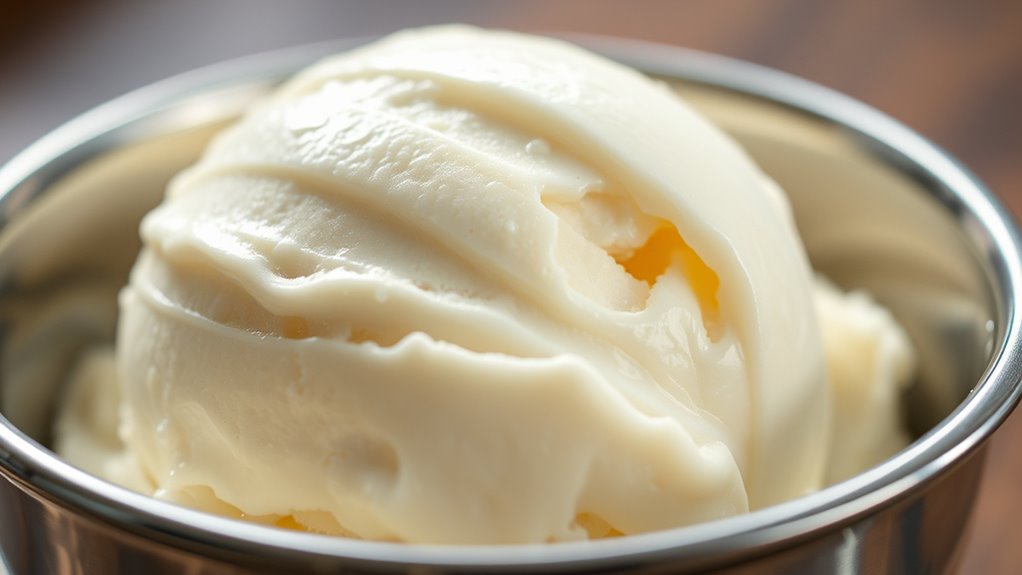
Serving ice cream at the right temperature is key to enjoying its full flavor and texture. When you serve it too cold, you miss out on the richness of its flavor profile because the cold dulls your taste buds. Conversely, if it’s too warm, it melts too quickly, losing its structure and making a mess. The secret lies in understanding the ice cream melting point and aiming for the *ideal* serving temperature. The ice cream melting point is around -5°F to 0°F (-20°C to -18°C), but this is just a starting point. To get the best experience, you want to serve your ice cream slightly above this range—around 6°F to 10°F (-14°C to -12°C). At this temperature, the ice cream maintains its firm yet creamy texture, allowing flavors to fully develop on your palate.
Achieving the *perfect* serving temperature isn’t just about getting the texture right; it’s about enhancing the flavor experience. When you scoop your ice cream at the right temperature, it’s soft enough to be easily scooped but firm enough to hold its shape. You notice the difference immediately—flavors are more pronounced, and the creaminess feels just right. If it’s too cold, your taste buds won’t detect the subtleties of vanilla, chocolate, or fruit. If it’s too warm, the ice cream quickly turns into a liquid mess, and you lose the satisfying bite. Keeping your ice cream at the *ideal* serving temperature encourages a balance where the texture is smooth and the flavor is bold. Maintaining the correct serving temperature can also help prevent the formation of ice crystals that compromise the texture.
To reach this *perfect* temperature, consider how long the ice cream has been out of the freezer. Usually, 5 to 10 minutes at room temperature is enough to soften it to the *ideal* point. If you’re serving multiple scoops, try to work quickly so the ice cream doesn’t warm up too much and start melting. Using a chilled scoop can help maintain the right temperature as you serve. It’s also helpful to store your ice cream at the back of the freezer, where it’s coldest, and avoid leaving it out for extended periods.
Frequently Asked Questions
How Does Ice Cream Temperature Affect Its Shelf Life?
You should know that ice cream temperature considerably impacts its shelf life. When stored at proper conditions, it stays fresh longer. If it’s too warm, ice crystals form and cause texture issues, leading to faster spoilage. Keep your ice cream consistently frozen to prevent ice crystal formation, which can compromise quality and reduce shelf life. Proper storage conditions are essential for maintaining its flavor, texture, and overall freshness.
What Tools Are Best for Measuring Ice Cream Temperature Accurately?
You should use digital thermometers for precise internal temperature readings of your ice cream, ensuring it’s at the ideal serving temperature. Infrared devices are also great for quickly measuring surface temperature without contact. Both tools help you maintain quality and safety, so you can serve ice cream at the perfect texture. Keep these tools handy in your kitchen or serving area for accurate, immediate results whenever needed.
Can Serving Temperature Influence Flavor Perception?
Imagine tasting ice cream that’s just a bit too cold—it dulls your flavor perception, like a muted symphony. Serving ice cream at the right temperature enhances flavor release, making each bite more vibrant and satisfying. When temperatures are ideal, your sensory perception sharpens, revealing nuanced flavors you might miss if it’s too cold or warm. So yes, temperature directly influences how delicious your ice cream truly tastes.
How Does Ambient Room Temperature Impact Ice Cream Serving?
Room temperature considerably impacts how you serve ice cream; if the room is too warm, it increases the melting rate, causing the ice cream to soften quickly. You might notice it loses its firm texture and becomes runny sooner. To keep it at the perfect serving temperature, aim for a cooler room environment. This way, your ice cream stays firm longer, preserving flavor and texture for an enjoyable treat.
Are There Health Risks Associated With Serving Ice Cream Too Cold?
Serving ice cream too cold can cause dental sensitivity and, surprisingly, promote bacterial growth if it’s left out too long. You might get a sharp pain when biting into it, especially if your teeth are sensitive. Also, overly cold temperatures create a breeding ground for bacteria, which can lead to infections or spoilage. So, aim for the ideal serving temperature to enjoy your treat safely and comfortably.
Conclusion
Now that you know the importance of serving ice cream at the perfect temperature, you can impress your guests like a master chef. Remember, just like a well-timed quill stroke on a parchment, the right serve temperature guarantees every scoop is creamy and delightful. Don’t let your ice cream turn into a frozen relic; serve it at the ideal degree for that perfect mouthful. Keep it cool, but not too cold—your taste buds will thank you.