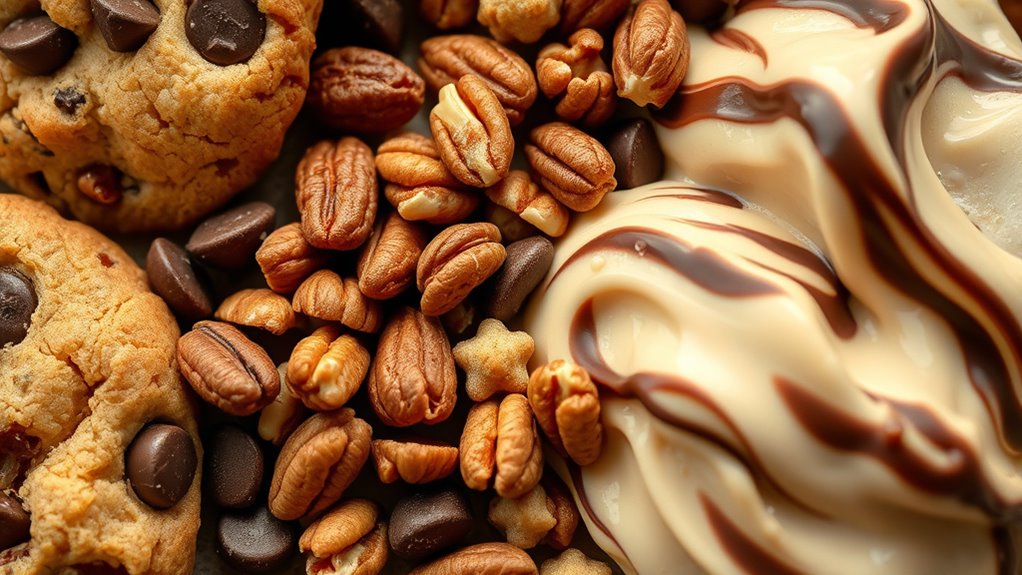

To guarantee even mix-in distribution of nuts, cookies, and swirls, you need to understand how ingredient characteristics affect blending. Use gentle yet thorough mixing techniques to avoid clumping or over-distribution, adjusting for differences in size, density, and viscosity. Environmental factors like temperature also play a role, so optimizing conditions helps ingredients spread evenly. Mastering these mechanics ensures your baked goods have consistent flavor and texture—keep exploring for more tips to perfect your process.
Key Takeaways
- Consistent dispersion relies on balancing mixing techniques to prevent clumping or uneven distribution of nuts, cookies, and swirls.
- Ingredient properties like size, density, and surface characteristics influence how mix-ins spread during blending.
- Gentle folding preserves delicate ingredients but may require longer or strategic mixing to ensure uniformity.
- Environmental factors such as temperature and viscosity significantly impact the flow and integration of mix-ins.
- Using stabilizers or emulsifiers can enhance the interaction and even distribution of oil-based and water-based components.
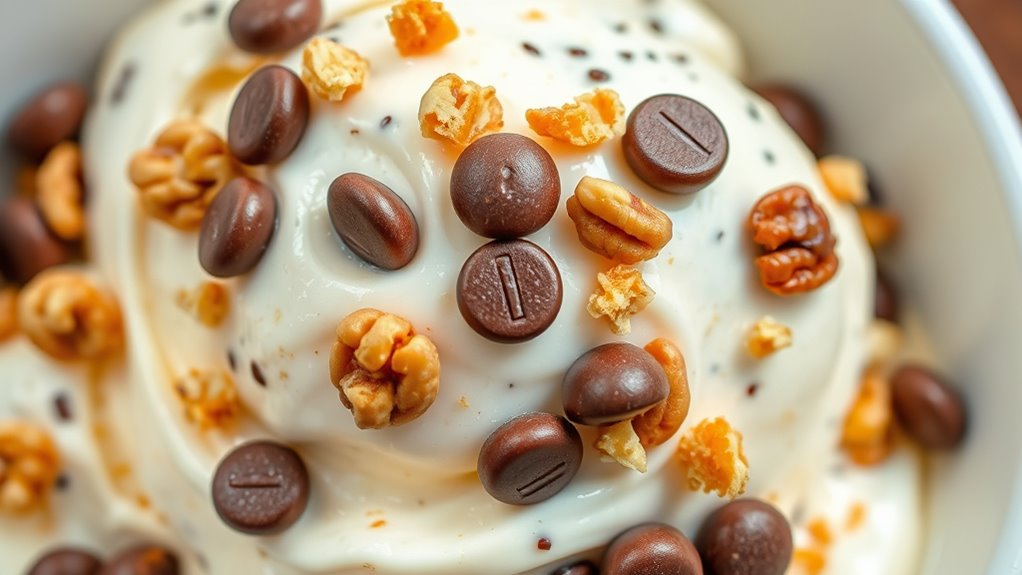
Understanding how mix-in components distribute within a system is essential for optimizing performance and functionality. When you’re working with ingredients like nuts, cookies, or swirls, achieving a consistent mix in uniformity is key. If these components aren’t evenly dispersed, some parts of your product will be overloaded, while others might lack the intended flavor or texture. Proper ingredient dispersion ensures that each bite or serving offers a balanced experience, which directly impacts customer satisfaction or the quality of your final product.
Consistent mix-in distribution ensures balanced flavor and texture in every bite.
The process begins with recognizing that different mix-ins have varying sizes, densities, and surface properties. Nuts, for example, are often denser and larger compared to small cookie crumbs or liquid swirls. These differences influence how they distribute during mixing. To optimize ingredient dispersion, you need to understand how each component behaves within the system. For instance, larger or heavier mix-ins tend to settle or clump if not properly integrated, leading to uneven distribution. This is where the mechanics of mixing come into play. Proper agitation, whether through stirring, tumbling, or blending, helps break up clumps and distribute ingredients evenly throughout the base.
The method of mixing directly impacts the mix in uniformity. Gentle folding may preserve delicate swirls but can result in uneven ingredient dispersion if not done thoroughly. Conversely, vigorous mixing might cause breakage or over-distribution of some components, leading to a less controlled product. You need to find the balance, adjusting speed and duration to ensure that each component is incorporated smoothly without damaging its structure.
Temperature and viscosity also influence how well ingredients disperse. Warmer environments or more fluid bases allow liquids or semi-liquids like swirls to spread more evenly, while colder or thicker mixtures might cause clumping or uneven spread. Fine-tuning these conditions helps you control how mix-ins distribute within the system, optimizing the overall uniformity. Additionally, understanding the different types of ingredients involved can help in selecting appropriate mixing techniques to improve distribution quality.
Finally, understanding the interaction between different ingredients is essential. Some components may naturally repel or attract each other, affecting their distribution. For example, oil-based nuts might not mix uniformly with water-based cookies unless emulsifiers or stabilizers are used. Recognizing these interactions helps you design mixing processes that promote better ingredient dispersion, ensuring a more consistent and appealing final product.
In essence, mastering the mechanics of mix-in distribution involves paying attention to ingredient characteristics, mixing techniques, and environmental conditions. When you do, you’ll achieve a more uniform distribution, enhancing both the quality and appeal of your creations.
Frequently Asked Questions
How Do Different Mix-Ins Affect Overall Texture?
Different mix-ins create texture variation, making each bite more interesting and enjoyable. Nuts add crunch, cookies bring a chewy or crumbly feel, and swirls add smoothness. If you mix in evenly, you guarantee uniformity, so every bite has a consistent experience. However, uneven distribution can lead to pockets of different textures, which might surprise or delight your palate, depending on your preference.
Can Mix-In Distribution Be Customized for Dietary Restrictions?
Your mix-in distribution can definitely be customized for dietary restrictions, transforming your treat into a culinary masterpiece. You can include gluten-free options and vegan substitutions, ensuring everyone gets to enjoy it without compromise. With careful placement, your mix-ins become a symphony of flavor and texture that caters to all needs. Imagine every bite bursting with tailored goodness—your creation becomes an inclusive delight, dazzling everyone’s taste buds with thoughtful perfection.
What Equipment Ensures Even Mix-In Distribution?
You guarantee even mix-in distribution by using specialized equipment like paddle mixers, ribbon blenders, or high-shear mixers. These tools promote thorough mixing through consistent agitation and proper mixing techniques. Regular equipment maintenance is essential; clean and calibrate your equipment frequently to prevent uneven distribution caused by wear or residue. By combining the right mixing techniques with well-maintained equipment, you guarantee uniform incorporation of nuts, cookies, and swirls into your products.
How Does Temperature Influence Mix-In Integration?
Temperature control plays a vital role in mix-in integration because it affects ingredient compatibility and how well ingredients blend. If the temperature is too high, nuts or cookies might become greasy or break apart, disrupting even distribution. Conversely, if it’s too low, ingredients may not incorporate smoothly. Maintaining the right temperature guarantees ingredients mix uniformly, preserving texture and flavor, and achieving consistent results in your final product.
Are There Best Practices for Storing Mixed-In Desserts?
To store mixed-in desserts properly, keep them in an airtight container in the refrigerator to preserve flavor enhancement and visual appeal. Avoid freezing, as it can cause texture changes, especially for nuts and cookies. Consume within a few days for the best taste and presentation. Make sure to store desserts away from strong-smelling foods to prevent flavor contamination and maintain their visual appeal.
Conclusion
Now that you understand how nuts, cookies, and swirls distribute throughout your treat, you’re better equipped to create a perfectly balanced dessert. Remember, a little bit of everything goes a long way—like they say, “Variety is the spice of life.” So, don’t be afraid to experiment with your mix-ins, adjusting quantities and placements until you get that ideal swirl or crunch. Keep mixing, and let your creativity shine through every bite!