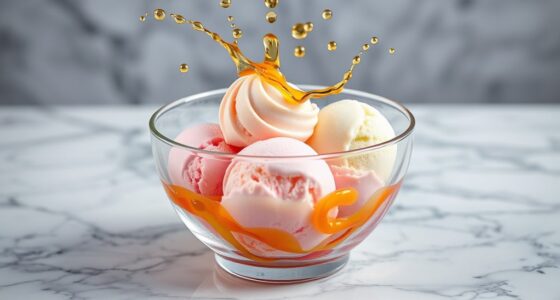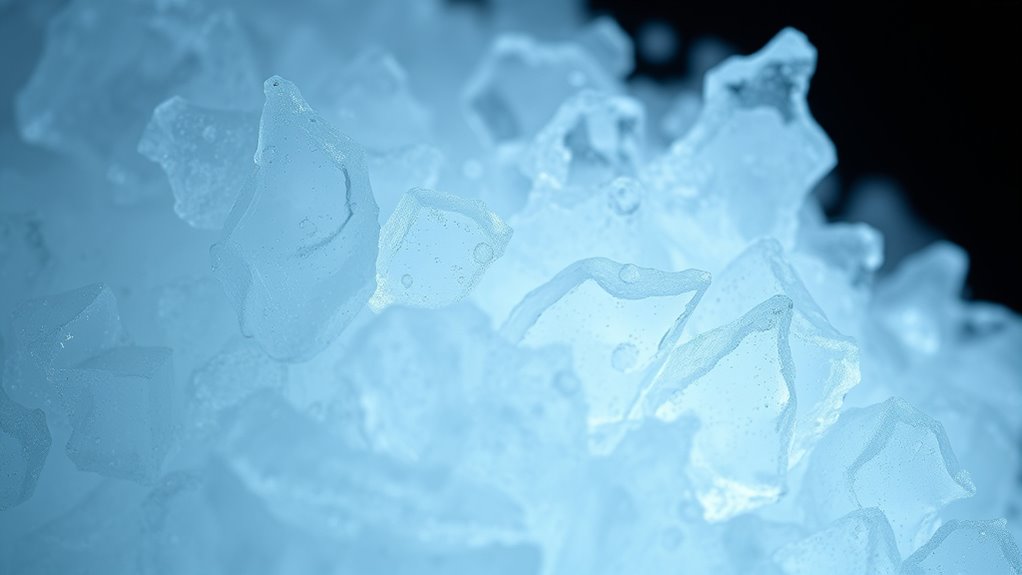

Inside the pint, under a microscope, you’ll see a complex network of tiny ice crystals and fat globules that shape the ice cream’s texture and mouthfeel. Smaller, uniform crystals make it smooth and velvety, while larger ones feel gritty. Fat globules are evenly dispersed, giving it a rich, creamy feel. Seeing these microstructural details helps you understand what makes your ice cream delightful—discover more about these intricate components as you explore further.

Get baking supplies delivered free — and shop member deals
- Fast, free delivery on millions of items
- Access to Prime Big Deal Days deals on October 6–7
- Prime Video, Amazon Music and more included
Key Takeaways
- Under a microscope, ice cream shows a network of ice crystals, fat globules, and air pockets shaping its texture.
- Smaller, uniform ice crystals contribute to a smooth, velvety microstructure, while larger crystals cause icy textures.
- Fat globules appear as tiny spheres evenly dispersed, influencing creaminess, melting behavior, and stability.
- Microstructure analysis reveals how processing methods affect crystal size and fat distribution, impacting overall quality.
- Visualizing microstructure helps optimize production, storage, and sensory qualities of ice cream.

Understanding the microstructure of ice cream is essential to appreciating how its texture and mouthfeel are developed. When you look at ice cream under a microscope, you see a complex network of tiny components working together to create the creamy experience you enjoy. Two critical aspects of this microstructure are cream crystallization and fat globule distribution. These elements influence everything from smoothness to scoopability, making them vital to understanding what makes ice cream appealing.
Cream crystallization occurs as the ice cream cools and freezes. Water molecules form ice crystals, which are visible at the microscopic level. The size and shape of these crystals directly impact the texture: smaller, uniformly-sized crystals yield a smooth, velvety mouthfeel, while larger crystals can cause a gritty or icy sensation. During freezing, controlling the rate of cooling helps prevent the formation of large crystals, leading to a more desirable product. This process is carefully managed in commercial production, but even homemade ice cream benefits from rapid freezing techniques to minimize crystal growth. The stability of these crystals over time also matters; if they grow larger during storage, your ice cream can become icy and less enjoyable. That’s why proper storage at consistent, cold temperatures is crucial for maintaining quality.
Fat globules are another key component that define your ice cream’s texture. These tiny spheres of fat are dispersed throughout the mixture, and their distribution is critical. When fat globules are evenly spread out, they create a smooth, rich mouthfeel, blending seamlessly with ice crystals and air bubbles. If fat globules clump together or are unevenly distributed, you’ll notice a greasy or grainy texture. The processing methods, such as churning speed and homogenization, are designed to break down fat into smaller globules and evenly disperse them. This not only improves mouthfeel but also influences how the ice cream melts. Well-distributed fat globules help create a stable structure that resists melting too quickly, ensuring you get a consistent flavor and texture from the first spoonful to the last.
home ice cream maker with adjustable churning speed
As an affiliate, we earn on qualifying purchases.
As an affiliate, we earn on qualifying purchases.
Frequently Asked Questions
How Does Temperature Affect Ice Crystal Growth in Ice Cream?
You’ll notice that temperature influences ice crystal growth in ice cream by affecting the nucleation process and crystal coalescence. When it’s colder, nucleation occurs more rapidly, creating many small crystals. Warmer temperatures slow nucleation, allowing crystals to grow larger through crystal coalescence. This results in a creamier texture. Proper temperature control during freezing minimizes large crystals, ensuring your ice cream stays smooth and enjoyable.
What Role Do Stabilizers Play in Ice Cream Microstructure?
They say “a chain is only as strong as its weakest link,” and stabilizers are your ice cream’s backbone. You choose stabilizer types like guar gum or carboxymethyl cellulose to prevent ice crystal growth, ensuring smooth texture. They modify the microstructure by stabilizing air bubbles and fat globules, which results in creaminess and consistency. Without stabilizers, your ice cream might turn icy and lose its delightful mouthfeel.
Can Microstructure Analysis Improve Ice Cream Flavor Retention?
Microstructure analysis can definitely improve ice cream flavor retention by revealing how flavor compounds diffuse within the microstructure. When you understand the microstructure stability, you can optimize the distribution of fats, stabilizers, and air pockets to slow down flavor diffusion. This means you get a longer-lasting flavor experience. By focusing on these microstructural features, manufacturers can create ice creams that hold their flavor better over time.
How Does Fat Content Influence Ice Crystal Formation?
You might think more fat means bigger ice crystals, but actually, fat globules play a vital role in crystal nucleation. Higher fat content inhibits large ice crystal formation by coating existing crystals, preventing them from growing. This results in a smoother texture. So, by adjusting fat levels, you influence ice crystal development, ensuring your ice cream stays creamy and avoids unwanted ice crystal growth.
Are There Differences in Microstructure Between Homemade and Commercial Ice Cream?
You’ll notice that homemade and commercial ice creams have distinct microstructures, leading to texture differences. Homemade versions often have larger ice crystals and more ingredient variance, giving them a creamier, less uniform feel. Commercial ice creams, with controlled freezing and stabilizers, typically have smaller crystals and a smoother texture. These microstructural differences directly impact how each type of ice cream feels and melts in your mouth.
Conclusion
As you observe the microstructure of ice cream, you see the intricate dance of ice crystals, fat globules, and air bubbles shaping its texture. You notice how each component interacts, supporting and balancing each other. You understand how the crystals freeze, the fats emulsify, and the air aerates, creating a creamy, smooth, and stable treat. You realize that beneath every scoop lies a delicate, complex microcosm working together to delight your senses.
Fall Picks
fall essentials
As an affiliate, we earn on qualifying purchases.