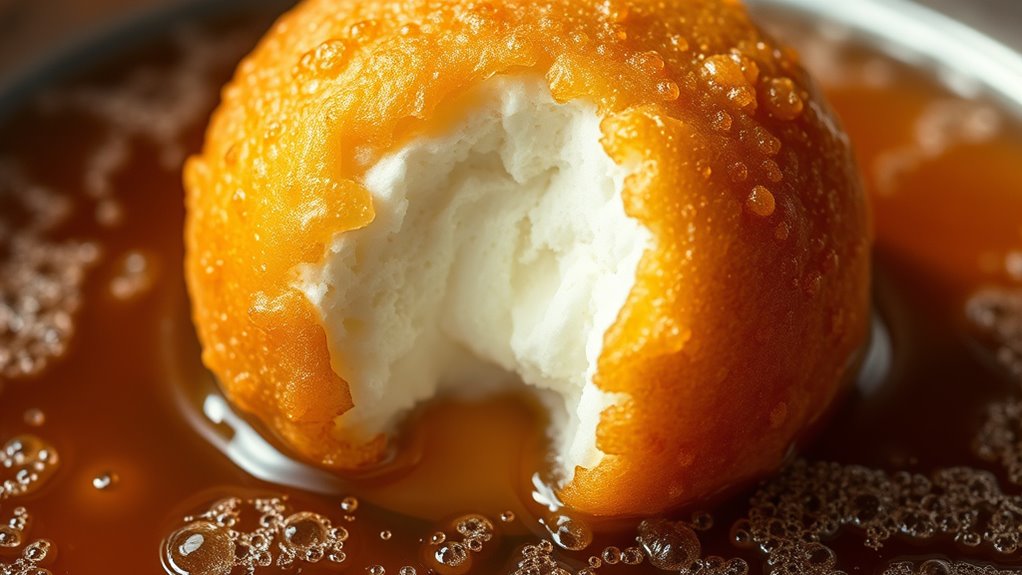

Fried ice cream stays frozen in hot oil because its thick coating acts as an insulator, slowing heat transfer from the hot oil to the ice inside. This barrier, often made of batter or breadcrumbs, limits how quickly heat reaches the interior, allowing the ice to remain frozen longer. The process balances rapid surface heating and insulation, creating a crispy exterior while keeping the center cold. Keep exploring to discover how this clever physics trick really works.
Key Takeaways
- The ice cream is coated with insulating batter, slowing heat transfer and delaying melting in hot oil.
- The rapid freezing beforehand ensures the core remains solid despite external heat.
- The coating’s low thermal conductivity limits heat flow, protecting the ice cream inside.
- Heat causes the outer layer to cook and form a crust, while the interior stays frozen due to insulation.
- Controlled phase change at the surface allows melting without compromising the frozen core.

Fried ice cream is a delightful dessert that seems to defy logic, but its creation involves fascinating physics principles. At the core of this paradox is how it stays frozen despite being submerged in hot oil. To understand this, you need to regard thermal transfer and phase change. When you fry ice cream, heat begins to transfer from the hot oil to the dessert’s outer layer through conduction and convection. Normally, this would cause the ice cream to melt rapidly. However, the secret lies in how the ice cream is prepared and coated beforehand.
Before frying, the ice cream is quickly frozen and then coated with a thick layer of batter or breadcrumbs. This coating acts as an insulating barrier, slowing down the transfer of heat. When you place the coated ice cream into hot oil, the heat doesn’t immediately reach the ice core. Instead, the heat flows into the outer layer, raising its temperature while the ice inside remains frozen due to the low thermal conductivity of the coating. The process involves a phase change: the ice inside remains in solid form because the transfer of heat isn’t enough to cause melting immediately. Instead, the heat causes the water molecules at the surface of the ice to undergo a phase change from solid to liquid, but because of the coating, this transition is delayed and localized at the boundary.
Coating acts as insulation, delaying heat transfer and phase change, keeping ice cream frozen inside hot oil.
As the hot oil transfers heat to the exterior, the batter or breadcrumb coating warms up and begins to crisp, creating a barrier that slows further heat transfer. Meanwhile, the interior stays frozen because the heat is not sufficient to reach the ice core quickly. The phase change that occurs is carefully controlled; the ice gradually melts at the surface, turning into a thin layer of liquid water, but the core remains solid due to the rapid freezing process and insulating coating. This delicate balance prevents the ice cream from melting instantly.
Eventually, the heat causes the outer layer to become golden and crispy, while the ice inside remains frozen long enough for you to enjoy the contrast of hot exterior and cold interior. The physics behind this trick relies on managing thermal transfer and phase change so effectively that the ice cream stays solid long enough in the hot oil. This process showcases how controlling heat flow and phase transitions can produce something that seems impossible—cold ice cream in hot oil—by carefully manipulating the principles of heat transfer and phase change. Additionally, understanding the thermal conductivity of the coating materials allows chefs to optimize the frying process further.
This process showcases how controlling heat flow and phase transitions can produce something that seems impossible—cold ice cream in hot oil—by carefully manipulating the principles of heat transfer and phase change.
Frequently Asked Questions
How Does the Ice Cream’s Sugar Content Affect Its Freezing Point?
You might notice that adding sugar to ice cream affects its freezing point. Sugar causes freezing point depression, meaning the mixture needs a lower temperature to freeze. Higher sugar content prevents sugar crystallization, keeping the ice cream smooth and frozen longer. So, by controlling sugar levels, you can influence how solid your ice cream remains, especially in warm environments or during melting.
What Role Does the Ice Cream’s Fat Content Play in Its Stability?
Think of ice cream composition as a delicate balance, with fat acting as a shield. Your fat stability helps the ice cream maintain its structure, even when faced with hot oil. The fat creates a barrier, preventing the ice crystals from melting quickly and ensuring the dessert stays intact. Without enough fat stability, the ice cream would break apart, losing its form and turning into a melt-in-your-mouth puddle.
Can Different Ice Cream Flavors Influence the Frying Process?
Different ice cream flavors can influence the frying process by affecting flavor consistency and texture variation. You might notice that fruit-flavored ice creams melt faster, altering the crust’s crunch and creaminess inside. Richer, chocolatey flavors tend to hold together better, providing a more uniform texture. So, when frying various flavors, consider their composition, as it impacts how well they withstand the heat and how the final treat turns out.
How Does the Shape of the Ice Cream Ball Impact Its Frying?
Did you know that the shape of your ice cream ball can substantially affect frying? An ice cream shape with a larger frying surface area heats unevenly, risking melting or breaking apart. Rounded shapes have less surface area, ensuring even heat distribution and a crispy exterior. You should choose shapes that maximize frying surface area for a perfect balance of crispiness and frozen core, ensuring delicious, intact fried ice cream.
What Are the Safety Considerations When Frying Ice Cream?
When frying ice cream, you need to prioritize safety. Watch for oil splatter, which can cause burns, and always use a deep, sturdy pot to prevent spills. Maintain proper temperature control, keeping the oil hot enough to quickly seal the coating but not so hot that it splatters excessively. Use long-handled utensils and wear safety gear to protect yourself, ensuring a safe and enjoyable frying experience.
Conclusion
So, next time you enjoy fried ice cream, remember it’s a clever balance of science and technique. Did you know that the ice cream’s freezing point drops even further when coated in ice and batter, helping it stay solid during frying? That’s why it stays frozen in hot oil for up to a minute without melting. It’s a delicious example of physics in action—proving science can be just as tasty as the treat itself!


