
Sugar acts as a natural antifreeze by lowering water’s freezing point. It does this by disrupting water molecules from forming ice crystals, mainly through increasing the number of particles in solution. This process, called freezing point depression, depends on how much sugar you add. The more sugar you use, the more it prevents ice from forming at standard freezing temperatures. To understand how this works and its practical uses, keep exploring these fascinating effects.
Key Takeaways
- Sugar lowers water’s freezing point by disrupting ice crystal formation through increased solute particles.
- It acts as an antifreeze, enabling solutions like syrups and jams to remain liquid at lower temperatures.
- The freezing point depression depends on sugar concentration and solution purity.
- This colligative property is exploited in food preservation, preventing undesired freezing.
- Sugar’s antifreeze effect is used in culinary and industrial applications to control freezing behavior.

SPLENDA for Baking, 1 Pound Bag Brown Sugar Blend 16 Ounce
Bake with Splenda: Splenda Low Calorie Sweetener brown sugar blend is specifically designed for baking. Use 1/2 cup…
As an affiliate, we earn on qualifying purchases.
As an affiliate, we earn on qualifying purchases.
How Sugar Lowers Water’s Freezing Point
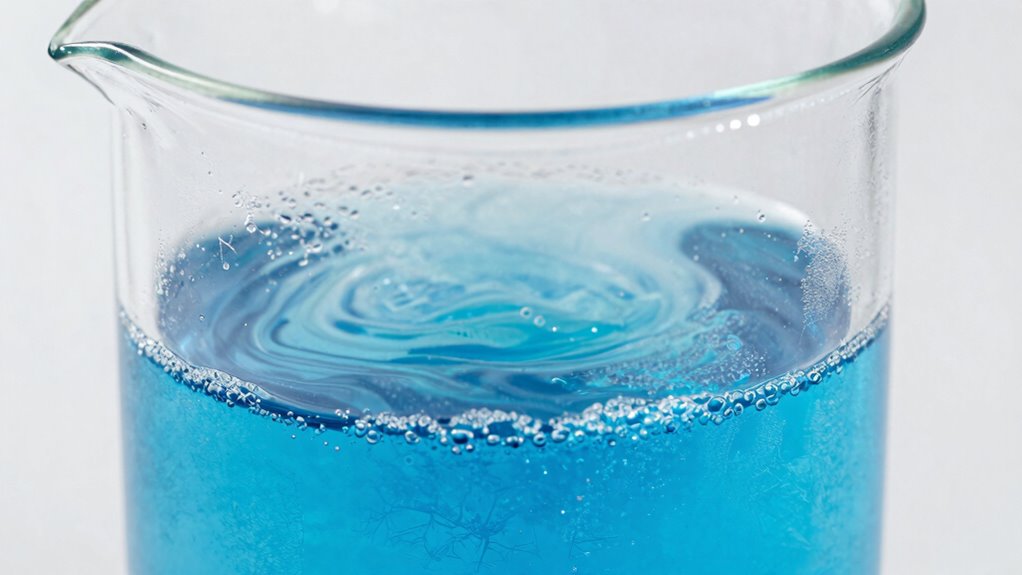
When you add sugar to water, it disrupts the water molecules’ ability to form a solid ice structure. This happens because sugar molecules interfere with the molecular interactions that normally allow water to freeze. As a solute, sugar influences the colligative properties of water, specifically lowering its freezing point. When dissolved, sugar particles spread throughout the water, making it harder for water molecules to come together and arrange into a crystalline ice lattice. This disruption means that the water needs to reach a lower temperature before freezing occurs. Basically, sugar acts as an antifreeze, changing the physical properties of water by altering how its molecules interact and reducing the temperature at which it transitions from liquid to solid. Additionally, this principle is utilized in various energy-efficient cooling processes and food preservation techniques. The extent of freezing point depression depends on the concentration of sugar particles in the water, illustrating how solute concentration impacts colligative properties. Understanding this phenomenon can also inform the development of more sustainable cooling methods to reduce energy consumption. Interestingly, this phenomenon is similar to how home theatre projectors can be affected by environmental conditions, where altering specific properties can enhance performance or image quality. In fact, understanding colligative properties can also aid in designing better de-icing solutions for roads and aircraft.

Preserving Food without Freezing or Canning: Traditional Techniques Using Salt, Oil, Sugar, Alcohol, Vinegar, Drying, Cold Storage, and Lactic Fermentation
An essential guide for those who seek "healthy food for a healthy world"
As an affiliate, we earn on qualifying purchases.
As an affiliate, we earn on qualifying purchases.
The Science of Freezing Point Depression in Solutions

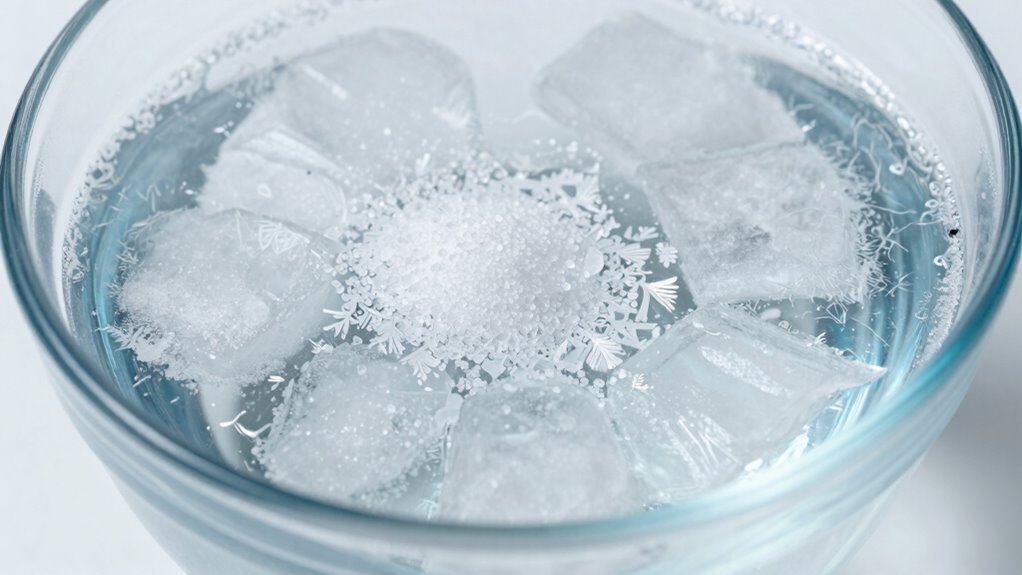
Have you ever wondered why adding salt or sugar to water lowers its freezing point? This phenomenon results from changes in molecular interactions within the solution, affecting its colligative properties. When you introduce solutes like sugar or salt, they disrupt the orderly arrangement of water molecules needed to form ice. These solutes don’t chemically react but influence the solution’s physical properties by increasing the number of particles in the liquid phase. This increase causes a decrease in vapor pressure and requires a lower temperature to freeze the solution. The key concept here is colligative properties, which depend on the number of solute particles, not their type. This explains why even small amounts of sugar or salt can notably depress the freezing point of water. Understanding colligative properties helps clarify how solutes impact physical changes in solutions. Additionally, this principle is applied in food preservation techniques like salting meats or freezing salted foods to extend shelf life. The same principles are important in cold exposure practices, as they demonstrate how adding substances can modify how water freezes in biological tissues. Recognizing the molecular interactions involved further deepens our understanding of how solutions behave under different conditions, especially in environmental processes.
cooking syrup with antifreeze effect
As an affiliate, we earn on qualifying purchases.
As an affiliate, we earn on qualifying purchases.
How Sugar Prevents Freezing in Cooking and Nature
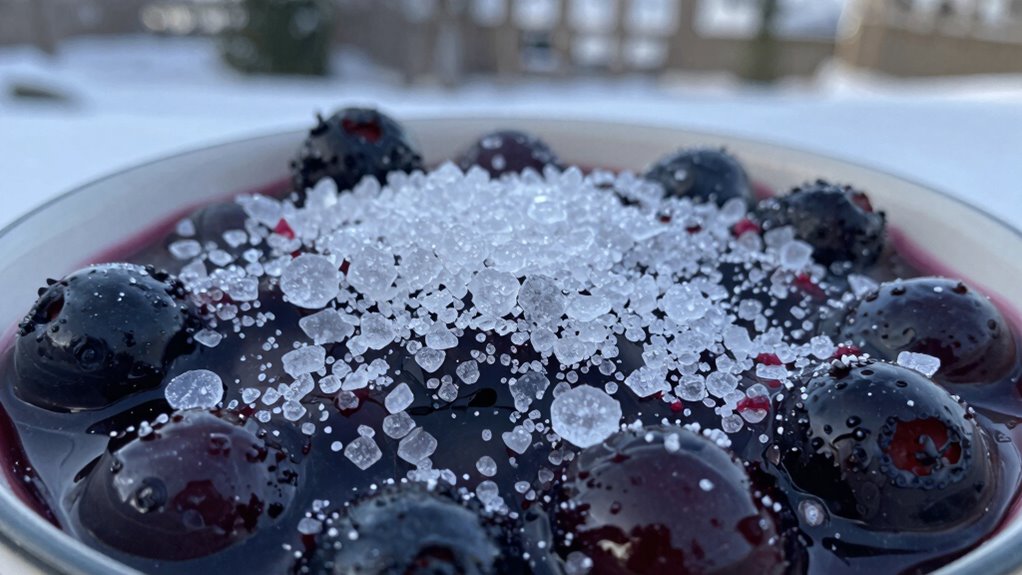
Adding sugar to solutions lowers their freezing point by increasing the number of particles that interfere with ice formation. In cooking, this prevents liquids like syrups or jams from freezing solid, making them easier to store and use. Sugar acts as a stabilizer by disrupting the process of sugar crystallization, which can cause undesirable graininess or texture changes. In nature, sugar’s antifreeze effect protects plants and insects from freezing temperatures by lowering the surrounding water’s freezing point. This ability to control temperature is vital for survival in colder climates. By adjusting sugar concentrations, you can precisely manage freezing behavior, ensuring products maintain their desired consistency or organisms survive harsh winters. Additionally, the presence of sugars can promote biodiversity in natural ecosystems by supporting various species’ adaptations to cold environments. Understanding freezing point depression demonstrates how manipulating particles can influence physical properties in both culinary and natural processes.
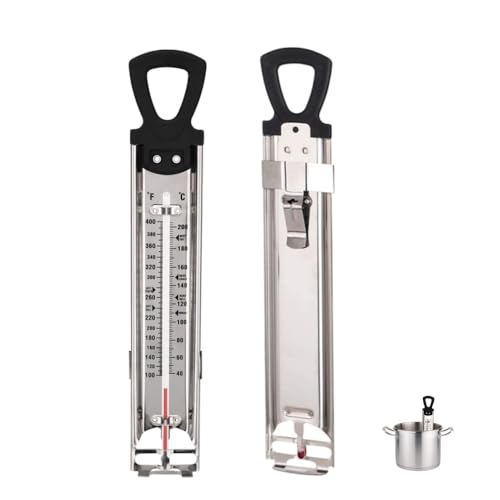
Stainless Steel Candy & Deep Fry Thermometer with Pot Clip & Handle – Analog Sugar Thermometer for Candy Making, Jam, Syrup, Oil, Chocolate, Brewing – Kitchen Cooking Food Thermometer
🌡️✅ PRECISION YOU CAN TRUST, RESULTS YOU CAN TASTE!-Master the science of sugar with crystal-clear dual-scale readings (40°C–200°C…
As an affiliate, we earn on qualifying purchases.
As an affiliate, we earn on qualifying purchases.
What Factors Affect How Much Sugar Lowers the Freezing Point
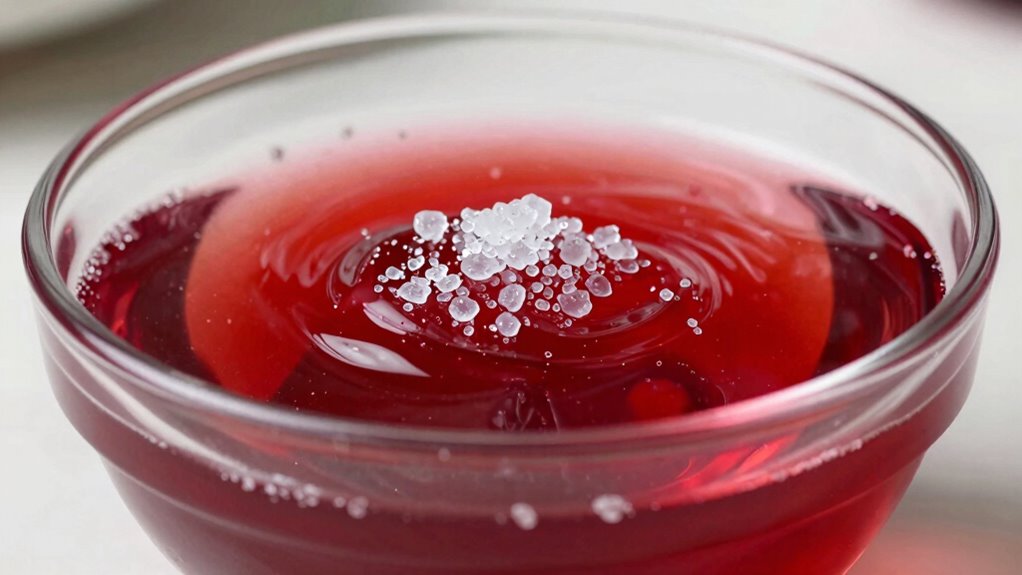
Several factors influence how much sugar can lower the freezing point of a solution. The key factor is sugar concentration—you’ll see a greater freezing point depression with higher amounts of sugar dissolved. However, solution purity also matters; impurities can interfere with sugar molecules, reducing its effectiveness. If your solution contains other dissolved substances, the overall impact on freezing point depression may decrease. Additionally, temperature and pressure can play minor roles, but the primary influences are how much sugar you add and how pure the solution remains. When you increase sugar concentration, you create a more significant antifreeze effect. Conversely, impurities dilute this effect, making the solution less resistant to freezing. The quality of ingredients used also impacts the overall efficiency of the solution, as impurities can diminish the antifreeze properties. Understanding these factors helps you control and predict how much sugar is needed for desired results. Product quality is crucial because high-quality, pure ingredients maximize the antifreeze properties of sugar solutions. Maintaining proper solution concentration ensures consistent results in lowering the freezing point. To optimize the antifreeze effect, it’s also important to consider solution stability over time, as changes in storage conditions can alter the solution’s effectiveness. Additionally, precise measurement of ingredients ensures predictable and repeatable results in lowering the freezing point.
How to Use Sugar’s Antifreeze Effect in the Kitchen and Industry

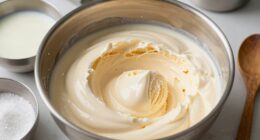
You can harness sugar’s antifreeze effect in both the kitchen and industry to prevent unwanted freezing and improve product stability. By understanding freezing point manipulation, you can create sweet preservation methods that maintain texture and flavor in cold environments. In the kitchen, adding sugar to syrups, jams, and ice creams lowers their freezing points, preventing large ice crystal formation and improving consistency. In industry, sugar is used in frozen foods, beverages, and even in pharmaceutical formulations to control freezing behavior and extend shelf life. Properly applying sugar’s antifreeze effect guarantees products don’t freeze solid, preserving quality and texture. Combining this knowledge with precise measurements allows you to optimize preservation techniques and achieve desired outcomes through effective freezing point manipulation.
Frequently Asked Questions
How Does the Type of Sugar Influence Freezing Point Depression?
You’ll notice that different sugars influence freezing point depression because their molecular structures and solubility differences matter. For example, glucose and sucrose have distinct structures, affecting how they dissolve and lower the freezing point. Sugars with higher solubility create more particles in solution, enhancing the antifreeze effect. So, the type of sugar directly impacts how effectively it depresses the freezing point through its molecular makeup and solubility.
Can Other Substances Cause Similar Antifreeze Effects as Sugar?
Yes, you can find alternative antifreeze agents beyond sugar, like alcohols and salts, which also lower freezing points. These natural coolants, such as ethanol or calcium chloride, create a similar antifreeze effect by disrupting ice formation. You might explore these options for specific applications, as they act as effective natural coolants and alternative antifreeze solutions, offering versatile, less toxic choices for controlling freezing temperatures.
What Are the Limits of Sugar’s Antifreeze Capabilities?
You should know that sugar’s antifreeze capabilities have limits; if you add too much, sugar can cause crystallization, which hampers its effectiveness. Excess sugar can also inhibit fermentation processes, making it less useful in certain applications. When balancing sugar levels, you prevent unwanted crystallization and guarantee proper fermentation inhibition, maximizing its antifreeze properties without compromising other processes. Keep these limits in mind to optimize your results.
How Does Temperature Affect Sugar’s Ability to Lower Freezing Points?
As temperature varies, sugar’s ability to lower freezing points diminishes if it gets too cold. When temperatures drop markedly, sugar solutions can experience crystallization, reducing their antifreeze effectiveness. You’ll notice that at higher temperatures, sugar continues to depress the freezing point effectively, but extreme cold causes crystallization, limiting its antifreeze properties. So, maintaining moderate temperatures helps maximize sugar’s antifreeze capability and prevents crystallization.
Are There Environmental Impacts of Using Sugar as an Antifreeze Agent?
Using sugar as an antifreeze can cause environmental runoff, leading to ecological toxicity in nearby water sources. Did you know that high sugar concentrations can harm aquatic life, disrupting ecosystems? While it’s biodegradable, excess runoff might encourage microbial growth that depletes oxygen levels. So, if you’re considering sugar for antifreeze, be mindful of its potential environmental impacts and avoid contaminating water bodies to protect local ecosystems.
Conclusion
Next time you bake or make ice cream, remember sugar’s quiet power to keep things from freezing solid—like a gentle guardian preventing a winter freeze. Imagine pouring sweet syrup on icy roads, helping cars glide smoothly—sugar’s “antifreeze” effect at work. It’s a simple trick with a big impact, turning a frozen challenge into a manageable moment. Embrace this science, and you’ll see how a touch of sugar can warm up your world in surprising ways.