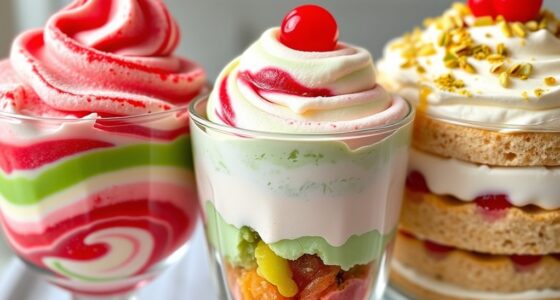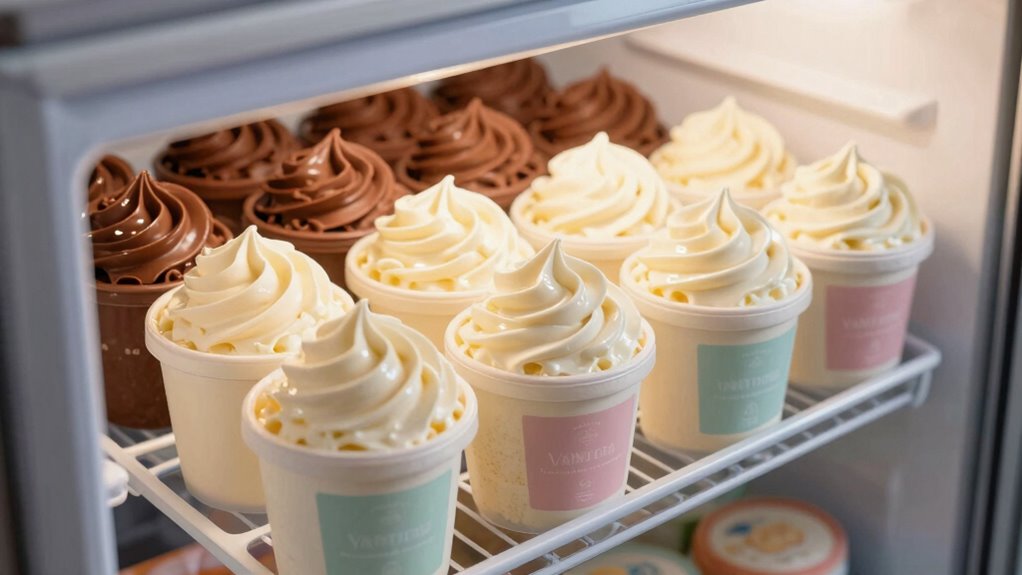

Vanilla has stayed ahead in the freezer because of its neutral flavor and excellent shelf stability. You’ll find it mixes easily with fruits, nuts, and spices, making it a versatile base for many desserts. Unlike chocolate, vanilla keeps its texture and flavor longer, even after extended storage. Its broad appeal and durability in the freezer make it a dependable choice for both home and commercial use. Keep exploring to discover more about its dominance in frozen treats.
Listen free for 30 days with Audible
Thousands of audiobooks and originals — cancel anytime.
As an affiliate, we earn on qualifying purchases.
Key Takeaways
- Vanilla’s neutral flavor allows for versatile pairing and easier adaptation in various frozen desserts.
- It maintains texture and flavor integrity better over extended freezing periods.
- Vanilla is less prone to becoming grainy or waxy compared to chocolate.
- Its broad appeal makes it a preferred choice for diverse consumers and settings.
- Vanilla’s practicality and stability make it more reliable for long-term storage and commercial use.
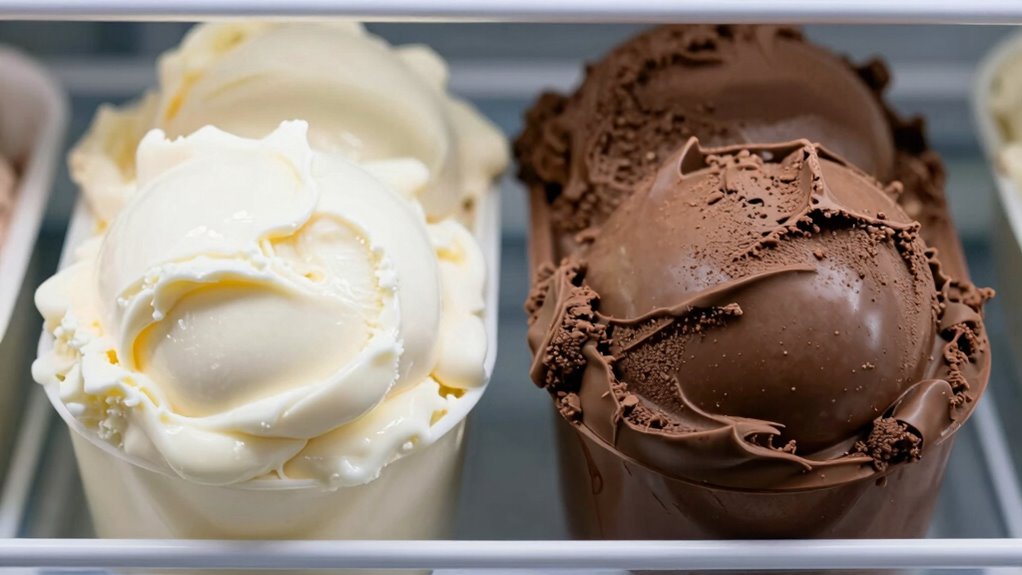
When it comes to freezing desserts, vanilla often beats chocolate to the punch, and there’s more to this than just taste preferences. Vanilla’s popularity in the freezer isn’t accidental; it’s rooted in its exceptional flavor versatility and shelf stability. You can pair vanilla with nearly anything—fruits, nuts, caramel, or even spicy flavors—making it a flexible choice for a variety of desserts. This adaptability means that vanilla can be easily transformed into different treats, from simple ice creams to complex parfaits. Its neutral base allows you to experiment without overwhelming your palate, which isn’t always the case with chocolate’s more intense and distinctive flavor. Because of this, vanilla remains a go-to for those who want a dependable, adaptable dessert that works well in many contexts. Additionally, vanilla’s flavor versatility allows for endless creative combinations, further cementing its popularity in frozen desserts. Shelf stability also plays a big role in vanilla’s early popularity. When you freeze desserts, especially for longer storage, stability becomes a key factor. Vanilla ice cream, with its relatively straightforward ingredient profile, tends to maintain its texture and flavor over time better than many chocolate-based options. Chocolate’s fats and cocoa solids can sometimes develop a grainy or waxy texture after extended freezing, making it less appealing on the shelf. Vanilla, on the other hand, often retains its smoothness and flavor integrity longer, which appeals to both home cooks and commercial producers alike. This durability means you don’t have to worry as much about spoilage or texture degradation when storing vanilla-based desserts. Its shelf stability ensures that your frozen treats stay fresher longer, making it a practical choice in busy kitchens or for those who like to stock up. Furthermore, vanilla’s subtle flavor makes it a safe choice for a wide audience. When you’re serving desserts to guests or sharing treats with family, you want something that’s broadly appealing and easy to enjoy. Vanilla’s mild taste complements a variety of toppings and mix-ins, which also contributes to its popularity in frozen desserts. Its neutral profile means it can be flavored in many ways—adding fruit swirls, cinnamon, or even coffee. Vanilla’s versatility, coupled with its ability to stay fresh longer, helps it dominate the freezer shelf—winning over chocolate not just in flavor but in practicality as well.
As an affiliate, we earn on qualifying purchases.
Frequently Asked Questions
How Did Vanilla Become the Dominant Flavor in Frozen Desserts?
You see, vanilla became the dominant flavor in frozen desserts because of its versatile flavor evolution and broad appeal. Market trends favored simplicity and familiarity, making vanilla a safe choice for consumers. Its neutral taste pairs well with toppings and mix-ins, which boosted its popularity. Over time, vanilla’s adaptability and consistent demand kept it at the top, shaping the frozen dessert market and cementing its status as the favorite flavor.
Were There Any Health Benefits That Favored Vanilla Over Chocolate?
Think of vanilla as the gentle healer in your dessert cabinet. It generally offers more health benefits compared to chocolate, such as lower fat and sugar content, making it a lighter choice. When you compare flavors, vanilla’s mildness is easier on digestion and less likely to trigger sensitivities. This health edge, combined with its subtle flavor, made vanilla a more appealing option for those seeking a wholesome indulgence.
Did Early Freezer Technology Influence Vanilla’s Popularity First?
Early freezer technology played a role in vanilla’s initial popularity, as flavor chemistry made vanilla easier to preserve and enhance. Packaging innovations also helped maintain vanilla’s fresh taste longer, making it more appealing to consumers. You’ll find that vanilla’s simpler flavor profile responded better to these technological advances, allowing it to dominate the freezer space first. The combination of flavor chemistry and innovative packaging ultimately gave vanilla a competitive edge over chocolate early on.
How Did Cultural Preferences Shape Vanilla’s Early Freezer Success?
Imagine flavor versatility as a chameleon, blending smoothly into diverse tastes, which shaped vanilla’s early freezer success. Your cultural preferences, valuing simplicity and subtlety, made vanilla a household favorite. Its lower production costs meant more people could enjoy it, fueling its popularity. This harmony of adaptability and affordability made vanilla the first to chill in freezers, winning hearts before chocolate’s richer, more complex profile took hold.
Are There Regional Differences in Vanilla Versus Chocolate Freezer Preferences?
Yes, regional taste trends and local ingredient availability influence freezer preferences. In areas where vanilla is culturally favored or local vanilla supplies are abundant, people tend to prefer vanilla ice cream. Conversely, regions with access to rich cocoa or a tradition of chocolate desserts often favor chocolate flavors. These regional differences shape consumer choices, making vanilla or chocolate more popular depending on local tastes and ingredient accessibility.
Conclusion
So, next time you scoop vanilla ice cream, remember it was the quiet hero that first won the freezer’s favor. Like an underdog rising to the top, vanilla’s versatility and long shelf life made it the champion early on. It’s a reminder that sometimes, the simplest flavors lead the way, quietly paving the path for the more flamboyant chocolates to follow. Vanilla’s victory is a proof to the power of consistency and subtle charm.
Flea & tick season Picks
flea and tick prevention
As an affiliate, we earn on qualifying purchases.