

Ice cream has played a surprising role in social movements, symbolizing unity and resilience during challenging times. During Prohibition, it provided a sense of community and hope, supporting local economies and challenging societal chaos. In the Civil Rights era, segregated ice cream parlors became battlegrounds for equality, sparking activism and social change. Its significance shows how simple treats can carry profound messages. To discover how these moments shaped history, keep exploring its powerful social impact.

Get baking supplies delivered free with Prime
- Fast, free delivery on millions of items
- Prime Video, Amazon Music and more included
- Member-only deals all year
Key Takeaways
- Ice cream parlors served as social hubs during Prohibition, fostering community resilience and challenging societal restrictions.
- The industry’s growth during Prohibition supported local economies and provided jobs amid societal chaos.
- Segregated ice cream parlors became sites of racial activism, symbolizing societal divisions and opportunities for change.
- Integration of ice cream businesses promoted social and economic inclusion, aiding civil rights progress.
- As a symbol of unity and dignity, ice cream helped challenge injustices and foster social cohesion in various movements.
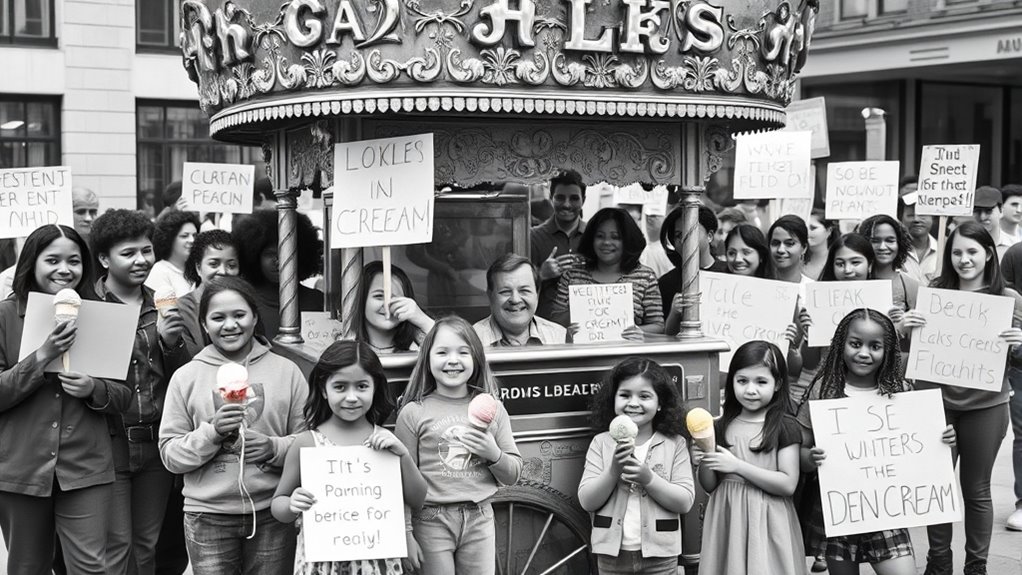
Ice cream, often seen as a simple treat, has surprisingly played a role in shaping social movements throughout history. At first glance, it might seem like just a sweet indulgence, but its sociocultural symbolism and economic impact reveal a much deeper significance. During the Prohibition era in the United States, for example, ice cream became more than just a dessert; it symbolized a desire for normalcy and community amid the chaos of alcohol bans. Ice cream parlors served as social hubs where people could gather, converse, and experience a slice of everyday life despite the country’s legal restrictions. This sociocultural symbolism helped foster a sense of resilience and hope, subtly challenging the oppressive temperance movement. Economically, the ice cream industry boomed during this period, creating jobs and supporting local businesses that thrived on the demand for cold treats, highlighting how the industry contributed to community stability during tough times.
Later, during the Civil Rights Movement, ice cream again took on a symbolic role. Segregated ice cream parlors and soda fountains became battlegrounds for racial integration. Activists recognized that these establishments were more than just places to eat; they represented societal divisions and the possibility for change. When Black patrons fought for the right to sit in previously all-white establishments, ice cream parlors became symbols of equality and dignity. These acts of activism helped to challenge and dismantle racial segregation, making ice cream a subtle yet powerful sign of social progress. The economic impact of these efforts was significant as well—integrating businesses opened new markets, and the demand for inclusive spaces spurred entrepreneurs to rethink their policies, ultimately contributing to broader social and economic integration.
Throughout history, ice cream’s influence extends beyond the dessert itself. Its role as a sociocultural symbol has helped unite communities, challenge injustices, and inspire social change. The economic impact of the industry has also played a part, providing livelihoods and supporting local economies during critical periods. By offering a common pleasure, ice cream has served as a vehicle for social cohesion and activism, proving that even the simplest things can carry profound meaning. Whether as a symbol of resilience during Prohibition or a catalyst for racial equality, ice cream’s story demonstrates how everyday commodities can shape societal values and economic realities. So next time you enjoy your favorite flavor, remember that it’s more than just a treat—it’s a piece of history, a symbol, and a catalyst for change.
As an affiliate, we earn on qualifying purchases.
Frequently Asked Questions
How Did Ice Cream Become a Symbol in Social Protests?
You see, ice cream became a symbol in social protests through its cultural symbolism and its role in consumer activism. People used ice cream to challenge segregation and racial inequality, often by sharing or serving it in integrated settings. This act of using a beloved treat became a powerful statement, showing that ordinary items could promote unity and spark conversations about social change. Your actions with ice cream can carry meaningful messages today.
Were Any Notable Figures Associated With Ice Cream in Social Movements?
You see, notable figures like celebrities often used ice cream to support social movements through endorsements and community fundraising. These personalities help rally public attention and funds, turning ice cream into a symbol of unity and activism. When you participate in community events or see celebrities promoting ice cream, you’re witnessing their efforts to advance social causes, making ice cream a powerful tool for raising awareness and fostering collective action.
Did Ice Cream’s Popularity Influence Social Change Strategies?
Your awareness of ice cream’s popularity reveals how it influenced social change strategies. By leveraging branding strategies, advocates attracted attention and fostered unity. Consumer perceptions of ice cream as a communal treat helped break down social barriers, making it a powerful tool for change. You can see how marketers used these perceptions to shape movements, turning ice cream into a symbol of progress and shared identity during pivotal moments in history.
How Did Ice Cream Protests Impact Policy Decisions Historically?
Your protests, like melting ice cream under the summer sun, forced policymakers to confront societal truths. They influenced policy decisions by highlighting the economic impact of social inequality and turning ice cream into a cultural symbol of unity and resistance. These movements showed that even something sweet could stir public opinion, pushing governments to act on civil rights and social justice issues, shaping policies that aimed for lasting change.
Are There Modern Social Movements Using Ice Cream Symbolically Today?
Yes, modern social movements sometimes use ice cream as a frozen treat and cultural symbolism to draw attention to issues like climate change, racial justice, and LGBTQ+ rights. Activists serve ice cream during rallies or create colorful displays to symbolize unity and diversity. This playful yet powerful approach helps engage the public, making complex social issues more relatable and memorable through the universal appeal of ice cream.
Conclusion
So, next time you indulge in your favorite scoop, remember—you’re part of a long, frosty tradition. From protests to civil rights, ice cream’s been the sweet sidekick, melting barriers and stirring change. Who knew that a simple treat could serve up justice, one cone at a time? So go ahead, savor that scoop—after all, you’re just enjoying a cool piece of history and a tasty rebellion in every bite.
Halloween Picks
halloween
As an affiliate, we earn on qualifying purchases.