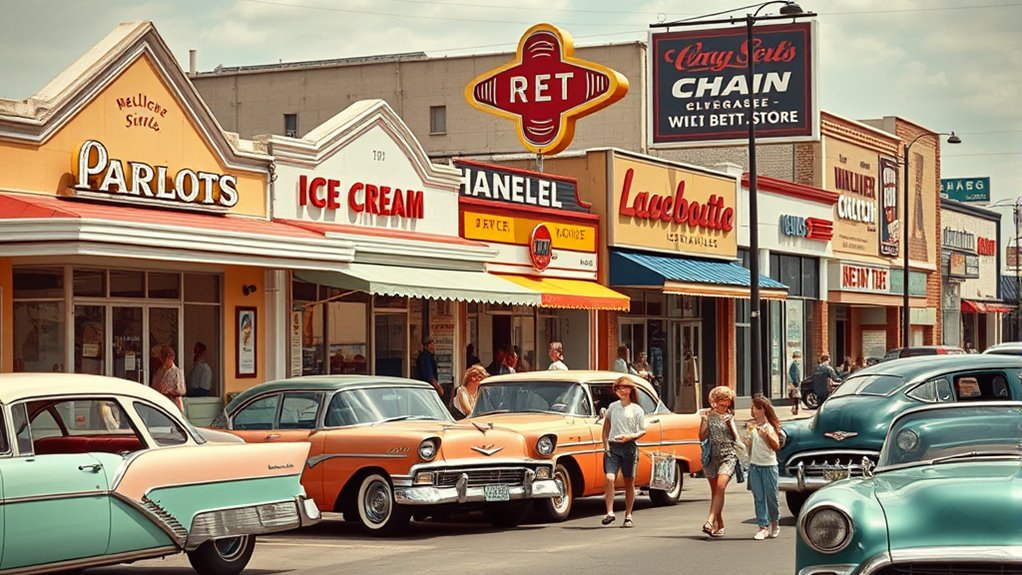

In the 20th century, ice cream shops shifted from neighborhood favorites to nationwide chains through technological advances like automobiles, improved manufacturing, and mass production. Businesses adopted branding and franchising to maintain quality while expanding their reach. This blend of local charm and wide recognition allowed chains like Baskin-Robbins to succeed globally. If you keep exploring, you’ll discover how these changes shaped the modern ice cream industry and kept communities connected even as chains grew larger.
Key Takeaways
- Early 1900s ice cream shops thrived on local branding, personal relationships, and community identity.
- Technological advances like automobiles and advertising enabled expansion and wider recognition.
- Standardized production and franchising allowed chains to maintain quality across multiple locations.
- Businesses shifted from neighborhood-focused shops to nationwide brands combining local charm with global reach.
- Modern brands integrate local engagement with technological tools and supply chains for efficient large-scale operations.

Have you ever wondered how the 20th century transformed the world we live in today? It was a time of incredible change, especially in how businesses operated and connected with consumers. You can see it clearly in the shift from small, local ice cream parlors to vast chains that span the globe. This transformation wasn’t just about expanding reach; it was rooted in the evolving landscape of local branding and technological innovations that reshaped the entire marketplace.
In the early 1900s, small ice cream shops thrived because they built strong local branding. They relied on personal relationships, neighborhood loyalty, and a sense of community. Customers knew the owners, and each shop had a unique personality that reflected its local flavor. But as the century progressed, the desire for consistency and broader recognition pushed businesses toward chain stores. The goal shifted from local charm to creating a recognizable brand that could be replicated across different locations. This shift was driven by technological innovations like the rise of the automobile, enabling people to travel farther and visit multiple outlets. Advertising also evolved with the advent of radio and later television, allowing brands to reach wider audiences and create a sense of familiarity regardless of location.
These technological innovations didn’t just change how businesses advertised—they changed how they operated. Mass production techniques, for example, made it easier to produce standardized products, ensuring that a customer’s favorite ice cream flavor tasted the same whether they visited in New York or Los Angeles. This uniformity was *vital* for the success of chains, and it hinged on advancements in manufacturing and distribution technology. Additionally, the development of franchising allowed entrepreneurs to expand quickly while maintaining control over quality and branding. This approach helped create a new kind of local branding—one that was still rooted in community values but now backed by a recognizable national or even international identity.
You can see this evolution in the way brands like Baskin-Robbins or Dairy Queen operate today—they combine local engagement with the power of a global brand. The 20th century’s technological innovations made this possible, giving companies tools to manage multiple locations, maintain brand consistency, and target diverse markets efficiently. The era marked a shift from the intimate, neighborhood-focused businesses of the past to the large chains that dominate today’s landscape. This transformation highlights how local branding and technological progress worked hand-in-hand to reshape commerce, creating a new model of business that’s now the norm worldwide. Furthermore, the rise of reliable supply chains ensured that these large chains could sustain consistent quality and availability across all locations, reinforcing their nationwide presence.
Frequently Asked Questions
How Did Ice Cream Flavors Evolve During the 20TH Century?
During the 20th century, ice cream flavors evolved through gelato innovation and flavor diversification. You’ve seen classic favorites like vanilla and chocolate expand to include unique options like pistachio, mint, and fruit blends. The rise of specialty shops and chains pushed creators to experiment, introducing exotic ingredients and new techniques. This evolution made ice cream more exciting, appealing to a broader range of tastes and encouraging continuous flavor innovation.
What Technological Advances Impacted Ice Cream Production Methods?
Did you know that refrigeration technology revolutionized ice cream production, increasing efficiency by over 50% in the early 20th century? You see, advancements in ice cream machinery and refrigeration technology allowed manufacturers to produce larger quantities faster and with better quality. These innovations made ice cream more accessible and consistent, transforming how it’s made and enjoyed today. Without these technological leaps, your favorite scoop might still be a rare treat.
How Did Marketing Strategies Change for Ice Cream Brands?
You see, marketing strategies for ice cream brands evolved through branding evolution and innovative advertising campaigns. You’re likely to notice how brands shifted from local shop promotions to nationwide campaigns, using catchy slogans and vibrant packaging to attract customers. They also embraced mass media, including radio and TV ads, to build brand recognition. This change helped brands connect emotionally with consumers, boosting sales and establishing iconic identities.
Were There Regional Differences in Ice Cream Popularity?
You’ll notice regional differences in ice cream popularity, as local preferences and flavors influence what people enjoy most. In warmer areas, you might prefer invigorating sorbets, while colder regions often favor richer, creamier options. Local ingredients and traditions also shape flavor choices, making certain styles more popular in some areas than others. These regional tastes create a diverse ice cream landscape, reflecting unique cultural and climatic influences across different parts of the country.
How Did Social and Cultural Shifts Influence Ice Cream Consumption?
Think of social and cultural shifts like a tide, shaping how you enjoy ice cream today. As social norms evolved, people became more open to indulging in treats, and demographic changes brought new groups into the ice cream-loving fold. These shifts made ice cream more accessible and popular across all ages and backgrounds, turning it into a symbol of joy and connection in your everyday life.
Conclusion
As you reflect on this century-long journey, consider how the rise of chains might have seemed inevitable. Yet, some believe this shift was driven by more than just business; it echoes a desire for comfort and familiarity amidst rapid change. Maybe, deep down, we crave connection in a world of growing anonymity. Whether true or not, this theory reminds us that even in progress, we seek the warmth of tradition and community.