Ice cream has long symbolized luxury and social status in Victorian novels, often highlighting class distinctions and evoking nostalgia. As mass production grew, it became a symbol of modernity, youthfulness, and fleeting happiness in pop art, famously explored by artists like Andy Warhol. In literature, it reflects innocence, desire, and societal shifts through vivid sensory descriptions. If you explore further, you’ll discover how ice cream continues to serve as a powerful mirror to human experiences across eras.
Key Takeaways
- Ice cream historically symbolized luxury and social status in Victorian art and literature, reflecting class distinctions and nostalgia.
- In modern art, especially pop art, ice cream became an icon representing fleeting happiness and consumer culture.
- Literature often uses ice cream as a motif for innocence, sensory memory, and transient moments of joy.
- Artistic representations emphasize texture and sensory appeal, exploring themes of modernity, luxury, and societal shifts.
- Ice cream serves as a versatile symbol across eras, mirroring cultural values, societal norms, and human experiences.
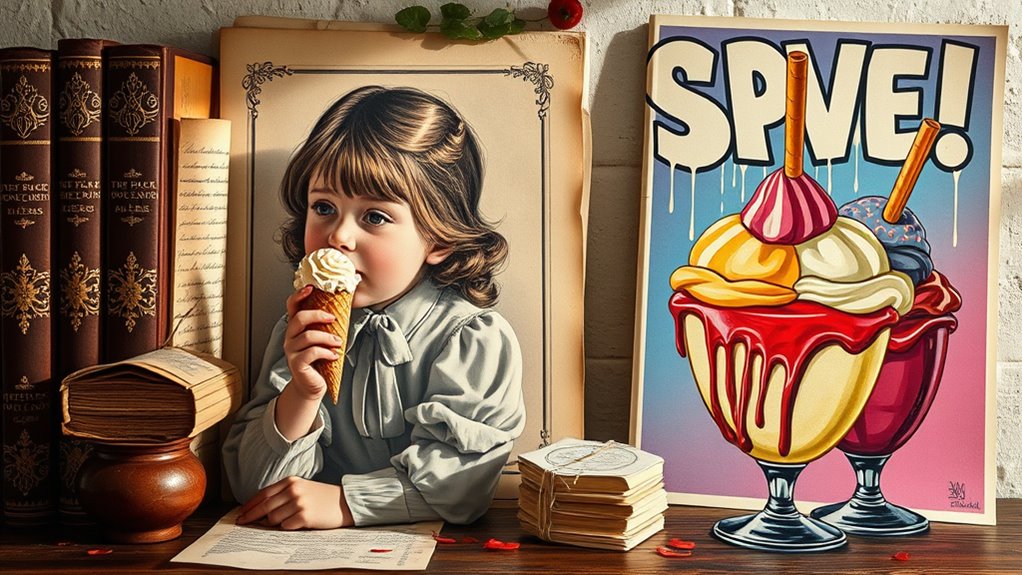
Ice cream has long captivated artists and writers, serving as a symbol of indulgence, childhood innocence, and fleeting pleasure. Throughout history, it has carried rich layers of meaning, often reflecting societal values and cultural shifts. In the domain of artistic representations, ice cream has been more than just a treat; it’s a canvas for exploring deeper themes. During the Victorian era, for example, ice cream often appeared in paintings and illustrations as a symbol of luxury and social status. Its accessibility was limited, making it a rare pleasure that signified wealth and refinement. Artists used this imagery to comment on class distinctions or to evoke nostalgia for simpler times. These historical symbols helped elevate ice cream from a mere dessert to a motif loaded with cultural significance. Additionally, the portrayal of ice cream in art often involved careful attention to detail, emphasizing its texture and appeal to evoke sensory responses.
As you examine different artistic representations, you’ll notice how the symbolism of ice cream evolved over time. In the early 20th century, with the rise of mass production and the advent of ice cream parlors, the treat became more democratized. Artists and writers began portraying it as a symbol of modernity and youthful exuberance. It represented a break from tradition and an embrace of consumer culture. During the pop art movement, ice cream took on bold, vibrant forms, often used to challenge conventional perceptions of art and consumerism. Artists like Andy Warhol transformed everyday objects like ice cream into icons, emphasizing their role in popular culture and the transient nature of pleasure. These artistic representations highlight how ice cream can symbolize fleeting happiness, consumerism, and even subversion.
In literature, ice cream often acts as a powerful motif that reflects human desires, innocence, or even the passage of time. Writers use it to evoke sensory memories, to underscore themes of innocence lost, or to comment on societal norms. Its transient nature—melting quickly—mirrors life’s fleeting moments, making it a potent symbol for fleeting happiness or childhood innocence. Moreover, the concept of attention to detail in artistic depictions enhances the realism and emotional impact of ice cream imagery, drawing viewers and readers into a more immersive experience. Whether depicted as an emblem of luxury in Victorian paintings or a pop culture icon in contemporary art, ice cream remains a versatile symbol. It captures the essence of moments, emotions, and societal shifts, making it a compelling subject for both artists and writers. As you explore its representations, you’ll see how this simple dessert continues to serve as a mirror to human experiences, constantly reinvented across eras and artistic movements.
As an affiliate, we earn on qualifying purchases.
Frequently Asked Questions
How Has Ice Cream Symbolized Social Class Across Different Eras?
You see, ice cream has long been a symbol of social class, reflecting status and privilege across eras. During Victorian indulgence, it was a luxury only the wealthy could afford, emphasizing class distinctions. Over time, this social class symbolism shifted as ice cream became more accessible, yet it still subtly hints at privilege in some contexts. Its history reveals how treats can mirror societal divisions and aspirations.
What Are Some Lesser-Known Artistic Representations of Ice Cream?
You might think ice cream motifs are just sweet clichés, but some surrealist depictions reveal a playful, bizarre side. Artists like Salvador Dalí have incorporated melting ice creams into dreamlike scenes, transforming this familiar treat into symbols of fleeting pleasure and subconscious desires. These lesser-known representations challenge your expectations, showing how ice cream can evoke deeper meanings beyond its surface, blending whimsy with surrealism in unexpected ways.
How Do Cultural Differences Influence Ice Cream’s Depiction in Art and Literature?
You see, cultural differences shape how ice cream appears in art and literature by influencing its symbolism and the regional flavors it showcases. In some cultures, ice cream symbolizes celebration or indulgence, while others see it as a symbol of nostalgia. Regional flavors highlight local tastes, making depictions unique. These variations reflect cultural identities, enriching how artists and writers portray ice cream across different societies.
Has Ice Cream Ever Been Used as a Political or Protest Symbol?
You might be surprised, but ice cream has occasionally been used as a symbol in political protests. In some cases, it represents innocence or a call for peace, while in others, it’s used ironically to highlight inequality or corporate greed. As protest symbolism, ice cream brings attention to social issues and can evoke emotional responses, making it a unique and unexpected tool in political protests.
How Has the Portrayal of Ice Cream Evolved With Technological Advancements?
You might think the portrayal of ice cream hasn’t changed much, but technological innovations have transformed how artists depict it. Advances in digital tools and artistic techniques let creators craft more vivid, detailed, and interactive images. These innovations make ice cream appear more realistic or fantastical, reflecting cultural shifts and consumer trends. As technology progresses, so does its influence on how we see and interpret ice cream in art, making it more dynamic and engaging.
Conclusion
As you explore the world of ice cream in literature and art, you realize it’s like a sweet thread weaving through history—connecting Victorian novels to pop art. This icy delight isn’t just a treat; it’s a mirror of culture, desire, and innocence lost and found. So, next time you savor a scoop, remember you’re tasting more than flavor—you’re biting into a rich tapestry of human creativity frozen in time.