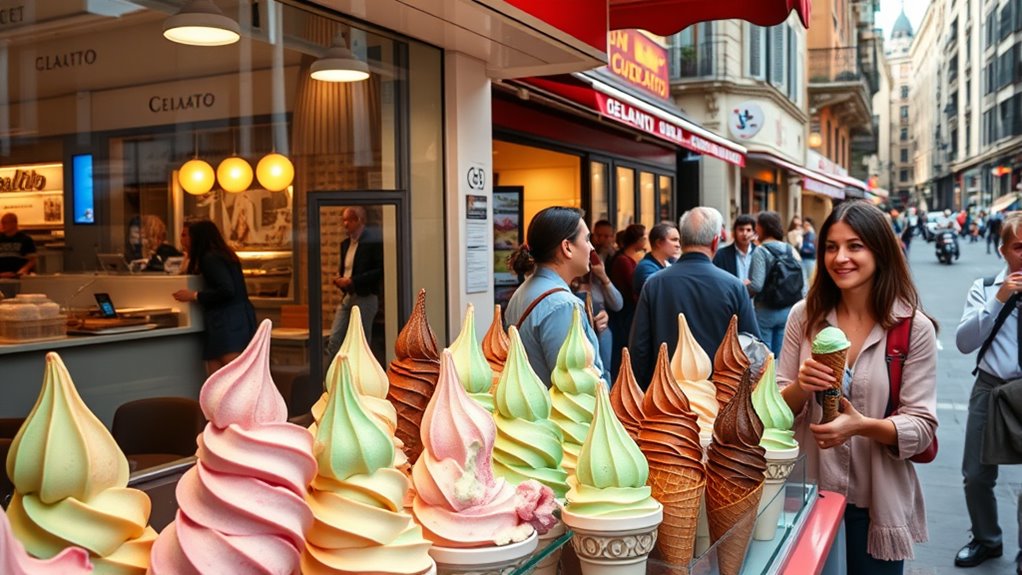

Gelato’s journey from Italy’s rich tradition to global popularity is driven by artisan techniques, quality ingredients, and regional adaptations. As it spread worldwide, local chefs added unique flavors inspired by regional tastes, making gelato versatile and beloved across cultures. Its craftsmanship and cultural significance continue to grow, inspiring innovation while preserving traditional methods. If you want to discover how this beloved treat evolved worldwide, there’s much more to explore.
Key Takeaways
- Traditional Italian gelato techniques, emphasizing quality ingredients and craftsmanship, laid the foundation for its global appeal.
- Artisan methods and regional adaptations have helped gelato maintain authenticity while embracing local tastes worldwide.
- The worldwide popularity of gelato reflects a cultural exchange, blending Italian tradition with regional flavors and ingredients.
- Craft gelato shops globally emphasize small-batch, handcrafted processes that highlight its artisanal roots.
- The spread of gelato fosters cultural appreciation, innovation, and the preservation of its rich heritage across diverse regions.
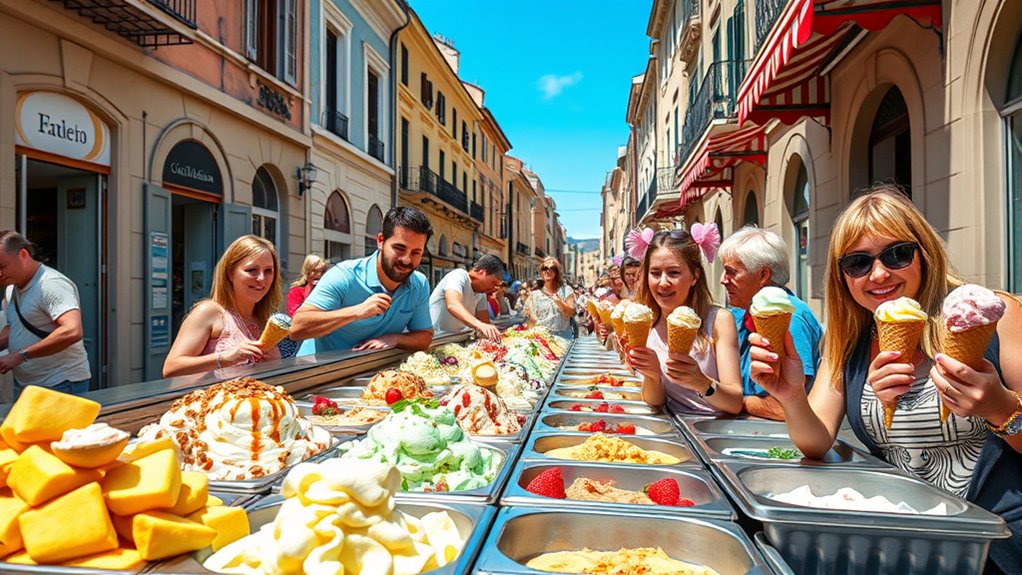
Gelato, Italy’s beloved frozen treat, has steadily gained worldwide popularity thanks to its rich flavors and creamy texture. This delightful dessert’s journey beyond Italy’s borders showcases a fascinating blend of artisan techniques and cultural influences that have helped it captivate taste buds around the globe. When you savor a scoop of gelato, you’re experiencing more than just a sweet treat; you’re tasting centuries of Italian craftsmanship and tradition. The secret behind its exceptional quality lies in artisan techniques—small-scale, meticulous methods passed down through generations. Unlike commercial ice creams that often rely on artificial stabilizers and preservatives, gelato makers focus on quality ingredients, slow churning, and precise temperature control. This process results in a denser, silkier texture that melts smoothly on your tongue. The emphasis on artisan techniques is a hallmark of authentic gelato, and it’s what sets it apart from other frozen desserts. As gelato spread beyond Italy, local chefs and entrepreneurs embraced these traditional methods, adapting them to regional tastes and ingredient availability. For example, in the United States, craft gelato shops often incorporate local fruits, nuts, and flavors, creating a unique fusion that still respects the core techniques. This blending of techniques and ingredients highlights how cultural influences shape gelato’s evolution worldwide. Each region brings its own twist to the classic recipe, reflecting local culinary styles and preferences. In Spain, you might find gelato infused with saffron or churros, while in Japan, green tea or yuzu flavors add a distinctive twist. These adaptations demonstrate how cultural influences enrich gelato, making it a versatile canvas for culinary innovation. Moreover, the global popularity of gelato has prompted a renewed appreciation for artisanal craftsmanship. More consumers are seeking out small-batch, handcrafted options that emphasize quality over mass production. This trend helps preserve traditional techniques while encouraging creativity and regional diversity. Additionally, the rise of artisan techniques has helped elevate gelato from a simple dessert to a respected culinary art form. As you indulge in gelato from different parts of the world, you’re experiencing a culinary dialogue—an ongoing exchange of techniques, ingredients, and cultural stories. The spread of gelato is a testament to its universal appeal and the dedication of artisans who keep its traditions alive, even as they adapt to new tastes and influences. Ultimately, whether you’re enjoying a classic stracciatella or a regional specialty, you’re part of a global movement that celebrates craftsmanship, cultural exchange, and the timeless pleasure of authentic gelato.
Frequently Asked Questions
How Did Gelato Originate in Italy?
You might find it interesting that gelato originated in Italy through centuries of Italian traditions and craftsmanship. Italian artisans carefully crafted this frozen treat, using fresh ingredients and innovative techniques to create its unique texture and flavor. You can see how gelato’s craftsmanship and dedication to quality set it apart from other frozen desserts. Over time, this rich tradition helped gelato become a beloved part of Italian culture and eventually gained global popularity.
What Makes Gelato Different From Traditional Ice Cream?
Gelato differs from traditional ice cream through its texture contrast and flavor intensity. You’ll notice gelato has a denser, creamier texture because it contains less air, making each bite richer. Its flavors are more intense since it’s churned at a slower speed, preserving the natural taste of ingredients. This combination gives you a smoother, more flavorful experience that sets gelato apart from regular ice cream.
Which Countries Have Adopted Gelato Most Enthusiastically?
You’ll find Italy’s influence everywhere, especially in countries like the U.S., Australia, and Japan, where gelato festivals celebrate this creamy delight. These nations enthusiastically embrace gelato through international chains and local artisans. Their passion mirrors Italy’s, making gelato a global phenomenon. Watching how these countries host vibrant festivals and support gelato shops shows their love for this Italian treat, turning it into a worldwide culinary sensation.
How Has Gelato’s Recipe Evolved Globally?
You’ll notice that gelato’s recipe has evolved globally through flavor innovation and ingredient diversity. Chefs and ice cream makers experiment with local ingredients, creating unique flavors like matcha, pistachio, or tropical fruit blends. They also incorporate new techniques, blending traditional methods with modern twists. This evolution keeps gelato exciting, appealing to diverse tastes worldwide, and reflects how cultural influences shape its delightful, ever-changing recipes.
Are There Health Benefits Associated With Gelato?
You might be surprised to learn that gelato offers some health advantages. Its nutrition profile often includes lower fat and sugar content compared to traditional ice cream, making it a slightly healthier treat. Plus, many gelato recipes include natural ingredients like fresh fruit and nuts, which provide vitamins and antioxidants. While moderation is key, enjoying gelato can be part of a balanced diet and offers some enjoyable benefits.
Conclusion
As you savor gelato’s creamy embrace, you’re gently carried on a wave of Italy’s rich tradition spreading softly across the world. Each spoonful whispers stories of craftsmanship and passion, inviting you to indulge in a moment of sweet escape. Though it’s become a global treasure, its true charm lies in how it quietly transforms simple moments into delightful memories. Embrace the gentle spread of gelato, and let its magic linger softly on your palate.