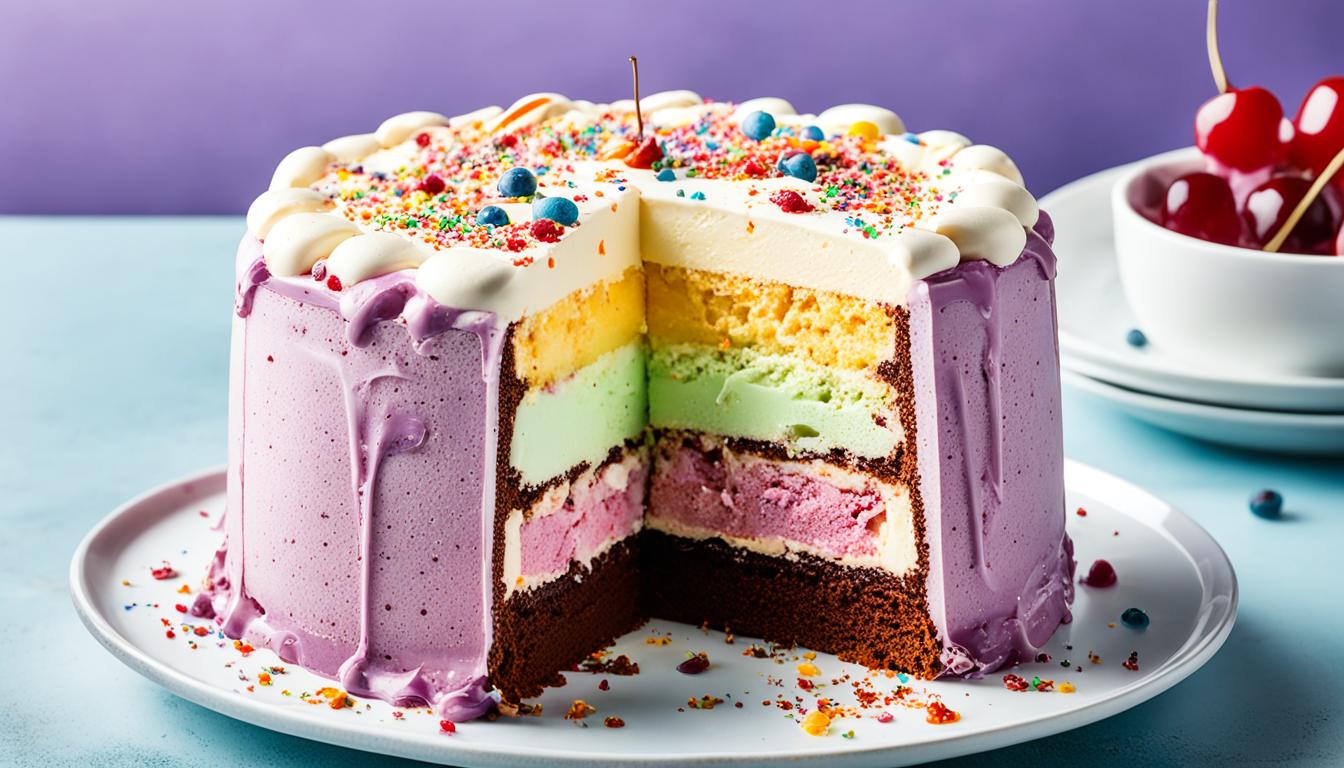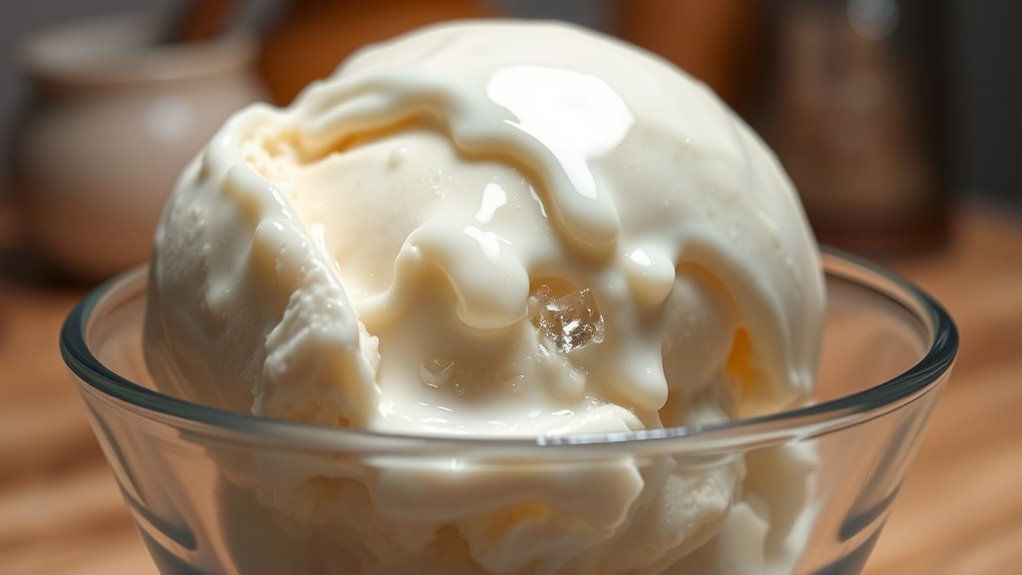

Refreezing melted ice cream can be risky because bacteria can grow quickly when it’s left out in the danger zone (40°F–140°F), especially if it’s been out for more than two hours. Melting also damages the texture and flavor, making it icy or grainy. If you keep it cold for a short time and handle it properly, refreezing might be okay, but beware of potential health and quality issues. Keep going to learn more about safe handling tips.

Get baking supplies delivered free with Prime
- Fast, free delivery on millions of items
- Prime Video, Amazon Music and more included
- Member-only deals all year
Key Takeaways
- Refreezing melted ice cream is generally safe if it has only been briefly out and kept cold; long exposure increases risks.
- Melting at room temperature for over two hours can promote bacterial growth, making refreezing unsafe.
- Repeated freeze-thaw cycles degrade texture, flavor, and can introduce food safety concerns.
- Quick refreezing and airtight storage help preserve quality but do not eliminate safety risks if conditions aren’t ideal.
- When in doubt about how long the ice cream has melted or its safety, it’s safer to discard it.

Have you ever wondered if it’s safe to refreeze melted ice cream? It’s a common question, especially when you’ve accidentally left your favorite treat out a little too long. The answer isn’t straightforward because it depends on several factors, including how long the ice cream was melted and the conditions it was exposed to. When ice cream melts, its texture changes dramatically—becoming softer, creamier, or even watery. If you plan to refreeze it, keep in mind that the ice cream’s texture will likely suffer. Instead of the smooth, creamy scoop you’re used to, it might turn into icy chunks or a grainy consistency once refrozen. This change isn’t just about aesthetics; it’s also about food safety.
Food safety guidelines emphasize the importance of handling dairy products properly to prevent bacteria growth. When ice cream melts, it enters the temperature danger zone, typically between 40°F and 140°F. Bacteria can multiply rapidly within this range, especially if the ice cream has been melted for an extended period. If you refreeze melted ice cream without taking precautions, you risk consuming bacteria that could cause foodborne illnesses. Consequently, if the ice cream has been sitting out for more than two hours at room temperature, it’s safest to discard it. If it’s only been a short period and the melted ice cream has remained cold, you might consider refreezing it, but with caution.
Additionally, the quality of the ice cream can be significantly affected by refreezing, leading to a less enjoyable texture. The ice cream’s original texture is compromised because of the formation of ice crystals during melting and refreezing. These larger crystals tend to make the ice cream feel grainy or icy once it’s back in the freezer. If you decide to refreeze it, try to do so as quickly as possible to minimize texture deterioration. Use airtight containers to prevent freezer burn and maintain as much original flavor as possible. Keep in mind, though, that repeated freeze-thaw cycles only worsen the texture and can make the ice cream less enjoyable.
airtight ice cream storage containers
As an affiliate, we earn on qualifying purchases.
As an affiliate, we earn on qualifying purchases.
Frequently Asked Questions
Can Refreezing Melted Ice Cream Cause Health Issues?
Refreezing melted ice cream can pose food safety risks because it may promote bacterial growth if it has been left out too long. When you refreeze melted ice cream, you risk contamination and potential health issues. To stay safe, make sure it’s cooled quickly and refrozen promptly, but avoid refreezing if it’s been at room temperature for more than two hours. Proper handling minimizes health risks and keeps your ice cream safe to enjoy.
How Many Times Can I Safely Refreeze Ice Cream?
You can generally refreeze ice cream up to two times, but it’s best to follow storage guidelines. Make sure your freezer stays at a consistent 0°F (-18°C) to prevent bacterial growth. Each time you refreeze melted ice cream, its texture and flavor might degrade. To maintain quality and safety, only refreeze if the ice cream has remained at a proper temperature and hasn’t been left out at room temperature for long.
Does Refreezing Affect the Ice Cream’s Flavor and Texture?
Refreezing melted ice cream can cause flavor degradation and texture changes. When you refreeze it, the ice crystals become larger, leading to a grainy or icy texture. The flavor might also diminish or develop off-tastes over time. While it’s generally safe to refreeze, be aware that these quality issues can make your ice cream less enjoyable. To preserve flavor and texture, try to refreeze it as quickly as possible.
What Is the Best Way to Refreeze Melted Ice Cream?
To refreeze melted ice cream, you should first transfer it to an airtight container, then quickly place it back in the freezer. Follow proper ice cream storage and avoid leaving it out too long to prevent bacterial growth. Use refreezing tips like minimizing temperature fluctuations and ensuring your freezer is at 0°F. This helps maintain its texture and flavor, making sure you enjoy your treat without compromising safety.
Is It Safe to Eat Ice Cream That Has Been Refrozen Multiple Times?
You shouldn’t eat ice cream that’s been refrozen multiple times, as it can compromise ice cream safety. Each time you refreeze, bacteria and ice crystals can develop, increasing the risk of foodborne illness. Follow refreezing guidelines carefully—only refreeze if the ice cream has been kept at a safe temperature and hasn’t warmed above 40°F for more than two hours. For safety, it’s best to avoid refreezing multiple times.
Conclusion
Refreezing melted ice cream is like locking away a fleeting moment of joy, preserving its essence even as it changes. While it may be safe, remember that once the magic melts, some of its true spirit is lost. Think of refreezing as a quiet reminder to savor each experience fully, rather than rushing to save what’s already slipping away. Cherish the sweetness now, knowing that some treasures are best enjoyed in their original form.
Halloween Picks
halloween
As an affiliate, we earn on qualifying purchases.