
Eating ice cream can lead to quick blood sugar spikes because of its high sugar and fat content. Portion size matters; larger servings release more sugar into your bloodstream at once. Choosing lower-sugar options, pairing with protein or fiber, and controlling your intake helps manage these effects. If you want to understand how to enjoy ice cream without upsetting your blood sugar, there’s more to discover about smart eating habits.
Key Takeaways
- Ice cream’s high sugar and fat content cause rapid blood glucose spikes after consumption.
- Portion size directly affects the amount of sugar entering the bloodstream; smaller servings help maintain stability.
- Choosing low-sugar or naturally sweetened ice creams reduces the glycemic response.
- Pairing ice cream with fiber or protein-rich foods can slow digestion and mitigate blood sugar spikes.
- Reading labels and controlling serving sizes are essential for managing the glycemic impact of ice cream.
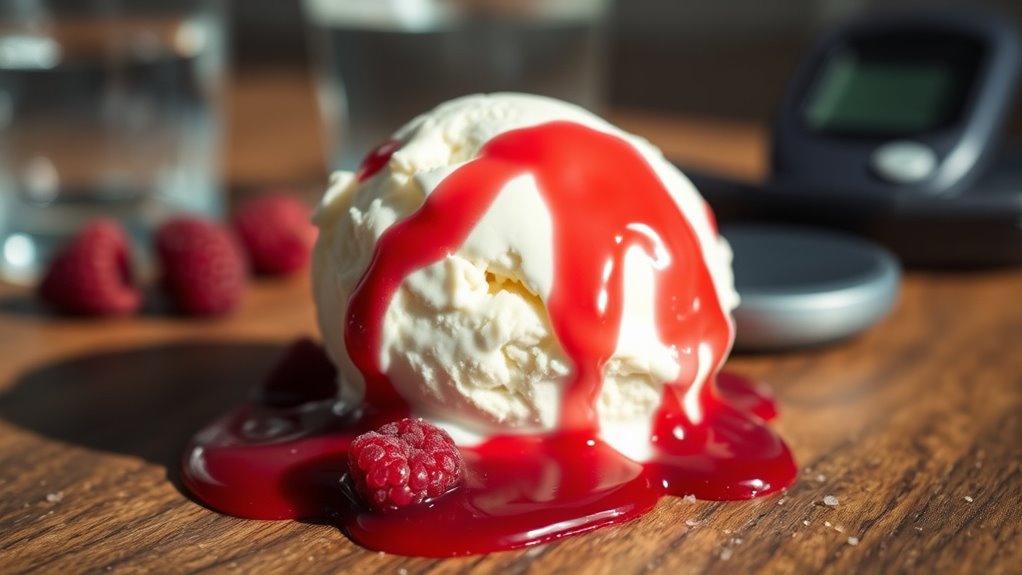
Understanding glycemic impact is essential if you want to manage your blood sugar levels effectively. When it comes to ice cream, a common treat, it’s important to recognize how its sugar content can influence your blood sugar spikes. Ice cream is typically high in sugars and fats, which means consuming large portions can lead to rapid increases in blood glucose. To keep your levels steady, you need to pay close attention to both the sugar content and your portion control. Smaller servings can help you enjoy your favorite flavors without causing drastic fluctuations in your blood sugar.
Knowing the sugar content in ice cream is key. Most regular ice creams contain added sugars that quickly raise blood glucose. Even flavors marketed as “low-fat” or “reduced sugar” can still have significant amounts of sugar. Reading labels becomes an *imperative* step in understanding how much sugar you’re consuming with each scoop. When you choose a smaller portion, you limit the amount of sugar entering your bloodstream at once, which can help prevent unwanted spikes. Portion control isn’t about deprivation; it’s about moderation. Using a small bowl or measuring out your servings can make a big difference in managing your blood sugar levels.
You might think that simply avoiding ice cream altogether is the best way to control your blood sugar, but that’s not necessarily true. Instead, focus on how much and what type of ice cream you’re eating. Opt for options with lower sugar content, such as those made with natural sweeteners or sugar substitutes. These alternatives tend to have a gentler impact on blood sugar levels. Additionally, pairing your small portion of ice cream with a protein or fiber-rich food can slow digestion and help keep your blood sugar more stable. For example, having a few nuts or a small handful of berries alongside your treat can be beneficial. Incorporating balanced meal planning strategies can further support blood sugar management when indulging.
As an affiliate, we earn on qualifying purchases.
Frequently Asked Questions
Does Adding Toppings Change Ice Cream’s Glycemic Impact?
Yes, adding toppings like topping sugar or flavor combinations can increase the glycemic impact of your ice cream. Toppings often contain additional sugars and carbs, which raise blood sugar levels more quickly. To enjoy your treat without spiking your blood sugar, choose toppings wisely—opt for nuts or fruit instead of sugary options. Keep in mind, the more toppings you add, the more your blood sugar can be affected.
Are Dairy-Free Ice Creams Better for Blood Sugar?
Dairy-free alternatives can be better for blood sugar considerations, especially if they’re made with lower-glycemic ingredients like coconut milk or almond milk. They often contain less lactose and may have fewer added sugars, which helps regulate blood sugar levels. However, always check labels, as some dairy-free options still contain added sugars or sweeteners that can impact your blood sugar. Choosing unsweetened versions gives you the best control.
How Does Serving Temperature Affect Glycemic Response?
Serving temperature variation influences your glycemic response because warmer ice cream melts faster, leading to quicker sugar absorption. Sensory perception plays a role here; when ice cream is too cold, you might not enjoy its full flavor, causing you to eat less. Conversely, slightly warmer ice cream feels softer and may cause you to eat more quickly, potentially spiking your blood sugar levels. Adjusting temperature helps you control portion size and blood sugar impact.
Can Alcohol-Infused Ice Creams Influence Blood Sugar Levels?
Alcohol-infused ice creams can influence your blood sugar levels by affecting alcohol absorption and sugar metabolism. When you consume these treats, alcohol slows down your body’s ability to process sugar, potentially causing blood sugar spikes or drops. The alcohol in the ice cream also impairs insulin function, making it harder to regulate blood sugar effectively. So, enjoy them in moderation to avoid unexpected fluctuations.
What Is the Effect of Homemade Versus Store-Bought Ice Cream?
You might think homemade ice cream is healthier than store-bought, and often it is because you control the ingredients. Homemade recipes use fresh, natural ingredients, avoiding preservatives and additives found in store-bought options. Store-bought ice creams can contain stabilizers and preservatives that may impact blood sugar differently. So, if you want to manage your blood sugar better, making ice cream at home with wholesome ingredients can be a smarter choice.
Conclusion
Understanding how ice cream affects your blood sugar is like reading the map to your health. While it’s a sweet treat that can bring joy, it can also stir up your blood sugar levels if you’re not careful. Think of it as a delicate dance—enjoy in moderation and pair it with balanced choices. By being mindful, you can savor the sweetness without letting your blood sugar run wild, keeping your health on the right track.