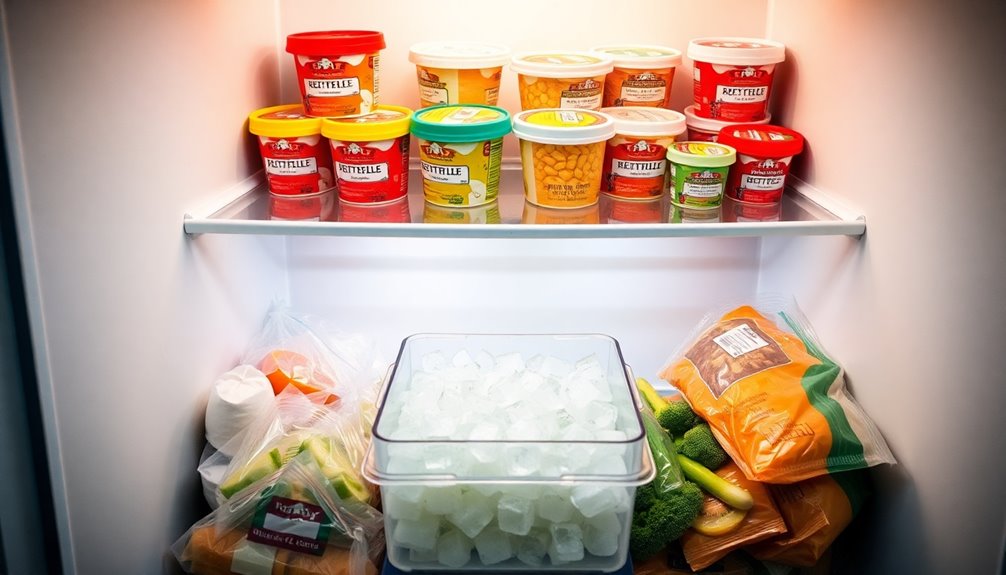

When storing ice cream with other foods, keep a few key points in mind. Always use airtight containers to prevent odor absorption, especially from strong-smelling items like garlic or fish. Place your ice cream in the coldest part of the freezer and avoid the door to maintain a consistent temperature. Seal opened containers tightly and cover the surface with plastic wrap to prevent freezer burn. Want to know more about ideal storage tips? There’s plenty more to explore!
Key Takeaways
- Store ice cream in airtight containers to prevent odor absorption from strong-smelling foods like garlic or fish.
- Place ice cream in the back center of the freezer for optimal coldness and stability.
- Avoid storing ice cream in the freezer door to prevent temperature fluctuations and softening.
- Keep ice cream away from frequently opened areas to maintain consistent temperature and quality.
- Surround ice cream with other frozen items to help regulate temperature and minimize exposure to warm air.

LayYun Ice Cream Containers for Homemade (4 Pack – 1 Quart Each), Reusable PP Plastic Ice Cream Storage Containers for Freezer, Leak-Free Ice Cream Containers with Silicone Lids
- Capacity: 1 Quart (1 Liter) per container
- Set Includes: 4 reusable containers
- Material: High-quality PP plastic and silicone lids
As an affiliate, we earn on qualifying purchases.
As an affiliate, we earn on qualifying purchases.
The Impact of Odor Absorption on Ice Cream Quality
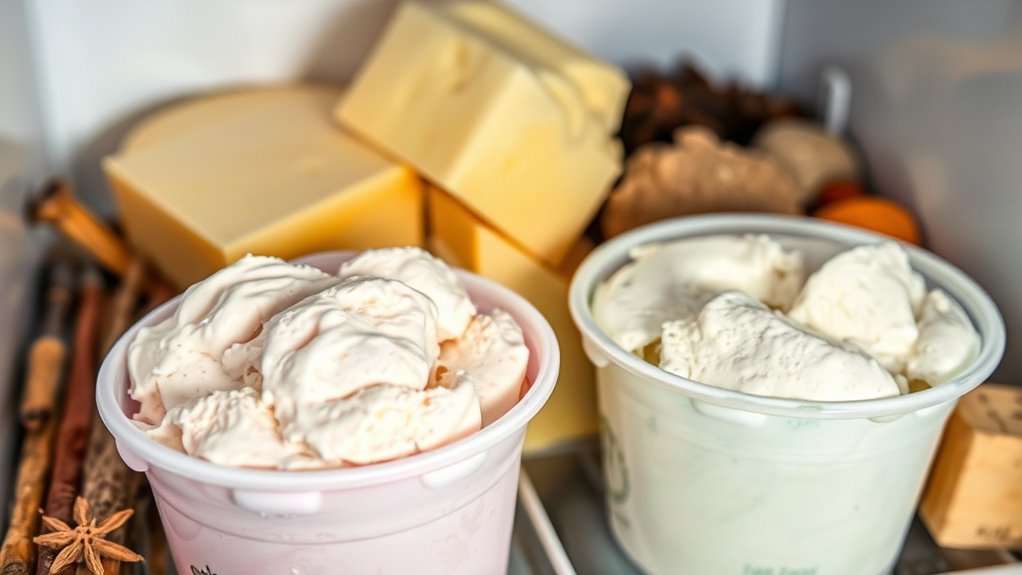
When you store ice cream alongside strong-smelling foods, you risk altering its flavor due to odor absorption. Ice cream, being a dairy product, is particularly sensitive to these scents, especially from items like garlic, onions, and fish. This can lead to significant flavor contamination, ruining your favorite treat.
To maintain ice cream quality, always practice proper storage techniques. Keep your ice cream in airtight containers to minimize exposure to odors. Additionally, make certain your freezer environment is neutral in scent by regularly checking for potential odor sources.
A clean, odor-free storage space is vital for preserving the delightful experience of enjoying your ice cream. Avoid mixing it with strongly scented foods to savor every scoop just as it was intended.
Ideal Freezer Placement for Ice Cream
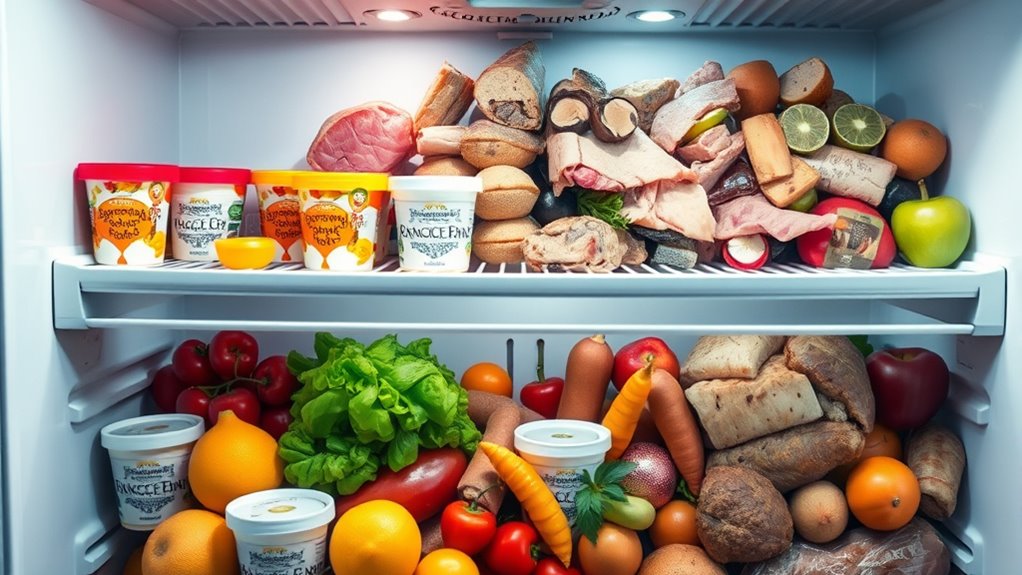
To keep your ice cream at its best, place it in the coldest part of the freezer, usually the back center shelf. This area maintains the ideal temperature of -10ºF to -20ºF, ensuring your ice cream stays hard and flavorful.
Avoid storing ice cream in the freezer door, where temperature fluctuations can lead to freezer burn. By positioning your ice cream containers surrounded by other frozen items, you help achieve consistent cold temperatures that preserve quality.
Keeping ice cream away from frequent door openings is essential to maintain its proper temperature. With these tips, you can effectively prevent freezer burn and enjoy delicious ice cream whenever you crave it!
Proper Sealing Techniques to Prevent Freezer Burn
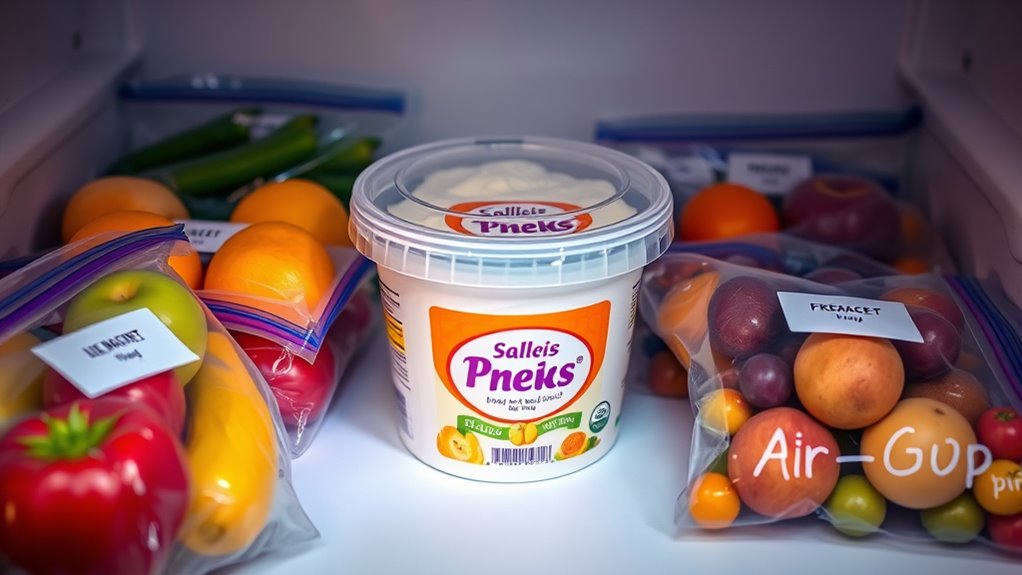
Properly sealing your ice cream is essential if you want to prevent freezer burn and maintain its creamy texture.
Start by using proper sealing techniques: cover the surface of opened ice cream with plastic wrap or wax paper. This barrier helps reduce air exposure, which can cause ice crystals to form. Additionally, consider using a container that minimizes air space, as a protein-rich start can also help in maintaining texture by reducing the likelihood of ice crystal formation.
Cover the surface of opened ice cream with plastic wrap or wax paper to minimize air exposure and prevent ice crystals.
After applying the barrier, make sure the container lid is tightly closed to keep the quality intact. For opened pints, cut a piece of parchment paper to fit the surface, place it on top, and then replace the lid.
Regularly check for signs of freezer burn, like ice crystals or dry patches, as they indicate air exposure.
Avoid letting ice cream melt and refreeze to keep its texture perfect. Maintaining proper cleanliness in your freezer can also contribute to improving indoor air quality, as it prevents odors and contamination from food spills.
Temperature Control: Keeping Ice Cream Frozen
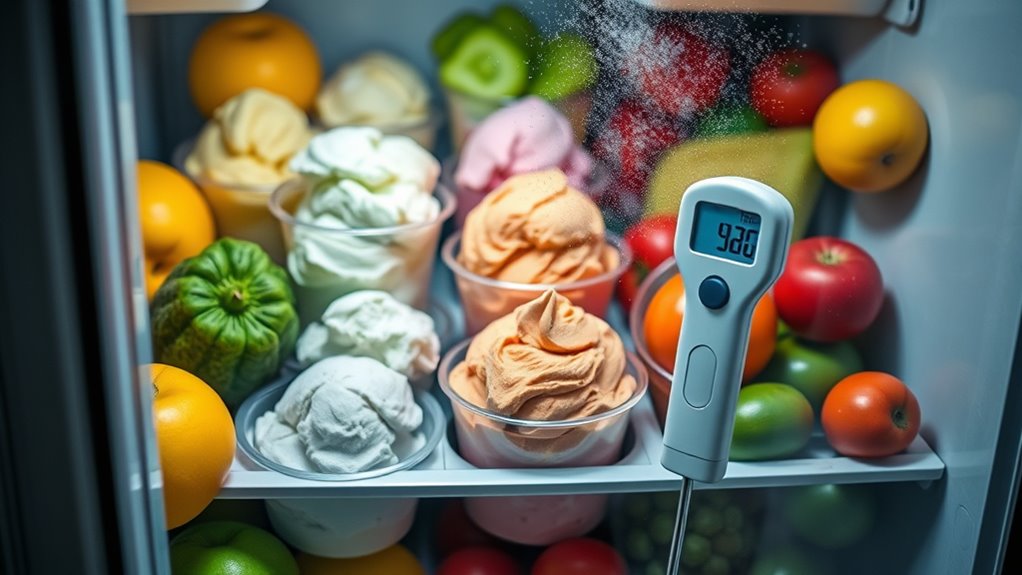
Maintaining the right temperature is essential for keeping your ice cream frozen and delicious. To guarantee peak flavor and texture, store ice cream at a consistent temperature between -10ºF and -20ºF.
Avoid placing it in the freezer door, where temperature fluctuations occur due to frequent openings. Instead, keep your ice cream in the back center shelf of the freezer, as it’s the coldest and most stable area.
Remember, ice cream shouldn’t exceed 0ºF during storage since this can lead to softening and degradation of quality. If possible, use a chest freezer, which maintains lower temperatures and experiences fewer openings.
When properly stored, your ice cream will remain hard to the touch and ready for enjoyment!
Shopping Tips for Preserving Ice Cream Freshness
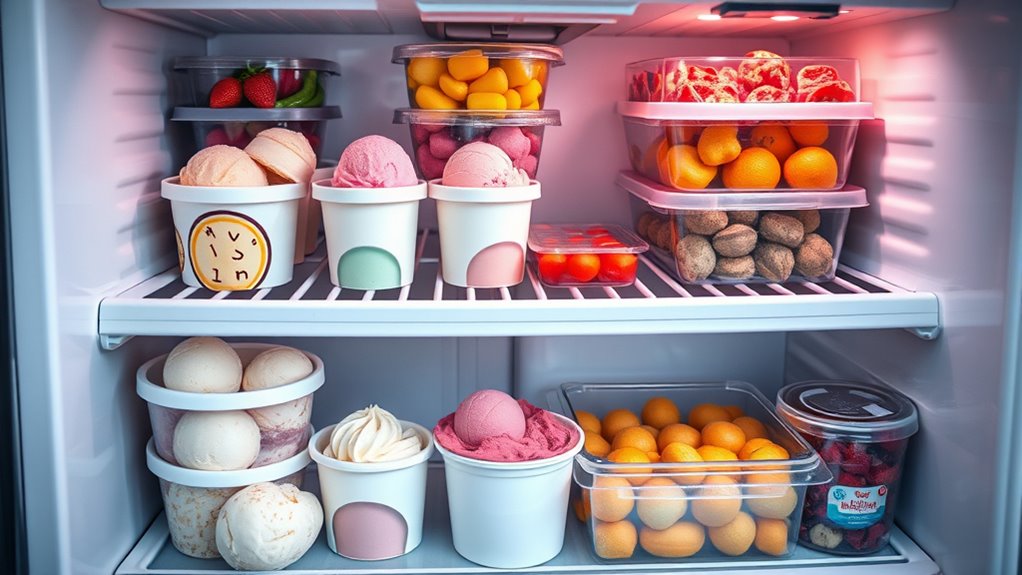
While you shop, keeping your ice cream as cold as possible is key to preserving its freshness. Always place it in your cart last to minimize exposure to warm air.
Choose ice cream from freezers maintained at below -20ºF (-29ºC) to guarantee it’s stored properly. If you can, use insulated shopping bags or request a freezer bag at the grocery store to help keep it thoroughly frozen.
Avoid letting your ice cream sit in a warm cart for too long, as this can cause partial melting and affect its texture.
Once you’re home, immediately transfer your ice cream to the coldest part of your freezer, ideally between -10ºF and -20ºF, to keep the remaining ice cream fresh for serving.
Frequently Asked Questions
What Can You Store Ice Cream In?
You can store ice cream in a variety of containers, but airtight ones are best.
Use heavy-duty plastic or glass containers with tight-fitting lids to keep it fresh and minimize air exposure.
If you’ve partially eaten the ice cream, cover the surface with plastic wrap or wax paper before sealing it.
For longer storage, consider a dedicated chest freezer, which helps maintain the ideal temperature for your favorite treat.
How to Keep Ice Cream Cold on a Buffet?
To keep ice cream cold on a buffet, place your containers in a shallow bowl filled with ice or ice packs. This helps maintain the chill throughout the event.
Use a double-walled insulated container to reduce temperature fluctuations. Regularly check and refill the ice as it melts.
Serve smaller portions in individual cups to limit exposure to warmer air, and keep the buffet away from direct sunlight or heat sources for best results.
Is It Better to Store Ice Cream in Glass or Plastic?
When it comes to storing ice cream, you’ll find plastic containers are generally better than glass.
Plastic’s lightweight and shatter-resistant nature makes it practical for long-term storage. Plus, they seal tightly, minimizing air exposure and preventing ice crystals from forming.
While glass may look nice, it can absorb odors and warm up more quickly when handled.
For the best results, stick with high-quality plastic containers designed for food storage.
How Long Can You Leave Ice Cream Unrefrigerated?
“You can’t have your cake and eat it too,” especially when it comes to ice cream!
You shouldn’t leave ice cream unrefrigerated for more than 2 hours. If the temperature’s above 90°F, aim to return it to the freezer within 1 hour.
Letting it sit out too long can cause it to melt and form unwanted ice crystals, ruining that creamy texture you love.
Keep it chilled for the best experience!
Conclusion
In the world of frozen treats, think of your ice cream as a delicate flower, needing protection from harsh elements. By storing it wisely and keeping it away from strong odors, you guarantee it blooms with flavor. Remember to seal it up tight, like wrapping a gift, and maintain a steady chill, just as a gardener nurtures their plants. With these simple steps, your ice cream will remain a sweet delight, ready to bring joy whenever you crave it.