
To keep your home ice cream making safe, start by thoroughly washing all utensils, bowls, and tools with hot, soapy water, then rinse well. Sanitize countertops, cutting boards, and measuring areas with a food-safe sanitizer or diluted bleach solution to prevent cross-contamination. Handle ingredients carefully, using clean utensils or gloves, and immediately clean and store equipment after use. Paying attention to sanitation guarantees your ice cream is both delicious and safe—learn more about good practices to perfect your process.
Key Takeaways
- Thoroughly wash all utensils, bowls, and tools with hot, soapy water to remove residue and bacteria.
- Sanitize countertops, cutting boards, and measuring areas with a food-safe sanitizer before use.
- Handle ingredients carefully, using sanitized utensils and minimizing hand contact to prevent contamination.
- Clean and sanitize equipment immediately after use and store in a covered, sanitized container if not used immediately.
- Maintain consistent sanitation practices to ensure food safety, prevent bacterial growth, and keep the final ice cream visually appealing.
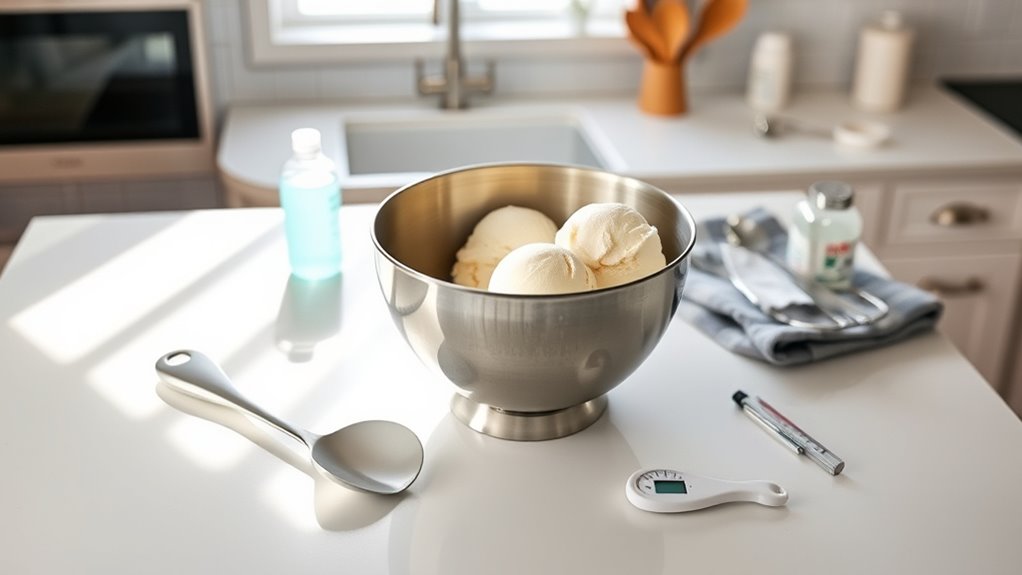
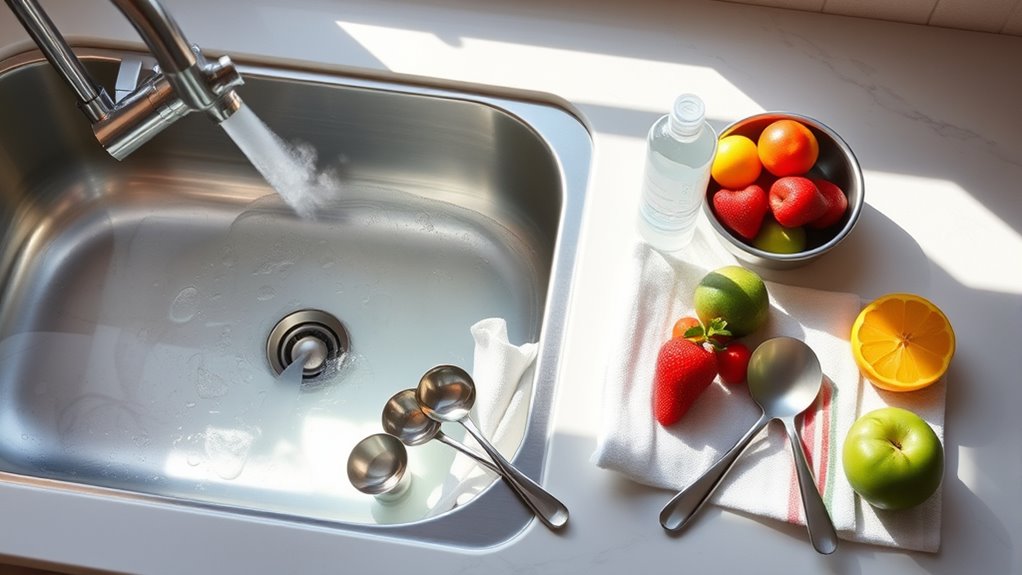
Making homemade ice cream is a fun and rewarding process, but ensuring proper sanitation is essential to prevent bacterial growth and achieve the best results. Before you start, take time to clean all your utensils thoroughly. This includes mixing bowls, spatulas, ice cream scoops, and any other tools you plan to use. Washing them with hot, soapy water helps remove any residue or bacteria that could contaminate your batch. After washing, rinse everything well to eliminate soap traces, which can affect the taste or safety of your ice cream. Remember, clean utensils are the foundation of sanitary food preparation.
In addition to cleaning utensils, you must also sanitize surfaces where you’ll be working. Countertops, cutting boards, and measuring areas should be wiped down with a food-safe sanitizer or a solution of diluted bleach. Allow the sanitizer to sit for a few minutes to effectively kill germs before wiping it dry with a clean cloth. This step prevents cross-contamination from raw ingredients or other sources that might carry bacteria. Maintaining a sanitized workspace ensures that all ingredients remain safe from bacteria, especially when handling dairy or eggs, which are common in ice cream recipes.
While preparing your ingredients, keep everything as clean as possible. Wash fruits, if used, and handle dairy products carefully, avoiding contact with unclean surfaces or utensils. When measuring ingredients, use sanitized measuring cups and spoons to prevent introducing bacteria into your mixture. During the mixing process, avoid touching the inside of bowls or the ice cream base with your hands; instead, use clean utensils or gloves. This minimizes the risk of bacterial transfer and keeps your ice cream safe to eat.
Once you’ve finished preparing your mixture, remember to clean and sanitize your equipment immediately. Leaving utensils or bowls sitting out increases the chance of bacterial growth, especially if they are not washed promptly. If you’re not planning to churn the ice cream right away, store the mixture in a covered container in the refrigerator, but still ensure the container is clean and sanitized beforehand. When you’re ready to freeze and serve, check your equipment again for cleanliness. A sanitized scoop or spoon helps prevent bacteria from spreading to your finished product.
Additionally, understanding the importance of color accuracy in food presentation can enhance the visual appeal of your homemade ice cream, making it even more enticing. A sanitized scoop or serving utensil is especially important to prevent cross-contamination, which can affect both safety and appearance.
In short, diligent cleaning and sanitizing are vital steps in home ice cream making. They protect your health, improve the quality of your dessert, and ensure your homemade ice cream is as delicious and safe as possible. Taking these simple precautions makes all the difference, turning a fun activity into a safe, memorable treat.
Frequently Asked Questions
Can I Reuse Ice Cream Containers Without Washing?
You shouldn’t reuse ice cream containers without washing them first, as container hygiene is vital for reuse safety. Bacteria and residue from previous use can contaminate your new batch, risking spoilage or illness. Always wash containers thoroughly with hot, soapy water and dry them well before reusing. This simple step helps prevent cross-contamination, maintains the quality of your homemade ice cream, and guarantees safe, delicious treats every time.
How Often Should I Sanitize My Ice Cream Maker?
Think of your ice cream maker as a trusted friend who needs regular care. You should sanitize it after every use, especially if you’ve made fruit or dairy-based flavors, to prevent bacteria buildup. Follow proper cleaning intervals—wash all parts thoroughly and sanitize at least once a week if used frequently. This routine keeps your ice cream safe, fresh, and tasting perfect, just like a well-loved recipe deserves.
Is It Safe to Use Tap Water for Ice Cream?
Yes, you can use tap water for ice cream, but make certain it’s safe by checking your local tap water safety reports. Using contaminated tap water increases the risk of ice cream contamination, which can cause illness. To minimize this, consider boiling tap water before use, especially if your water quality is questionable. This extra step helps ensure your ice cream stays safe and delicious for everyone to enjoy.
What Cleaning Supplies Are Best for Ice Cream Utensils?
You should use cleaning brushes and food safe sanitizers for your ice cream utensils. Cleaning brushes help remove residue and prevent buildup, while food safe sanitizers eliminate bacteria and guarantee safety. Make sure to thoroughly scrub all parts of your utensils with the brushes, then rinse and apply the sanitizer according to the instructions. This routine keeps your equipment clean and safe for making delicious, worry-free ice cream at home.
Can I Make Ice Cream in a Dirty Kitchen?
You shouldn’t make ice cream in a dirty kitchen because kitchen cleanliness directly impacts food safety practices. A dirty environment can introduce bacteria and contaminants that spoil your ice cream or make you sick. Before you start, verify surfaces, utensils, and equipment are thoroughly cleaned and sanitized. Keeping your kitchen clean helps maintain proper hygiene, ensuring your homemade ice cream is safe and delicious every time you make it.
Conclusion
By keeping everything clean and sanitized, you guarantee your homemade ice cream is safe and delicious. Remember, thorough sanitation isn’t just about following rules—it’s about caring for your health and creating the best treats possible. So, are you ready to enjoy your ice cream knowing you’ve taken every step to keep it pure? When you prioritize cleanliness, you’re not just making ice cream—you’re making memories with peace of mind.