To boost fruit flavors, try roasting to caramelize sugars and deepen sweetness, or macerate to extract and intensify natural aromas with liquids like syrup or alcohol. Purées break down cell walls, concentrating flavors and adding vibrant aroma notes. Each method enhances different qualities—roasting adds warmth, maceration amplifies freshness, and purées provide smooth intensity. Exploring these techniques further will unleash even richer, more complex fruit flavors in your dishes.
Key Takeaways
- Roasting caramelizes sugars, deepening flavor and enhancing aroma, ideal for robust fruit desserts and toppings.
- Maceration extracts and intensifies natural fruit flavors, adding brightness and preserving delicate aromas.
- Fruit purées break down cell walls, concentrating flavors and aromas for versatile use in sauces and desserts.
- Combining roasting with maceration or purées can create complex, layered fruit flavors in culinary applications.
- Selecting the right process depends on desired flavor intensity, aroma, and texture for specific fruit-based dishes.
Have you ever wondered how different preparation methods can transform the flavor of fruit? It’s fascinating how simple techniques like roasting, maceration, and creating purées can elevate fruit’s natural qualities. These methods don’t just change the texture—they considerably influence the fruit aroma and enhance the flavor in ways you might not expect. When you understand how each technique works, you can reveal new depths of taste, making your dishes or beverages more vibrant and appealing.
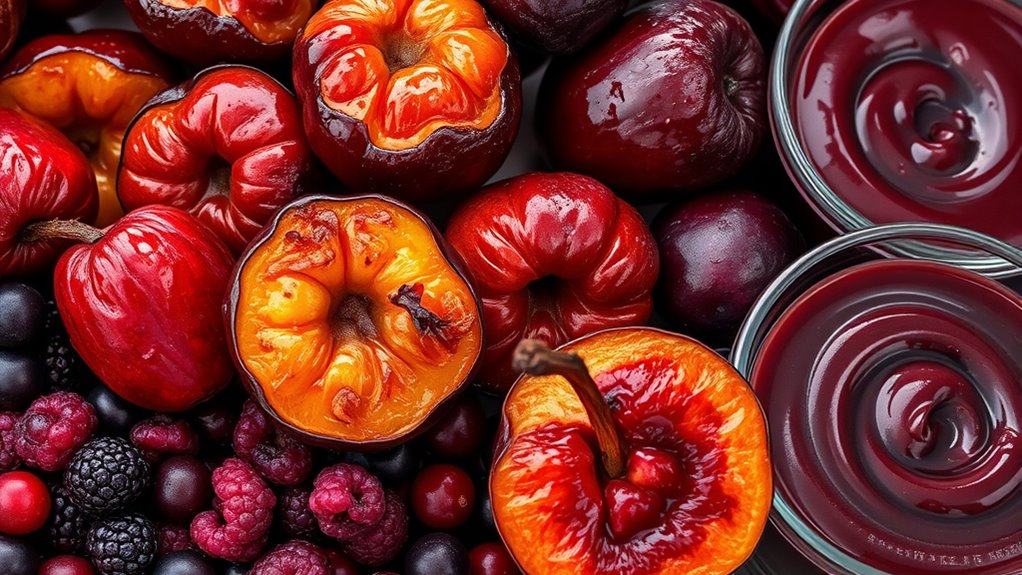
Start with roasting, a method that involves cooking fruit at high heat. When you roast fruit, the intense heat caramelizes the natural sugars, creating a richer, more complex flavor profile. This process also intensifies the fruit aroma, making it more pronounced and inviting. For example, roasted peaches develop a deep, smoky sweetness that’s perfect for desserts or toppings. The heat breaks down cell walls, releasing aromatic compounds that weren’t as noticeable before. As a result, the flavor becomes more concentrated and layered, giving your dish a warm, comforting depth. Roasting works especially well with stone fruits like apricots and plums, as well as apples and pears, transforming their delicate flavors into something more robust.
Roasting intensifies fruit flavors, creating rich, caramelized, and aromatic profiles perfect for desserts and toppings.
Maceration, on the other hand, involves soaking fruit in a liquid—often sugar, alcohol, or a combination—to draw out juices and intensify flavor. This process also enhances the fruit aroma by releasing volatile compounds into the surrounding liquid, which absorbs and carries those fragrant notes. As you macerate fruit, you’ll notice its natural sweetness becomes more pronounced, and the flavors meld with the added ingredients, creating a harmonious and more vibrant taste. For example, strawberries macerated in sugar and a splash of balsamic vinegar develop a deep, sweet-tart flavor that’s perfect for topping yogurt or incorporating into salads. Maceration is a gentle way to amplify the fruit’s inherent qualities without cooking out delicate aromas. It’s especially effective with berries, citrus, and stone fruits, allowing their natural brightness to shine through. Additionally, using labeled tableware enhances presentation and makes the experience more enjoyable.
Creating fruit purées offers a different kind of flavor enhancement. When you blend fruit into a smooth purée, you break down cell structures, releasing enzymes and aromatic compounds that heighten the fruit’s natural scent and flavor. The result is a concentrated, versatile ingredient that can serve as a base for sauces, desserts, or drinks. The process preserves the fruit’s freshness while intensifying its aroma and flavor. For example, a pureed mango or raspberry can add a vibrant, fragrant note to smoothies or tarts. The key to a good purée is balancing the fruit’s natural sweetness with the right amount of liquid or acidity to maximize flavor without overpowering it. This method keeps the fruit’s essence intact while making its aroma more accessible and its flavor more robust.
Frequently Asked Questions
How Do Different Fruit Varieties Affect Flavor Outcomes?
You’ll notice that different fruit varieties considerably impact flavor outcomes due to varietal differences. Each variety brings unique flavor profiles, such as sweetness, acidity, and aromatic qualities, which influence the final product’s taste. By selecting specific fruit types, you can enhance or balance flavors during processing. Understanding these varietal differences helps you craft more nuanced, appealing flavors, whether roasting, macerating, or making purées.
What Are the Best Storage Methods for Roasted or Macerated Fruits?
While it’s tempting to keep your roasted or macerated fruits in any container, the best approach is to use airtight containers and refrigeration. These methods help preserve their delicate flavors and textures, preventing spoilage and flavor loss. Make certain to store them properly, and consume within a few days for maximum freshness. Doing so ensures your fruit remains flavorful and safe to enjoy later.
Can These Techniques Be Applied to Tropical or Exotic Fruits?
Yes, you can adapt roasting, maceration, and purées to tropical and exotic fruits. These techniques help enhance tropical flavors and bring out unique qualities. For tropical flavor enhancement, roasting can develop deeper, richer tastes, while maceration infuses fruits with complementary flavors. Purées work well for creating vibrant sauces or smoothies. Just adjust timing and temperature to suit each fruit’s delicate nature, ensuring you preserve their vibrant, exotic essence.
How Do Processing Times Influence the Flavor Intensity?
Processing duration directly impacts flavor intensity by controlling flavor extraction. Longer processing times allow more thorough extraction of flavors, resulting in a richer, more intense profile. However, overdoing it can lead to bitterness or loss of delicate notes. You should find a balance, adjusting processing duration based on the fruit’s characteristics to optimize flavor without overpowering subtle nuances. Keep a close eye to achieve the perfect flavor balance.
Are There Health Benefits Associated With These Fruit Preparation Methods?
Think of these methods as treasure chests revealing health benefits. Roasting, maceration, and purées can boost nutritional benefits and antioxidant content by making nutrients more accessible. They may also reduce harmful bacteria, promoting better digestion. While they don’t replace fresh fruit, these techniques help preserve essential antioxidants and vitamins, contributing to overall health. So, you get more flavor and more wellness in every bite.
Conclusion
By exploring roasting, maceration, and purées, you discover a world of vibrant fruit flavors. Sometimes, it’s funny how a simple technique can transform your dish, almost like the fruit was waiting for its perfect moment to shine. When you experiment with these methods, you might find that even the most familiar fruits surprise you in the best way. It’s no coincidence—these techniques truly bring out the fruit’s hidden potential, making every bite memorable.