
To prevent a greasy mouthfeel in coconut-based ice cream, you should balance the coconut fat with lighter dairy-free ingredients and consider using lower-fat coconut milk or cream. Incorporate stabilizers like chia seeds or xanthan gum to improve texture, and blend thoroughly to guarantee an even fat distribution. Proper freezing, churning, and allowing the ice cream to soften slightly before serving help maintain a smooth, less greasy mouthfeel. Continue exploring these tips to perfect your ice cream.
Key Takeaways
- Use lighter coconut milk or blend with dairy alternatives to reduce overall fat and prevent greasiness.
- Incorporate stabilizers like chia seeds or xanthan gum to improve texture and prevent separation.
- Properly emulsify the mixture with high-speed blending for a smooth, cohesive ice cream.
- Control coconut cream quantity and balance ingredients to avoid oily aftertaste.
- Freeze in airtight containers and allow slight thawing before serving to enhance creaminess and minimize greasiness.

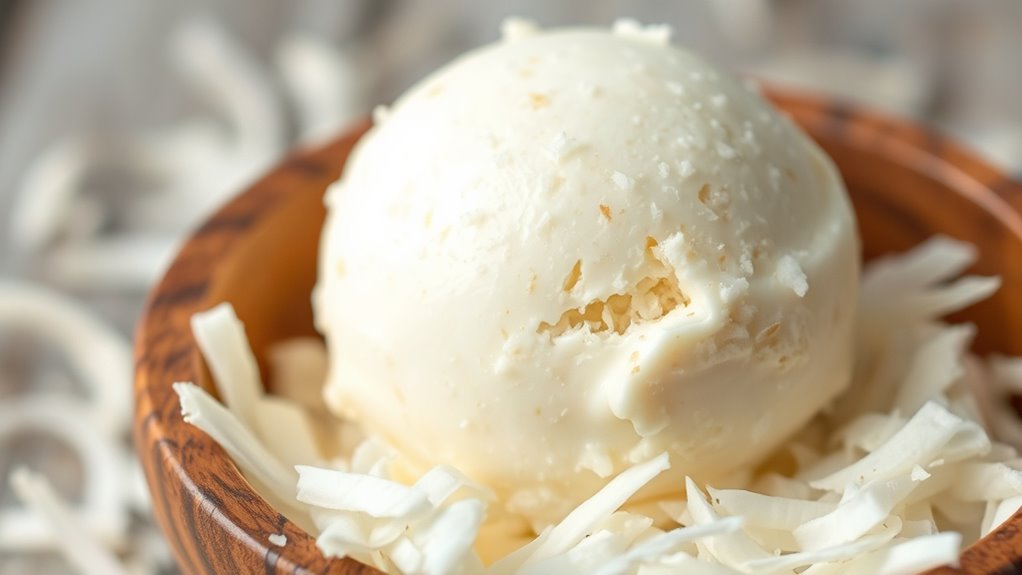
Coconut-based ice cream has gained popularity as a delicious and dairy-free alternative for those seeking a tropical twist. If you’re exploring dairy alternatives or looking to enjoy vegan desserts, coconut ice cream offers a rich, creamy texture without relying on dairy milk or cream. However, one common challenge with coconut ice cream is avoiding that greasy mouthfeel that can sometimes leave you feeling heavy or overly coated. To prevent this, understanding how to balance ingredients and improve texture is vital.
The key to preventing a greasy mouthfeel lies in selecting the right ingredients and preparing your coconut-based ice cream carefully. Coconut milk and cream are naturally high in fat, which contributes to creaminess, but too much can lead to an oily or greasy sensation on your palate. To counteract this, consider using lighter coconut milk or combining it with other dairy alternatives like cashew or almond milk. These tend to have a smoother, less greasy texture while still maintaining creaminess. When making vegan desserts, blending coconut with these lighter options helps create a balanced mouthfeel, ensuring your ice cream isn’t overly greasy.
Another important aspect is the emulsification process. Properly blending your ingredients ensures that fats are evenly distributed, which prevents separation and the greasy residue that sometimes forms. Using an immersion blender or high-speed blender can help achieve a smooth, cohesive mixture. Additionally, incorporating natural stabilizers like chia seeds or a small amount of xanthan gum can improve the texture, giving your ice cream a more refined, less oily consistency. These stabilizers help trap air and water molecules, creating a lighter, fluffier final product that feels less greasy on your palate.
Controlling the fat content is also vital. While coconut fat is what gives the ice cream its signature creaminess, reducing the amount of coconut cream used or mixing it with other dairy-free ingredients can prevent a greasy aftertaste. Sweeteners like agave syrup or maple syrup not only enhance flavor but also influence texture, helping to prevent ice crystals from forming and ensuring a smoother mouthfeel. Proper churning is essential too; over-churning can create an overly dense, greasy texture, so follow recommended times to achieve ideal creaminess without excess fat buildup.
Lastly, storage plays a role. Freezing your coconut ice cream in an airtight container and allowing it to sit at room temperature for a few minutes before serving can improve its texture. This small step helps melt some of the fats slightly, reducing the greasy sensation and making your vegan desserts more enjoyable. By paying attention to ingredient ratios, blending techniques, and storage methods, you can create coconut-based ice cream that’s irresistibly creamy without that greasy aftertaste, perfect for any dairy-free or vegan treat.
Frequently Asked Questions
How Does Coconut Fat Affect Ice Cream Texture?
Coconut fat influences ice cream texture by creating a rich, creamy mouthfeel. Its unique chemistry can pose emulsification challenges, making it harder to blend smoothly with other ingredients. You might notice a greasy mouthfeel if the fat isn’t properly emulsified. To improve texture, you should carefully control processing conditions and consider stabilizers. This way, you guarantee the coconut fat contributes to a luscious, balanced ice cream without greasiness.
Can Plant-Based Emulsifiers Reduce Greasy Mouthfeel?
You might think plant-based emulsifiers can’t fully improve mouthfeel, but they actually excel at reducing greasiness. When you include these emulsifiers, they help create a smoother, more balanced texture, enhancing mouthfeel without the oily aftertaste. By stabilizing fats and preventing separation, plant-based emulsifiers deliver a creamy experience, making your coconut-based ice cream feel less greasy and more indulgent, satisfying your cravings with every bite.
Which Natural Ingredients Improve Coconut Ice Cream’s Creaminess?
You can improve coconut ice cream’s creaminess by adding natural ingredients like plant-based stabilizers such as agar or guar gum, which enhance texture without greasiness. Incorporate flavor enhancers like vanilla or toasted coconut to boost richness and mouthfeel. These ingredients work together to create a smooth, creamy experience, reducing greasy sensation and delivering a satisfying, indulgent treat with natural, clean labels.
Are There Specific Processing Techniques to Minimize Greasiness?
To minimize greasiness, you should use alternative emulsification techniques like high-shear mixing or ultrasonication, which help create a stable blend without excess oil separation. Incorporate flavor enhancement methods such as natural stabilizers or emulsifiers to improve texture and mouthfeel. These techniques guarantee the coconut ice cream remains creamy without feeling greasy, providing a smoother, more enjoyable experience for your customers.
How Does Coconut Milk Variation Influence Ice Cream Consistency?
You’ll find that the variation in coconut milk substantially impacts ice cream consistency. Using full-fat coconut milk enhances creaminess and coconut flavor, but can increase greasiness if not processed carefully. Opting for light or processed coconut milks reduces greasiness and allergen concerns, creating a smoother texture. Adjusting the coconut milk type helps balance flavor, allergen considerations, and mouthfeel, ensuring your ice cream remains rich yet not greasy.
Conclusion
Remember, a good thing takes time, and with the right ingredients, your coconut-based ice cream can deliver a creamy, satisfying experience without that greasy aftertaste. By carefully balancing fats and textures, you’ll enjoy a delicious treat that feels indulgent but isn’t overwhelming. Keep in mind that patience pays off—trust the process, and you’ll create a dessert that delights without compromise. As the saying goes, “Rome wasn’t built in a day,” so savor every step of your tasty journey.