
Milkshake spindle mixers and blenders create different textures because of how their designs handle ingredients. Spindle mixers gently stir the mixture with slow, controlled movement, producing a smooth, velvety finish without much foam. Blenders use high-speed blades that break down ice quickly, resulting in a lighter, frothier shake with more aeration. By understanding these differences, you can choose the right equipment for the perfect milkshake texture—continue to explore how each impacts the final result.
Open a free Amazon Business account
Business pricing, bulk buying and tax-exempt orders.
As an affiliate, we earn on qualifying purchases.
Key Takeaways
- Spindle mixers use slow, gentle stirring, preserving a smooth, velvety milkshake texture, unlike blenders’ rapid, high-shear action.
- Blenders’ fast blades introduce more air, creating a frothy, aerated consistency, whereas spindle mixers avoid excessive aeration.
- Mechanical design differences dictate whether the equipment produces dense, creamy shakes or light, foamy ones.
- Proper maintenance of spindle mixers ensures consistent gentle mixing, while wear can alter texture outcomes.
- The controlled, low-impact mixing of spindle mixers maintains the richness and smoothness distinct from blender-produced textures.

When it comes to making milkshakes, choosing the right equipment can make a big difference in the final product. Milkshake spindle mixers and blenders each produce distinct textures, and understanding why can help you make better choices. In dairy processing, the type of equipment you use influences not just the consistency but also the richness and mouthfeel of your milkshakes. Spindle mixers, often used in commercial settings, operate differently from blenders, creating unique results due to their design and mixing mechanics.
Choosing the right equipment, like spindle mixers or blenders, greatly affects your milkshake’s texture and richness.
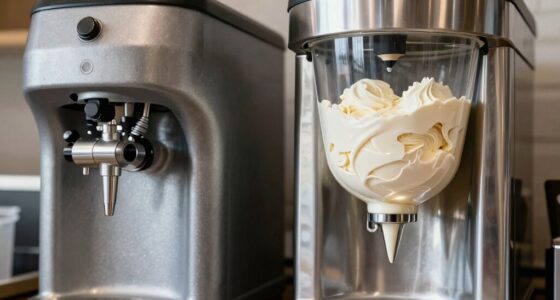
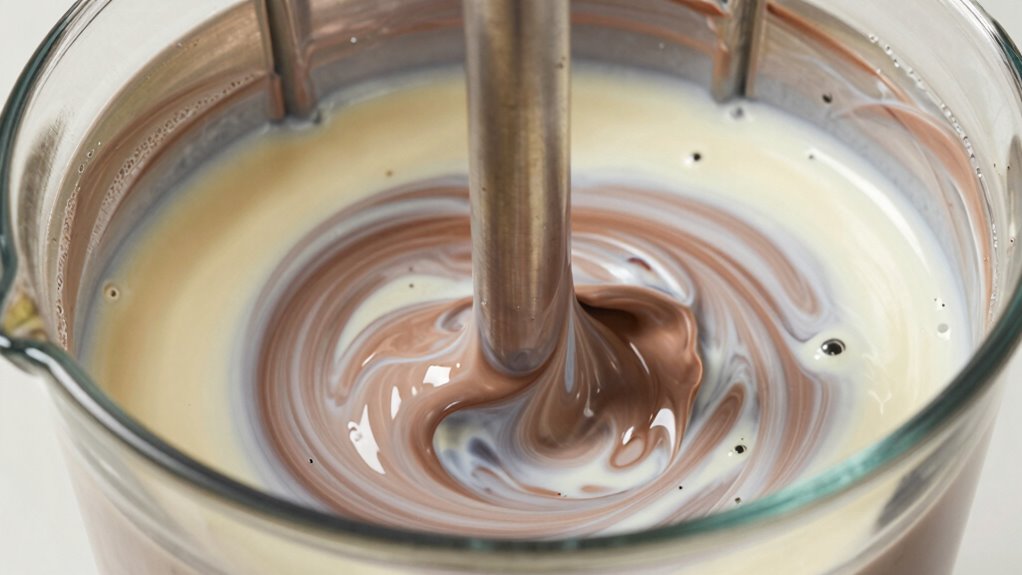
A spindle mixer works by rotating a vertical spindle with attached paddles or blades that stir ingredients gently. This method promotes a slow, controlled mixing process that preserves the integrity of delicate ingredients like ice cream and dairy. Because of this, spindle mixers tend to produce a creamier, smoother texture that feels luxurious on the palate. The gentle agitation minimizes aeration, so you don’t get a frothy or overly airy shake. Instead, the result is a dense, velvety consistency, which many consider ideal for high-quality milkshakes.
In contrast, blenders operate with rapidly spinning blades that pulverize ingredients with high speed. This vigorous action introduces more air into the mixture, creating a lighter, frothier texture. While this can be desirable for some recipes, it often results in a less dense milkshake that feels more like a smoothie. The churning action of blenders also breaks down ice more quickly, which can sometimes lead to a thinner consistency if not carefully controlled. The rapid blending can generate heat, which might slightly alter the dairy’s texture over time, impacting the overall quality of the shake.
Another factor that influences texture is equipment maintenance. Both spindle mixers and blenders require regular cleaning and servicing to operate at their best. In dairy processing, neglecting maintenance can lead to uneven mixing, bacterial buildup, or mechanical failure—all of which can compromise the quality of your milkshake. Proper maintenance ensures that the equipment functions smoothly, maintaining the precise mixing action needed to achieve the desired texture. This is especially vital with spindle mixers, where worn paddles or misaligned spindles can disrupt the gentle stirring process, resulting in inconsistent consistency.
Additionally, the mechanical design of each piece of equipment plays a crucial role in the resulting texture, with spindle mixers designed for gentle, controlled stirring and blenders built for rapid, high-shear mixing. Ultimately, the difference in texture between spindle mixers and blenders stems from their mechanical design and mixing action. Your choice depends on whether you want a dense, velvety milkshake or a lighter, frothier one. By understanding these distinctions and keeping your equipment well-maintained, you can consistently craft milkshakes with the perfect texture to satisfy your preferences.
As an affiliate, we earn on qualifying purchases.
Frequently Asked Questions
Can Spindle Mixers Handle Hot Ingredients Safely?
Yes, spindle mixers can handle hot ingredients safely if they’re designed for that purpose. You should check hot ingredient safety features in the product. Look for durable spindle material to withstand high temperatures and prevent damage. Always follow manufacturer instructions to guarantee safe operation. Properly handling hot ingredients with a suitable spindle mixer protects both you and the equipment, ensuring consistent results without risking safety or durability.
Do Spindle Mixers Incorporate Air Differently Than Blenders?
You can’t judge a book by its cover, and the same goes for spindle mixers. They incorporate air differently through their unique mixing mechanics, often creating a denser or creamier texture. Unlike blenders, which whip air in quickly, spindle mixers gently fold air into ingredients, resulting in a distinct, richer consistency. This difference makes spindle mixers ideal for achieving specific textures that blenders might not replicate as effectively.
Are Spindle Mixers Suitable for Making Non-Dairy Milkshakes?
Yes, spindle mixers are suitable for making non-dairy milkshakes. They offer excellent non-dairy compatibility and give you better texture control compared to blenders. You can easily create smooth, creamy results without over-processing, preserving the desired consistency. Plus, spindle mixers handle thicker, non-dairy ingredients well, making them a versatile choice for customizing your milkshake’s texture to your liking.
How Does the Cleaning Process Differ Between Mixers and Blenders?
You’ll find cleaning a spindle mixer simpler than a blender because of its design, which minimizes residue buildup. Spindle mixers often have fewer crevices, making residue removal easier with a quick rinse or wipe. In contrast, blenders can trap ingredients in hard-to-reach spots, requiring more thorough cleaning. Overall, spindle mixers offer better cleaning ease, helping you maintain hygiene effortlessly and saving time after each use.
What Is the Typical Lifespan of a Spindle Mixer Compared to a Blender?
You’ll find that spindle mixers generally have a longer durability compared to blenders, often lasting several years with proper maintenance. They require less frequent repairs and are built for continuous use, whereas blenders may need replacement or repairs sooner due to their simpler design. Regular maintenance, like cleaning and checking components, extends the lifespan of both, but spindle mixers are designed for more demanding, long-term use.
Conclusion
Now that you know how milkshake spindle mixers dance differently from blenders, you can picture each as its own artist shaping your treat. The spindle mixer’s gentle twirl stirs a silky, textured masterpiece, like a delicate snow globe, while the blender’s vigorous whirl creates a smooth, stormy sea. So, next time you crave that perfect scoop, imagine the mixer as a wizard wielding a wand, crafting textures that enchant your taste buds with every delightful bite.
Fall yard work Picks
leaf blowers
As an affiliate, we earn on qualifying purchases.