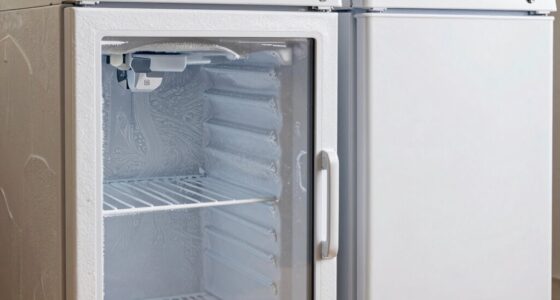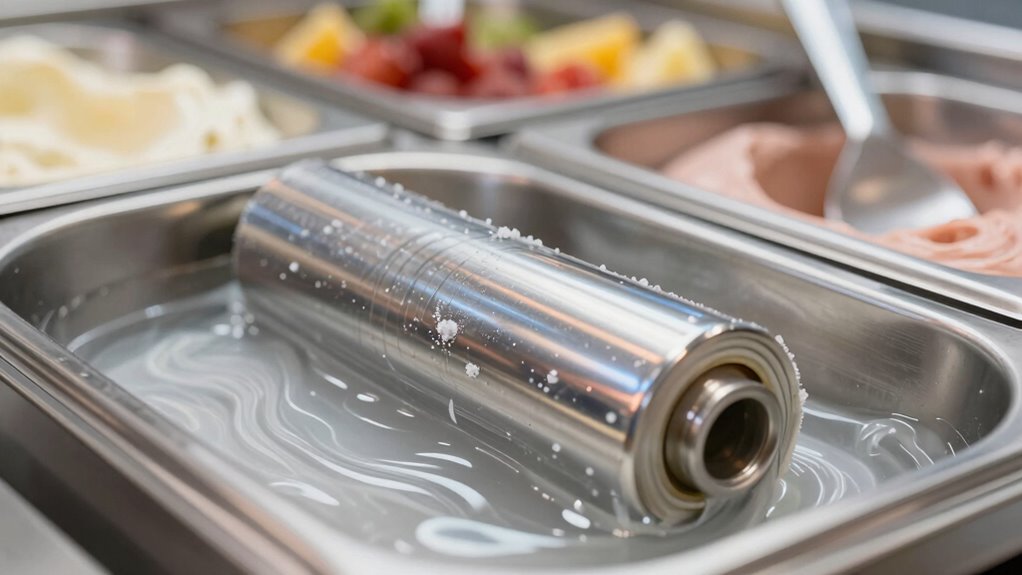

The freezing surface on rolled ice cream cold plates works by rapidly lowering the temperature of the metal surface, usually through a refrigerant system, creating a super-cold surface ideal for freezing ingredients as you spread them thin. The temperature you set influences how fast and evenly the ice cream freezes, affecting texture and flavor retention. Proper maintenance keeps these surfaces working effectively, so if you want to know how to optimize performance, more details await you.
Key Takeaways
- Cold plates are metal surfaces that rapidly freeze ice cream mixtures, enabling the signature rolled texture.
- The surface temperature, controlled by the cooling system, determines freezing speed and flavor preservation.
- Proper maintenance ensures consistent surface temperature, preventing uneven freezing and flavor inconsistencies.
- The refrigerant flow and cooling components regulate the surface temperature, directly affecting freezing efficiency.
- Regular cleaning and system checks optimize the freezing surface’s performance for high-quality rolled ice cream.
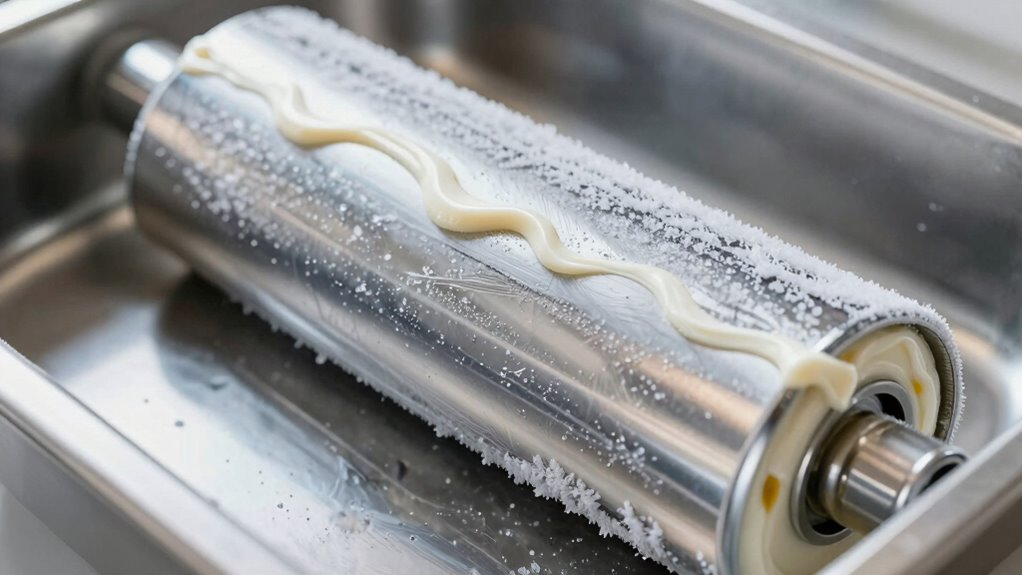
Rolled ice cream cold plates are essential tools for crafting the signature rolled ice cream style that’s gained popularity worldwide. These metal surfaces are the foundation for creating the smooth, creamy texture that makes rolled ice cream so unique. When you start making your ice cream, you’ll appreciate how the cold plate’s temperature directly influences the ice cream flavors you choose. The colder the surface, the faster your ingredients freeze, allowing you to work quickly and efficiently. This rapid freezing helps lock in the flavors and guarantees that each roll is perfectly textured. If your cold plate isn’t maintained properly, it can lead to inconsistent freezing, which might compromise the quality of your ice cream and limit your flavor options.
Maintaining your cold plate is indispensable for consistent results. Regular cold plate maintenance involves cleaning the surface thoroughly after each use to prevent residue buildup, which can interfere with freezing performance. Use a scraper to remove any remaining ice cream and wipe down the surface with a damp cloth and mild detergent. Avoid abrasive cleaners that could scratch or damage the metal, as this could affect heat transfer and freezing efficiency. Proper maintenance also involves checking the refrigerant levels and ensuring the cooling system is functioning correctly. A well-maintained cold plate maintains a consistent temperature, which is essential for working with a variety of ice cream flavors, especially those with delicate or complex profiles. Additionally, understanding the cooling system components can help troubleshoot performance issues more effectively.
When selecting ice cream flavors, the temperature of your cold plate plays a significant role. Some ice cream ingredients require quick freezing to preserve their texture and flavor, while others benefit from a slightly warmer surface to prevent over-hardening. For example, fruit-based or dairy-heavy flavors might need different handling techniques to achieve the perfect swirl. By understanding how your cold plate’s temperature affects different ingredients, you can customize your approach to maximize flavor and texture. This knowledge also helps you troubleshoot issues, like inconsistent freezing or ice cream that melts too quickly.
As an affiliate, we earn on qualifying purchases.
Frequently Asked Questions
How Long Does It Take to Freeze the Cold Plate?
It typically takes about 15 to 30 minutes to freeze a cold plate, depending on the temperature regulation settings and the initial temperature of the plate. During this freezing duration, you should monitor the surface to make sure it reaches the ideal temperature for ice cream rolling. The right freezing duration ensures the surface is cold enough to quickly freeze the ingredients, making your rolled ice cream process smooth and efficient.
What Materials Are Used for Cold Plates?
You’ll find cold plates made from materials with high thermal conductivity, like copper or aluminum, which help transfer cold efficiently. These materials are selected for their ability to quickly absorb and dissipate heat, ensuring the surface freezes quickly when chilled. Choosing the right materials for cold plates is essential for peak performance, so you want options that balance durability and excellent thermal conductivity to keep your ice cream perfectly frozen.
Can Cold Plates Be Customized for Different Sizes?
Like a blank canvas waiting for your touch, cold plates can absolutely be customized for different sizes. You have a variety of customization options, allowing you to adapt the size to fit your specific needs. Whether you want a smaller, more portable surface or a larger one for high-volume production, manufacturers can tailor the cold plates to match your desired size adaptations, ensuring your rolled ice cream experience is perfectly personalized.
How Energy-Efficient Are Rolled Ice Cream Cold Plates?
You’ll find that rolled ice cream cold plates are quite energy-efficient, helping you save on energy consumption. They use minimal power while maintaining effective freezing temperatures, which reduces their environmental impact. By choosing models with good insulation and energy-saving features, you can further lower energy use. Overall, these cold plates are a smart, eco-friendly option for your ice cream business, balancing performance with sustainability.
What Maintenance Is Required for Cold Plates?
Think of cold plates like a car’s engine—they need regular checkups. You should clean cold plates daily with gentle cleaning protocols to prevent buildup, and periodically inspect for residue. Also, regularly calibrate the temperature to guarantee ideal freezing. I once forgot to calibrate, and the ice cream melted faster than expected. Proper maintenance keeps your cold plates running smoothly and your ice cream consistently perfect.
Conclusion
Now that you understand how rolled ice cream cold plates work, you can appreciate the science behind each freeze, each layer, each roll. You see how the surface cools, how the temperature controls, how the process transforms ingredients into art. You realize that mastery lies in the balance, precision, and patience. With this knowledge, you’re not just a spectator—you’re a creator, a connoisseur, a storyteller. Embrace the process, enjoy the craft, and savor the cold perfection.