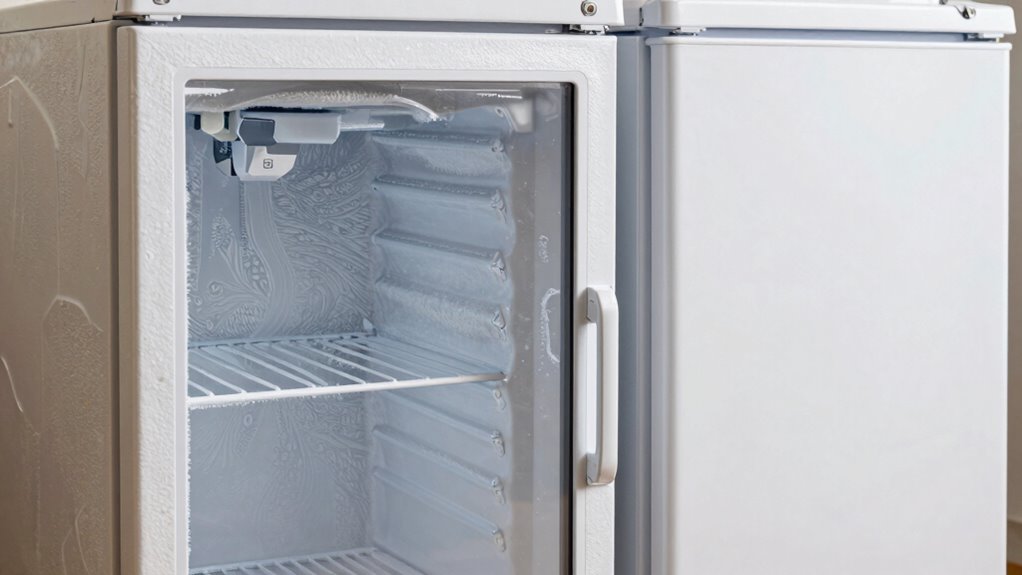

Hardening freezers protect your food’s texture better than standard deep freezers because they maintain a consistently lower and more stable temperature. This prevents temperature fluctuations that cause cell damage and large ice crystal formation, which can ruin texture and flavor. With a steady cold environment, your food stays fresher, looks better, and retains its quality longer. If you want to understand how this works and the benefits it offers, keep exploring further.
Prime for Young Adults — start your free trial
Fast free delivery, streaming and member deals for eligible 18–24 year olds.
As an affiliate, we earn on qualifying purchases.
Key Takeaways
- Hardening freezers maintain lower, more stable temperatures, preventing cell damage and texture degradation in stored food.
- They reduce temperature fluctuations that cause large ice crystal formation, preserving food’s cellular structure.
- Enhanced insulation and robust components minimize temperature swings, protecting delicate textures over time.
- Consistent cold environments prevent moisture loss and freezer burn, keeping food appearance and mouthfeel intact.
- Better temperature control reduces the risk of spoilage, ensuring high-quality, fresh-tasting food longer.

When choosing a freezer for your needs, understanding the difference between hardening and standard models can make a significant impact on your storage efficiency and security. Hardening freezers are designed to operate at lower temperatures and maintain a more consistent cold environment, which directly benefits the preservation of food texture. Unlike standard freezers, which fluctuate slightly in temperature, hardening models provide a stable environment that prevents cell damage in your stored items. This stability guarantees that your food retains its original texture, flavor, and quality over time, reducing waste and the need for frequent refreezing or cooking adjustments. Additionally, the temperature stability of hardening freezers plays a crucial role in maintaining food integrity over extended periods. Maintaining a consistent environment is especially important for sensitive items such as seafood or high-end meats, which are more prone to texture degradation. The temperature regulation capabilities of hardening freezers also help prevent the formation of large ice crystals that can damage cell walls, further protecting food texture. Furthermore, the consistent cold environment minimizes the risk of freezer burn, which can negatively impact food quality.
Hardening freezers offer stable temperatures to preserve food texture and reduce waste over time.
Energy efficiency plays an essential role when comparing these two types of freezers. Hardening freezers tend to be more energy-efficient because their consistent temperature regulation requires less power to maintain the desired cold environment. Because they operate more efficiently, you’ll likely see lower electricity bills over the long run, making them a cost-effective choice despite their typically higher upfront investment. When you consider the cost comparison, it’s important to factor in both initial purchase price and ongoing operational expenses. While standard freezers may be cheaper initially, the extra energy consumption and potential for more frequent defrosting or repairs can offset those savings.
The durability of hardening freezers also contributes to why they protect texture better. Their build quality often includes better insulation and more robust compressors, which help sustain a uniform temperature and reduce temperature swings. This means your stored food isn’t subjected to the stress of freezing and thawing cycles that can compromise texture. Over time, this leads to fresher-tasting, better-looking food that maintains its original consistency longer than in standard freezers. A robust construction is a key factor in ensuring long-term performance and reliability. Additionally, the enhanced durability of these freezers often translates into fewer maintenance issues and a longer lifespan.
In terms of security, hardening freezers are less prone to temperature-related spoilage, which is especially important if you store sensitive or high-value items. The reduced risk of spoilage means you don’t have to worry as much about losing your investment due to power outages or fluctuating temperatures. Additionally, the consistent cold environment minimizes ice buildup, reducing maintenance efforts and preventing damage to the freezer itself, further extending its lifespan. This reliability is particularly valuable for commercial settings where food quality is paramount.
Ultimately, choosing a hardening freezer means investing in a device that not only preserves your food’s texture more effectively but also offers better energy efficiency and long-term savings. While the initial cost may be higher, the benefits of improved food quality, lower energy bills, and greater durability make it a smart choice for those who prioritize food integrity and operational efficiency.
hardening freezer for food preservation
As an affiliate, we earn on qualifying purchases.
As an affiliate, we earn on qualifying purchases.
Frequently Asked Questions
How Does Hardening Affect Freezer Energy Efficiency?
Hardening improves freezer energy efficiency by enhancing thermal insulation, which reduces heat transfer and keeps cold air inside longer. When your freezer is well-hardened, it uses less energy to maintain the desired temperature, promoting energy conservation. You’ll notice this efficiency because the compressor doesn’t have to work as hard, saving electricity and reducing your overall energy costs. This makes hardened freezers a smarter, more sustainable choice.
Can Hardening Be Applied to Existing Standard Freezers?
Yes, you can apply hardening to existing standard freezers through retrofit options. While it might involve some hardening costs, many upgrades are designed to integrate smoothly with current units. Retrofit options typically include adding insulation or advanced cooling systems to improve texture protection. Keep in mind, though, that the overall cost-effectiveness depends on your freezer’s current condition and the specific hardening measures you choose.
What Materials Are Used in Freezer Hardening?
You might think freezer hardening uses complex materials, but it mainly involves specialized insulation panels and thermal compounds. For example, a food processing plant improved product texture by applying a hardening process with polyurethane insulation, known for its excellent insulation properties and lightweight material composition. These materials create a barrier that maintains consistent low temperatures, preventing ice crystal growth and preserving texture. The focus on insulation properties and material composition makes a big difference.
Is Hardening Suitable for All Types of Frozen Foods?
Hardening is suitable for most frozen foods, especially those where texture maintenance is crucial, like meats, seafood, and baked goods. It helps preserve food quality during preservation by rapidly freezing and reducing ice crystal damage. However, some delicate items, like certain fruits or vegetables, might not benefit as much. You should evaluate each food type’s specific needs to determine if hardening enhances their preservation and maintains ideal texture.
How Long Does the Hardening Process Typically Take?
Did you know that the hardening process typically takes 3 to 8 hours? During this time, temperature stability is essential, ensuring the frozen food reaches ultra-low temperatures quickly. This rapid cooling prevents frost formation and preserves texture. The duration varies depending on food size and type, but a well-maintained hardening freezer accelerates this process, safeguarding quality and consistency in your frozen products.
Conclusion
Just as the ancients knew the value of preserving life’s precious moments, hardening freezers safeguard your food’s texture with unwavering resilience. Unlike standard freezers, they stand firm against the chaos of temperature fluctuations, ensuring each bite remains as fresh and vibrant as the day it was frozen. Embrace this modern marvel, and let your culinary treasures echo the timeless wisdom of preservation—protect what matters most, and savor every moment with confidence.
Fall yard work Picks
leaf blowers
As an affiliate, we earn on qualifying purchases.