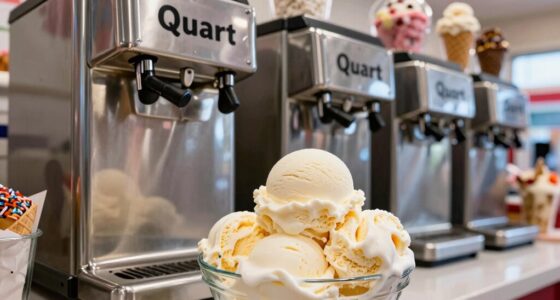
The main difference between compressor and freezer-bowl ice cream makers is how they cool the mixture. Compressor models have built-in refrigeration, so you can make ice cream immediately without pre-freezing the bowl, making them more convenient and suitable for frequent use or larger batches. Freezer-bowl models need you to pre-freeze the bowl first, limiting spontaneity. If you want to explore how this difference impacts your choices, there’s more to uncover ahead.
Key Takeaways
- The main difference is that compressor models have built-in refrigeration, allowing immediate use without pre-freezing, unlike freezer-bowl units.
- Compressor ice cream makers can produce larger batches faster, suitable for frequent use, while freezer-bowl models are more limited and manual.
- Freezer-bowl machines require pre-freezing the bowl for hours, adding planning time; compressor units are ready to use instantly.
- Compressor models are generally more expensive but offer greater convenience and capacity; freezer-bowl units are budget-friendly but less flexible.
- The key distinction impacts ease of use, batch size, and suitability for regular or occasional ice cream making.

When choosing an ice cream maker, understanding the difference between compressor and freezer-bowl models can help you make the right decision. One key aspect to contemplate is manual operation. With freezer-bowl models, you need to pre-freeze the bowl for several hours before making ice cream. This means you’ll manually prepare ahead of time, which can be inconvenient if you’re enthusiastic to whip up a batch. On the other hand, compressor models don’t require pre-freezing since they have a built-in refrigeration system. This allows you to start making ice cream whenever you want without planning ahead. The manual operation of freezer-bowl units limits flexibility but keeps costs lower, making them suitable if you only plan to make ice cream occasionally. Compressor models tend to be more user-friendly and faster, especially if you often crave fresh desserts. Additionally, some models incorporate credit card security measures to protect your payments during online purchases, ensuring safe transactions whenever you buy new appliances. Storage capacity is another important factor influenced by the type of machine you choose. Freezer-bowl models generally have smaller bowls, typically ranging from 1 to 2 quarts. This limits the amount of ice cream you can produce at one time, which might be a concern if you entertain or have a big family. However, their compact size makes them easier to store and more affordable. Compressor models usually come with larger capacities, often exceeding 2 quarts, allowing you to make more ice cream in a single batch. Their larger size means you’ll need more storage space, but they’re ideal if you want to serve multiple people or stock up for later. Additionally, some compressor units have features like double bowls, enabling you to prepare different flavors simultaneously or keep one batch frozen while starting another. While manual operation and storage capacity are key differences, they’re also interconnected. With freezer-bowl models, you’re limited by the frozen bowl’s size, and the manual process requires planning. Compressor models offer more convenience and larger capacity, making them better suited for frequent use or larger gatherings. If you prefer a quick, hassle-free experience and need more ice cream at once, a compressor model is likely the better choice. Conversely, if you’re on a budget and only occasionally make small batches, a freezer-bowl model might suffice. Ultimately, understanding how manual operation and storage capacity affect your usage helps you select an ice cream maker that fits your lifestyle and guarantees you enjoy homemade ice cream whenever you crave it.
Frequently Asked Questions
Which Type Is More Energy-Efficient for Regular Ice Cream Making?
They say “a penny saved is a penny earned,” and when it comes to energy efficiency, freezer-bowl ice cream makers use less power in the long run. Without a compressor, they consume less energy during each batch, making them more power-efficient for regular ice cream making. If you want to save on energy consumption, go for a freezer-bowl model. It’s a smart choice that keeps your electricity bill in check.
How Long Does Each Machine Typically Take to Freeze and Churn?
You’ll find that compressor machines typically take around 20 to 40 minutes for freezing times and churn durations, offering a quick turnaround. In contrast, freezer-bowl models need about 30 to 60 minutes for freezing and churning, depending on the ingredients and freezer temperature. Your choice depends on how fast you want your ice cream and whether you prefer a one-step process or pre-freezing the bowl.
Can Freezer-Bowl Machines Make Soft-Serve or Gelato?
You can definitely make soft-serve and gelato with freezer-bowl machines if they’re designed for it. Many models offer soft-serve capabilities and gelato compatibility, but check the product details to be sure. The key is that the freezer bowl must stay consistently cold during churning. With the right setup, you’ll enjoy smooth, creamy soft-serve and authentic gelato right at home, just like in a shop.
Are Compressor Models Louder During Operation Than Freezer-Bowl Models?
Think of compressor models as the loud musicians in your kitchen band—they tend to be louder than freezer-bowl models. During operation, compressor ice cream makers produce higher noise levels and more prominent operational sounds, which can be noticeable. Freezer-bowl machines stay relatively quiet, making them perfect if you prefer a peaceful environment. So, if noise levels are a concern, a freezer-bowl model might be your best bet.
What’s the Maintenance Difference Between Compressor and Freezer-Bowl Ice Cream Makers?
You’ll find that compressor ice cream makers require more maintenance because you need to regularly clean the machine and its components to prevent buildup. They often have more durable parts, but the compressor itself needs occasional checks for proper oil levels and functioning. Freezer-bowl models are simpler; just clean the bowl after each use. Overall, compressor models demand slightly more attention to guarantee peak performance.
Conclusion
So, whether you choose a compressor or freezer-bowl ice cream maker, understanding their key difference can transform your frozen dessert experience. Did you know that compressor models can make multiple batches back-to-back without refreezing? This means more convenience and less waiting time. With 60% of users preferring compressor machines for their speed and flexibility, you’re now better equipped to pick the perfect one for your sweet cravings. Happy ice cream making!