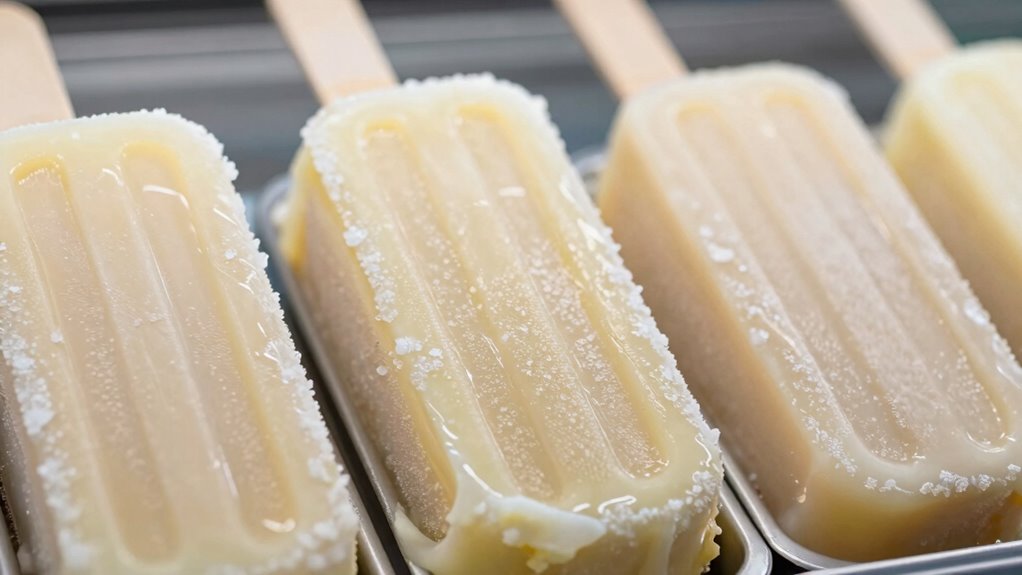
You might notice some frozen desserts have a more rigid or icy texture because they’re made to last longer on shelves and withstand temperature fluctuations. To achieve this, producers control ice crystal growth through rapid freezing, special packaging, and adding stabilizers or emulsifiers. These techniques help prevent spoilage but often at the expense of creaminess. If you’re curious about how these methods affect texture and shelf life, there’s more to discover below.

Get baking supplies delivered free — and shop member deals
- Fast, free delivery on millions of items
- Access to Prime Big Deal Days deals on October 6–7
- Prime Video, Amazon Music and more included
Key Takeaways
- Shelf-stable frozen desserts prioritize long storage life over optimal texture by controlling ice crystallization and using stabilizers.
- Packaging innovations, like moisture barriers, reduce ice crystal growth during storage, enhancing shelf stability.
- Rapid freezing techniques create smaller ice crystals, improving texture but often at higher cost and complexity.
- Formulation with stabilizers and emulsifiers maintains consistency and prevents large crystal formation over time.
- The focus on durability and resistance to temperature fluctuations often leads to a more rigid or gritty texture.
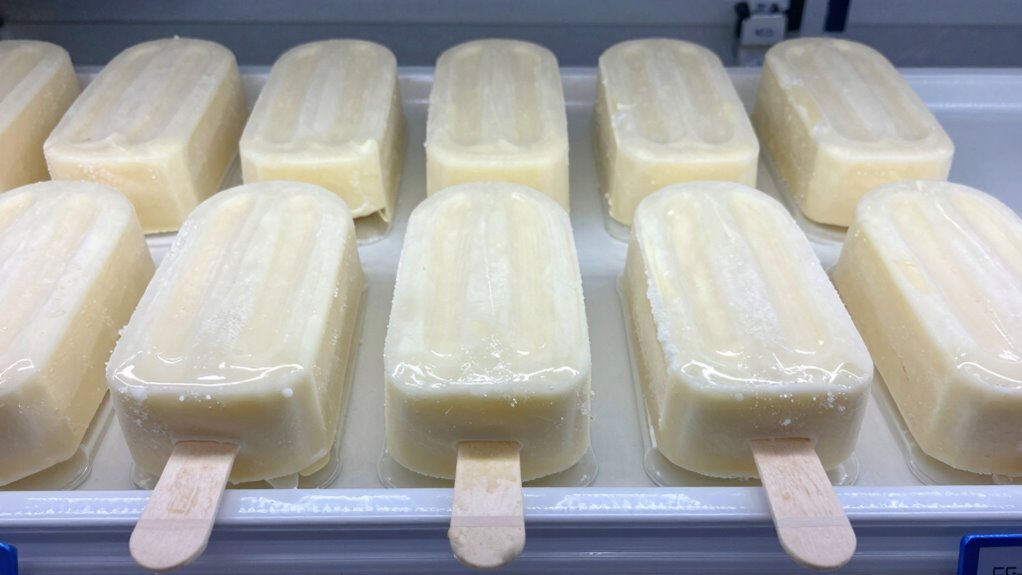
Frozen desserts are a popular treat, but their shelf stability depends on how they’re processed and stored. When you buy a frozen dessert, you might notice that some maintain a smooth, creamy texture even after months in the freezer, while others develop a gritty or icy consistency. This difference largely comes down to how the dessert is designed to handle ice crystallization. Ice crystallization occurs when water molecules within the dessert form ice crystals, which can grow larger over time and ruin the texture. This process is influenced by various factors, including the freezing rate, which plays a crucial role in determining crystal size and overall product quality. To prevent this, manufacturers often choose ingredients, formulations, and freezing methods that minimize crystal growth, guaranteeing the product remains palatable during storage.
Frozen desserts’ shelf stability depends on processing and storage methods that control ice crystal growth and maintain texture.
However, many frozen desserts are intentionally built for shelf stability rather than perfect texture. They’re designed to last longer, resist freezer burn, and withstand temperature fluctuations during transportation and storage. This focus on longevity often means sacrificing some of the fresh, creamy qualities you’d expect from a premium ice cream. Instead, these desserts might have a more rigid, icy, or gritty feel, which results from larger or more numerous ice crystals forming over time. To combat this, manufacturers have turned to packaging innovations that help preserve the desired texture. Advanced packaging materials and techniques—such as vacuum-sealing or barrier films—limit moisture transfer and slow down ice recrystallization. This not only extends shelf life but also helps maintain the intended consistency of the product. Additionally, quality control measures during production play a vital role in ensuring consistency across batches. Incorporating stabilizers and emulsifiers further enhances the product’s ability to resist undesirable ice crystal growth, ensuring a more uniform texture during storage.
Another factor influencing shelf-stable frozen desserts is the inclusion of stabilizers and emulsifiers. These ingredients work together to suspend water and fat particles uniformly, making it harder for ice crystals to grow and for the dessert to develop an undesirable texture. While these additives may not appeal to all consumers, they’re essential for creating products that can sit on shelves for extended periods without losing quality. Additionally, the freezing process itself plays a vital role: rapid freezing produces smaller ice crystals that are less likely to damage the smoothness, but it’s often more costly and less practical for mass production. As a result, many shelf-stable options rely on a combination of ingredient formulation, freezing techniques, and packaging innovations to strike a balance between durability and acceptable texture. Controlling ice crystallization is key to maintaining product quality over time.
Understanding these techniques reveals the importance of processing methods in the production of shelf-stable frozen desserts. In the end, you should recognize that many frozen desserts prioritize shelf life over the ideal mouthfeel of freshly made ice cream. Their ability to stay stable on store shelves depends on controlling ice crystallization and employing advanced packaging solutions. While they might not always match the luxury of a fresh scoop, their design ensures you get a safe, long-lasting treat that can be conveniently stored and enjoyed anytime.
As an affiliate, we earn on qualifying purchases.
Frequently Asked Questions
How Do Shelf-Stable Frozen Desserts Differ From Traditional Ice Cream?
Shelf-stable frozen desserts differ from traditional ice cream because they prioritize packaging innovations and flavor complexity for long shelf life. You’ll notice they often have a different texture, less creamy and more stable, due to ingredients that prevent ice crystal formation. These desserts focus on maintaining flavor integrity over time, meaning you might sacrifice some creaminess for convenience and durability, making them ideal for on-the-go enjoyment without the need for immediate refrigeration.
What Ingredients Are Used to Improve Shelf Life in Frozen Desserts?
You’ll notice that preservative agents and stabilizer ingredients are key to improving shelf life in frozen desserts. Preservatives help prevent microbial growth, extending freshness, while stabilizers like guar gum or carrageenan enhance texture and prevent ice crystal formation. Together, these ingredients guarantee your frozen treat stays safe, stable, and maintains a desirable consistency during storage, even if it’s not as creamy as traditional ice cream.
Are Shelf-Stable Frozen Desserts Suitable for All Dietary Preferences?
Like a modern-day alchemist, shelf-stable frozen desserts aren’t always suitable for all dietary restrictions. You might find flavor variations that suit your needs, but ingredients used for shelf life could conflict with gluten-free or vegan diets. Always check labels carefully, as some options may contain allergens or animal products. While they’re convenient, these desserts aren’t universally inclusive, so explore specialty brands for better alignment with your dietary preferences.
How Do Manufacturing Processes Impact the Texture of Frozen Desserts?
Manufacturing processes markedly impact frozen dessert texture through emulsification techniques and freezing point depression. Emulsification guarantees smoothness by evenly combining fats and liquids, while freezing point depression prevents large ice crystal formation, maintaining creaminess. If these processes aren’t carefully controlled, your dessert could become icy or grainy. Proper emulsification and precise control of freezing points help create a consistent, enjoyable texture, even in shelf-stable products.
Can Shelf-Stable Frozen Desserts Be Made at Home?
You can definitely make shelf-stable frozen desserts at home. Imagine scooping a creamy, store-bought ice cream from your freezer—now, with smart homemade preservation and freezing techniques, you can create similar textures. Use proper insulation, control your freezer temperature, and incorporate stabilizers like gelatin or cornstarch. These steps help prevent large ice crystals, giving you a smoother, more stable dessert that mimics store-bought shelf stability.
Conclusion
So, next time you reach for that tub of ice cream, remember it’s a delicate balance between taste and shelf life. Manufacturers often prioritize stability over silky texture, turning frozen desserts into resilient workhorses that survive the journey to your freezer. It’s like baking a sturdy loaf rather than a delicate soufflé—you get reliability, not perfection. Understanding this helps you appreciate the science behind your favorite treats and choose what truly satisfies your craving.
Halloween Picks
halloween
As an affiliate, we earn on qualifying purchases.