
Although frozen custard and soft serve use the same type of machine, they serve different purposes through their unique formulations and textures. Frozen custard offers a dense, creamy, and flavorful experience thanks to higher egg and cream content, making it indulgent and consistent. Soft serve, on the other hand, is lighter, airy, and designed for quick, volume dispensing. To understand how each is crafted for its specific goal, keep exploring these delicious differences.

Get baking supplies delivered free with Prime
- Fast, free delivery on millions of items
- Prime Video, Amazon Music and more included
- Member-only deals all year
Key Takeaways
- Both use similar equipment but are formulated differently to achieve distinct textures and flavor profiles.
- Frozen custard emphasizes flavor consistency and density, while soft serve focuses on lightness and volume.
- Ingredient ratios differ, with custard containing more eggs and cream for richness; soft serve prioritizes air incorporation.
- Manufacturing and storage techniques are tailored to preserve each dessert’s unique texture and quality.
- Their serving styles align with their goals: indulgent, dense custard versus quick, airy soft serve.
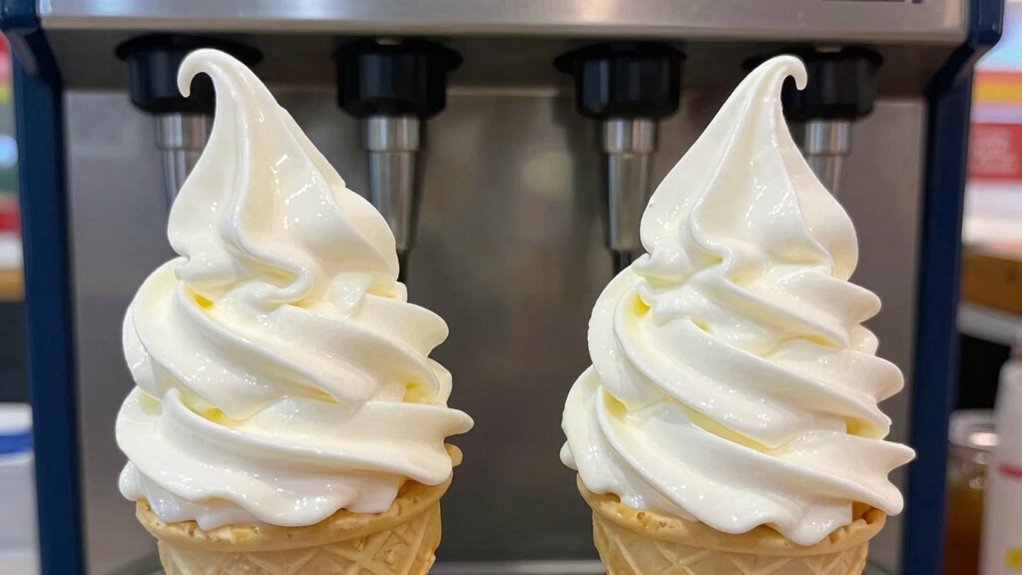
Have you ever wondered what sets frozen custard apart from soft serve? At first glance, they might look similar, both served from the same type of machine, but they serve very different purposes. One of the main differences lies in flavor consistency. Frozen custard is crafted to provide a uniform, rich flavor with every scoop. Because it contains a higher percentage of egg yolks and cream, the ingredients are blended thoroughly, ensuring each batch maintains its signature taste. This means that when you indulge in frozen custard, you’re getting a product that’s consistently smooth and flavorful, no matter when or where you enjoy it. Soft serve, on the other hand, often has more variability in flavor. Its lower fat content and different formulation can lead to slight differences in taste from batch to batch, especially when made in large quantities or stored for extended periods.
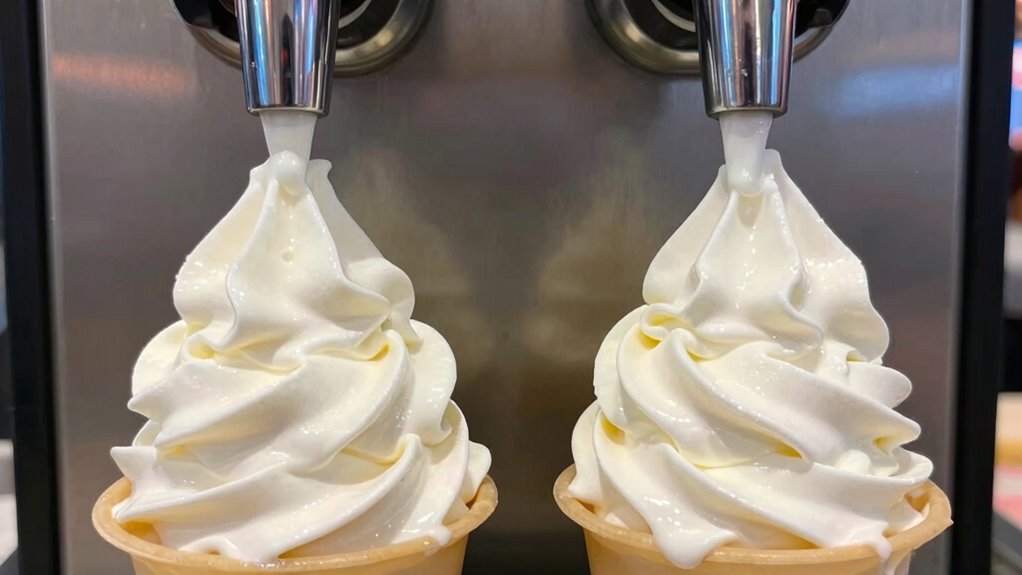
Texture variations also set these two desserts apart. Frozen custard’s higher fat and egg content give it a dense, creamy texture that feels luxurious on your palate. It’s thicker and richer, almost like a frozen pudding, which makes each bite feel indulgent and satisfying. Soft serve, by contrast, is lighter and airier. It’s whipped to incorporate air, giving it that fluffy, smooth consistency that’s easy to scoop and quick to melt in your mouth. This airy quality is intentional, designed for quick serving and consumption, often with the goal of pleasing a broad audience with its light, refreshing feel. ingredients and formulation play a crucial role in determining these differences, emphasizing the importance of recipe design in each dessert. Additionally, the manufacturing process impacts how these desserts are produced and maintained, with proper storage conditions also influencing the final product’s quality and texture.
Despite sharing a machine, the difference in their goals influences how they’re made and served. Frozen custard is often prepared with care to preserve its dense texture and consistent flavor profile, making it a premium treat. Soft serve, meanwhile, is optimized for speed and volume. Its formulation allows it to be dispensed quickly and maintained at a temperature that keeps it soft and easy to serve, even in high-traffic situations. Additionally, understanding the ingredients is essential for appreciating how each dessert achieves its unique characteristics and serves its purpose.
In essence, you can think of these desserts as two sides of the same coin. Both are delicious frozen treats, but they’re designed for different experiences. When you choose frozen custard, you’re opting for a dessert that emphasizes flavor consistency and a rich, creamy texture. Pick soft serve when you want something light, airy, and quick to enjoy. Knowing these differences helps you appreciate exactly what makes each one special, even if they come from the same machine.
frozen custard soft serve machine
As an affiliate, we earn on qualifying purchases.
As an affiliate, we earn on qualifying purchases.
Frequently Asked Questions
Which Is Healthier, Frozen Custard or Soft Serve?
Frozen custard is generally healthier than soft serve because it has a better nutritional comparison, often containing less air and more real ingredients. Its ingredient differences include higher egg yolk content and a richer, creamier texture, which can mean fewer added stabilizers or artificial flavors. However, both are treats high in sugar and fat, so moderation is key. Always check labels for specific nutritional details to make an informed choice.
Can Frozen Custard Be Stored Longer Than Soft Serve?
Yes, frozen custard can be stored longer than soft serve if you use proper storage techniques. Frozen custard typically has a longer shelf life, around 2-3 months, because it’s stored at consistently low temperatures in airtight containers. Soft serve, on the other hand, is best enjoyed fresh and usually has a shorter shelf life. Proper storage techniques for frozen custard help maintain its quality over time.
Are There Flavor Options Exclusive to Frozen Custard?
A bird in the hand is worth two in the bush, and with frozen custard, you’ll find flavor options exclusive to it. You get a richer flavor variety and ingredient exclusives, like real eggs and cream, which aren’t always used in soft serve. These unique ingredients allow for traditional flavors like vanilla and chocolate, plus special seasonal or signature flavors, giving frozen custard its distinct, indulgent appeal.
How Does the Texture Differ Between the Two?
You’ll notice that frozen custard has a creamier consistency compared to soft serve, thanks to its higher egg yolk content. The texture variation is smoother and denser, giving it a richer mouthfeel. Soft serve, on the other hand, is lighter and airier, offering a fluffier experience. This difference in texture makes frozen custard feel more indulgent, while soft serve provides a more invigorating, airy treat.
Is One More Suitable for Catering Events Than the Other?
For catering events, soft serve is more suitable because it’s easier to serve with portable equipment, ensuring quick setup and clean presentation. Its smooth, consistent texture looks appealing and is easy to portion, making event presentation seamless. Frozen custard, while richer, often requires specialized machinery and colder storage, which can complicate portable setups. Soft serve’s flexibility and convenience make it the better choice for on-the-go catering.
Conclusion
So, whether you’re chasing the rich creaminess of frozen custard or the light, airy feel of soft serve, remember—they’re like two sides of the same coin, each with its own charm. While they share machinery, their goals diverge, offering different experiences for your taste buds. Next time you indulge, know which one will hit your sweet spot, and let your craving guide the way—each spoonful promises a delightful journey.
Halloween Picks
halloween
As an affiliate, we earn on qualifying purchases.