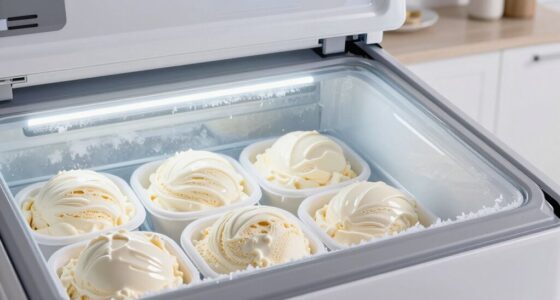
Condensation or “sweat” on your ice cream happens when warm, moist air touches its cold surface, causing water droplets to form. To avoid this, keep your freezer steady at or below 0°F (-18°C), seal containers tightly, and store ice cream in the coldest spot away from the door. Minimizing freezer door openings also helps maintain consistent conditions. For more tips on preventing condensation and preserving your ice cream’s quality, keep exploring.
Key Takeaways
- Condensation occurs when warm, moist air contacts the cold ice cream surface, causing water droplets to form.
- Fluctuating freezer temperatures and humidity increase the likelihood of condensation ‘sweat’.
- Proper sealing and storing ice cream in the coldest freezer area reduce exposure to moisture.
- Limiting freezer door openings helps maintain a stable environment, preventing condensation buildup.
- Quickly resealing after serving and blotting away droplets minimizes moisture exposure and preserves quality.

Have you ever noticed tiny water droplets forming on the surface of your ice cream? That’s condensation happening right before your eyes. When warm, moist air comes into contact with the cold surface of your ice cream, the air cools rapidly, causing the moisture to condense into visible water droplets. This process, known as condensation ‘sweat,’ is a common issue that can make your ice cream look unappetizing and affect its texture. Proper storage techniques are essential to minimize this problem and preserve your ice cream’s quality.
Tiny water droplets on your ice cream are condensation ‘sweat,’ caused by warm air meeting its cold surface.
But beyond just looking unappealing, this moisture can lead to more serious problems. Excess water on the surface can accelerate ice crystal formation inside the ice cream, which affects its creaminess. As water migrates and refreezes, it forms larger ice crystals, making the ice cream grainy and less enjoyable to eat. Additionally, repeated condensation and melting can contribute to freezer burn, where dehydration occurs at the surface, causing dry, leathery patches that ruin the texture and flavor. Freezer burn is a sign that your ice cream has been exposed to air and fluctuating temperatures, which not only impacts taste but also speeds up the degradation of quality.
To prevent this, start by controlling the environment where you store your ice cream. Keep your freezer at a steady temperature—ideally at or below 0°F (-18°C)—to minimize temperature fluctuations that lead to condensation. Make sure your ice cream container is sealed tightly; air exposure invites moisture in, increasing the chances of condensation and freezer burn. Wrapping the container with plastic wrap or using an airtight lid creates a barrier that keeps humidity out. When you’re serving, avoid leaving the ice cream out for too long, especially in warm or humid conditions, as this gives moisture more opportunity to settle on the surface.
Another tip is to minimize opening the freezer frequently. Each time you do, warm air enters and can cause condensation on the ice cream’s surface. When you do open it, do so quickly to limit exposure. Also, consider placing your ice cream in the coldest part of the freezer, usually away from the door, to help maintain a consistent temperature. If condensation does form, don’t scrape off the droplets; instead, gently blot them away with a paper towel before resealing the container to prevent additional moisture from seeping in. Remember, controlling the freezer environment is crucial for preventing condensation and maintaining ice cream quality.
Frequently Asked Questions
Can Condensation Damage the Flavor of Ice Cream?
Condensation can damage your ice cream’s flavor by causing flavor dilution and texture changes. When moisture forms on the surface, it can dilute the rich taste and make the texture less creamy, leading to an unpleasant eating experience. To avoid this, store your ice cream properly, keep it sealed, and minimize temperature fluctuations. This helps maintain its original flavor and smooth, desirable texture.
Does Condensation Affect the Nutritional Value?
Think of condensation on ice cream like a sudden rain shower—brief but impactful. It doesn’t substantially affect the nutritional impact or nutrient stability of your ice cream. While excess moisture might cause texture changes or spoilage over time, it doesn’t alter the vitamins or minerals inside. So, rest assured, condensation mainly influences quality and appearance, not the nutritional value you get from enjoying your favorite treat.
How Quickly Does Condensation Form on Ice Cream?
Condensation can form on ice cream within minutes if there are significant temperature fluctuations during storage or handling. When you take it out of the freezer and expose it to warmer air, moisture quickly condenses on its surface. To minimize this, keep the ice cream consistently cold and limit its exposure to temperature changes. Proper storage duration also helps prevent excessive condensation, ensuring your ice cream stays fresh and free of unwanted moisture.
Can Condensation Cause Freezer Burn?
Yes, condensation can cause freezer burn. When humidity levels inside your freezer are high, moisture settles on your ice cream, leading to ice crystal formation. Over time, this moisture dehydrates the product, creating those dry, leathery patches. As you open the freezer, you may notice fog-like vapor, signaling increased humidity. To prevent this, keep your freezer sealed tightly and minimize temperature fluctuations, avoiding the sneaky buildup that leads to freezer burn.
Is Condensation More Common in Certain Climates?
Yes, condensation is more common in humid climates because higher humidity levels increase moisture in the air. When you bring ice cream from a cold freezer into a warm, moist environment, condensation forms more easily on its surface. Climate influence plays a significant role; in dry climates, you’re less likely to see sweat on your ice cream. To minimize this, keep ice cream in a tightly sealed container and avoid frequent temperature changes.
Conclusion
Now that you know why condensation forms on your ice cream, think of it like a sudden rainstorm on a picnic. Just as you’d quickly pack up to keep your food dry, using airtight containers and proper storage can prevent moisture from ruining your treat. Remember, a little extra effort keeps your ice cream’s creamy texture just right—so you can enjoy every spoonful without that pesky “sweat” ruining the moment.