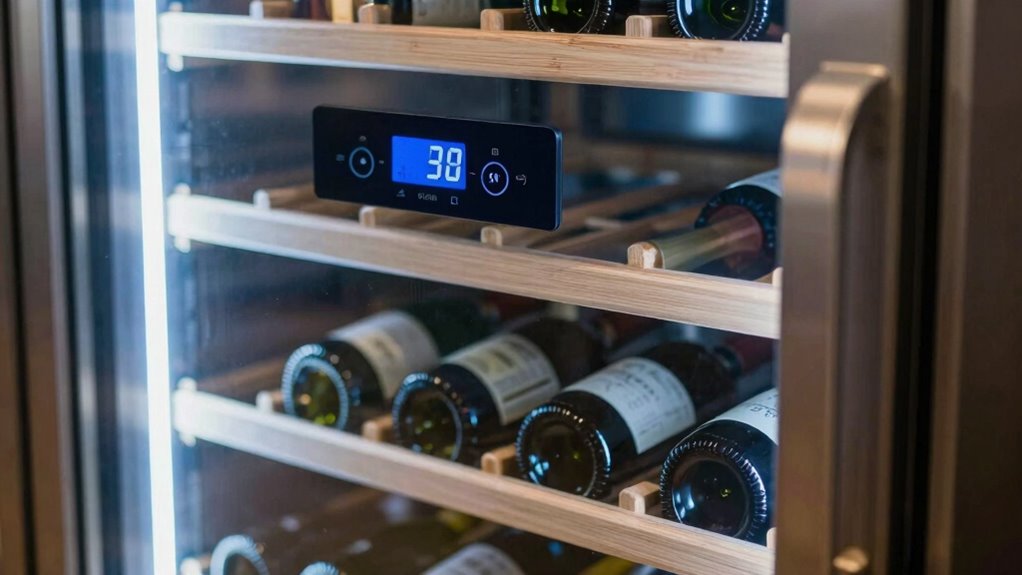
To keep your wine in top shape, set your wine fridge to the ideal temperatures based on your wine types; around 55°F for reds and 45-55°F for whites and rosés. Avoid frequent adjustments, as stable, consistent temperatures preserve flavor and aging potential. Use a reliable thermometer to monitor, and make small changes when necessary. If you want to understand how to fine-tune your settings and choose the right equipment, keep exploring these essential tips.
Prime for Young Adults — start your free trial
Fast free delivery, streaming and member deals for eligible 18–24 year olds.
As an affiliate, we earn on qualifying purchases.
Key Takeaways
- Set your wine fridge to 55°F for optimal aging of red wines and 45-55°F for whites and rosés.
- Maintain a consistent temperature within a narrow range to prevent flavor fluctuations and spoilage.
- Use a high-quality fridge with precise digital controls for accurate temperature settings.
- Regularly verify internal temperature with a reliable thermometer, not just the built-in gauge.
- Avoid external heat sources and placement near radiators or direct sunlight to ensure temperature stability.
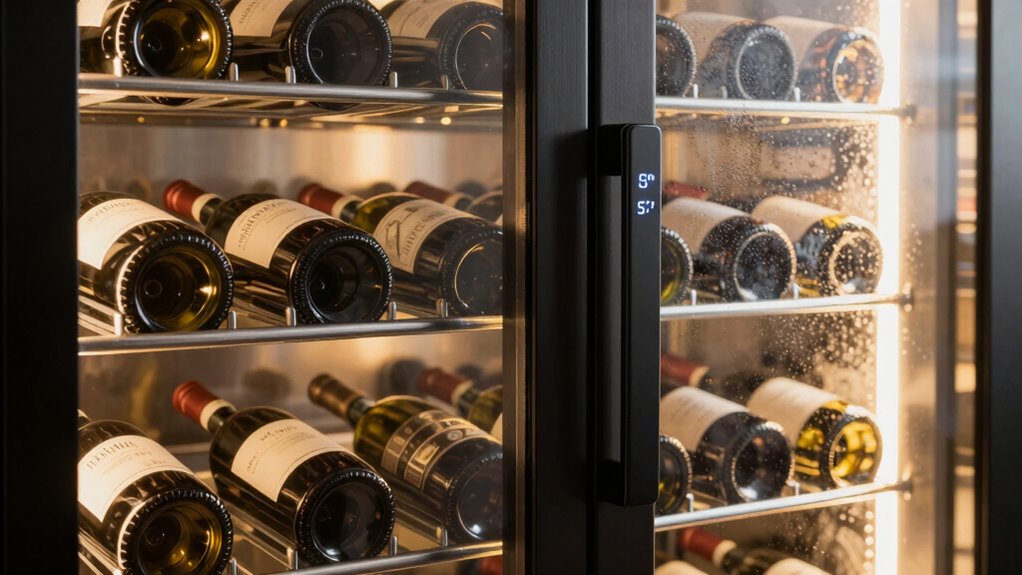
Maintaining the right temperature in your wine fridge is essential to preserving the quality and flavor of your wines. When you control the correct environment, you ensure that each bottle ages gracefully and retains its intended character. Temperature consistency plays a critical role in wine preservation because fluctuating temperatures can cause your wine to expand and contract, which may lead to premature aging or spoilage. If your fridge experiences sudden shifts or irregularities, the delicate balance needed to keep wine at its best gets disrupted, risking spoilage or compromised flavor.
To optimize your wine preservation efforts, you need to set your fridge to the ideal temperature range. For most red wines, keep the temperature between 55°F and 65°F, with 55°F being the sweet spot for aging and flavor development. For whites and rosés, a slightly cooler setting around 45°F to 55°F works best. The key is consistency—once you’ve established the right temperature, avoid frequent adjustments. Fluctuations, even minor ones, can negatively impact your wine by speeding up aging or causing unwanted chemical reactions.
Investing in a good quality wine fridge with precise temperature controls helps you maintain this consistency. Digital thermostats with adjustable settings allow you to fine-tune the environment, so you avoid the common pitfalls of temperature swings. Avoid placing your wine fridge near heat sources like ovens, sunlight, or radiators, as external temperature influences can affect internal stability. Proper insulation and a stable location help keep the temperature steady, which is crucial for wine preservation. Additionally, understanding the importance of temperature control systems can help you choose the right equipment for your needs.
Monitoring your fridge regularly is also vital. Use a reliable thermometer to verify the actual temperature inside, since built-in gauges can sometimes be inaccurate. Make small adjustments if necessary, and give the fridge time to stabilize after changes. Remember that the goal is to keep the temperature within a narrow range, minimizing any variation. Consistent temperatures allow your wines to age properly, develop complexity, and retain their freshness longer.
As an affiliate, we earn on qualifying purchases.
Frequently Asked Questions
What Is the Ideal Temperature for Aging Different Types of Wine?
For ideal storage, keep red wines around 55°F, which supports proper wine aging and preserves their complexity. White wines age best at slightly cooler temperatures, around 45-50°F, to maintain freshness. Sparkling wines should be stored at about 45°F to prevent premature aging. By setting your wine fridge correctly, you help guarantee your wines develop their full flavor potential over time. Adjust your fridge to these temperatures for ideal aging conditions.
How Often Should I Calibrate My Wine Fridge Thermometer?
You should calibrate your wine fridge thermometer at least once every three to six months to ensure thermometer accuracy. Regular calibration helps you maintain precise temperature control, which is vital for proper wine aging. Use a reliable calibration method, like a thermometer calibration kit or an ice-water test, to verify accuracy. Frequent calibration keeps your wine at the right temperature, preserving its quality and taste over time.
Can Temperature Fluctuations Damage Wine Quality?
If your wine fridge temperature wildly swings, it could turn your wine into a spoiled mess overnight! Fluctuations harm wine quality by causing expansion and contraction, which can break down the wine’s delicate flavors and even ruin long-term wine storage. To keep your bottles tasting perfect, maintain consistent temperature, avoid sudden changes, and make certain your fridge stays steady. Proper temperature consistency is key to preserving the true essence of your wine.
How Do Ambient Room Temperatures Affect Wine Fridge Settings?
Ambient room temperatures influence your wine fridge settings because high temperatures can cause fluctuations that harm your wine. To counter this, you should adjust the thermostat accordingly, considering humidity control and door insulation. Proper insulation helps maintain consistent temperatures, while humidity control prevents corks from drying out. Keep your fridge away from heat sources and make sure the door seals tightly. This way, your wine stays at ideal conditions, no matter the room temperature.
Are There Specific Settings for Sparkling Versus Still Wines?
Think of your wine fridge as a tailor-made suit; it needs to fit perfectly. For sparkling wine, set the fridge at 40-45°F to keep the bubbles lively. Still wine benefits from slightly warmer settings, around 50-55°F, which enhances flavor and aroma. You don’t need separate compartments; just adjust the temperature based on the wine type to enjoy each sip at its best.
Conclusion
Remember, maintaining the right wine fridge temperature is vital. Did you know that even a 5-degree difference can greatly affect your wine’s flavor? Setting your fridge between 45°F and 55°F is ideal for preserving quality. By paying attention to this key detail, you’ll guarantee every bottle you open tastes as it should—rich, balanced, and perfect. Keep your wine at the right temperature, and enjoy every sip to the fullest.
NFL season / tailgating Picks
team gear
As an affiliate, we earn on qualifying purchases.