
To get the best pour from your kegerator, you need to balance CO₂ pressure, temperature, and foam. Keep your pressure around 12-14 PSI for most beers, adjusting slightly for different styles. Maintain a temperature of about 38°F, as cold helps CO₂ dissolve better and prevents foam. Regularly check for leaks and adjust as the beer level drops. Understanding these basics helps you pour consistently, and more tips await to refine your setup further.
Key Takeaways
- Maintain 12-14 PSI for most lagers and ales to ensure proper carbonation and pour quality.
- Keep the kegerator temperature around 38°F (3°C) to help CO₂ dissolve effectively into the beer.
- Adjust pressure gradually in small increments to prevent over-foaming or flat beer.
- Regularly check for leaks and ensure the regulator and tank are functioning properly.
- Proper temperature and pressure balance are essential for consistent carbonation and minimal foam.
Have you ever wondered how to keep your beer fresh and perfectly carbonated in a kegerator? It all comes down to understanding carbon dioxide regulation and proper keg pressure adjustment. When you’re serving beer from a kegerator, maintaining the right pressure ensures that your brew stays bubbly without becoming overly foamy or flat. The key is balancing the CO₂ levels with the temperature of your fridge and the pressure you set on the regulator.
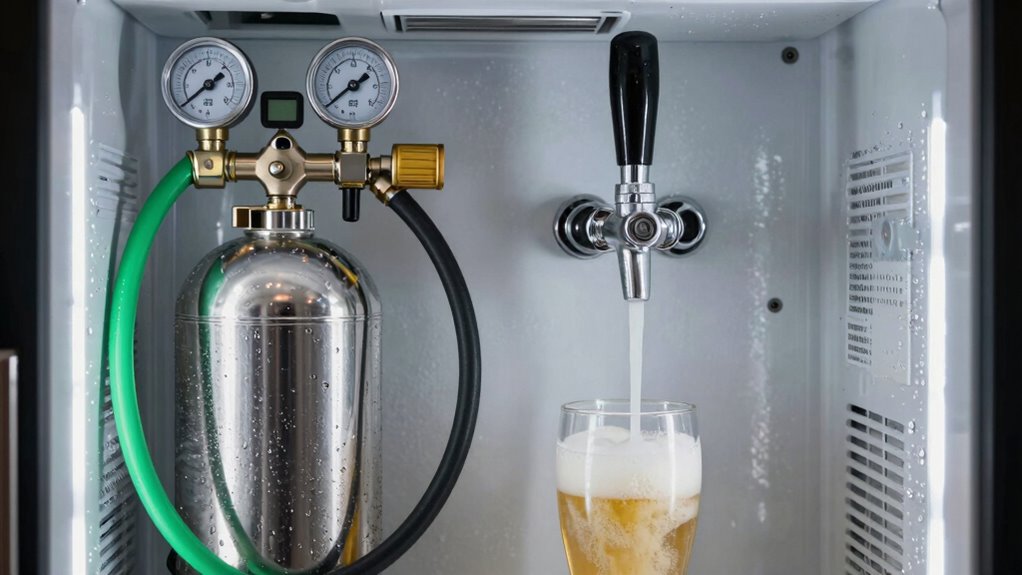
To start, you need to get familiar with your CO₂ tank and regulator. The regulator controls how much carbon dioxide flows into your keg, which directly impacts the carbonation level and pour quality. Adjusting the keg pressure involves turning the regulator’s knob to increase or decrease the PSI (pounds per square inch). Too much pressure, and your beer will pour foamy or over-carbonated. Too little, and it’ll go flat quickly. A good rule of thumb is to set your pressure around 12-14 PSI for most lagers and ales, but you’ll want to fine-tune based on your specific beer and serving conditions.
Familiarize yourself with your CO₂ tank and regulator to optimize beer carbonation and pour quality.
Temperature plays a vital role in this process. When your kegerator is cold—generally around 38°F (3°C)—the CO₂ dissolves better into the beer, creating that perfect carbonation. If the beer is warmer, the CO₂ won’t dissolve as well, leading to flat beer or excessive foaming when served. So, always keep your kegerator at the recommended temperature and make small adjustments to the pressure to match the beer’s carbonation level. Remember, the goal is to keep the pressure just enough to counteract the beer’s natural tendency to foam when poured.
Regular keg pressure adjustment is essential as your beer level drops. As you dispense beer, the pressure might need to be tweaked slightly to maintain ideal carbonation and pour quality. Also, monitor for any leaks or changes in pressure, as they can affect the beer’s freshness and carbonation. When you change beers or adjust serving temperatures, revisit your pressure settings to guarantee you’re still in that sweet spot.
As an affiliate, we earn on qualifying purchases.
Frequently Asked Questions
How Often Should I Replace the Co₂ Tank?
You should replace your CO₂ tank when it’s empty or near empty, which typically happens after 2 to 3 months of regular use. The CO₂ tank lifespan depends on your usage and pressure settings. To avoid running out unexpectedly, check the pressure gauge regularly and plan for replacement every few months. Properly maintaining your tank ensures consistent carbonation and excellent beer quality.
Can I Use a Different Gas for My Kegerator?
Imagine swapping a trusted friend for a stranger; that’s what using a different gas feels like. You can use alternative gases like nitrogen or argon, but only if it complies with gas regulations. These gases can alter the beer’s taste and head. Always check local laws and your kegerator’s compatibility before switching. Otherwise, sticking to CO₂ guarantees consistent quality and safety.
What Are Signs of Co₂ Leaks?
You can spot CO₂ leaks by doing leak detection around connections and hoses. Look for odor clues like a faint gas smell near fittings or regulator areas. Also, listen for hissing sounds indicating escaping gas. If your beer starts foaming excessively or pressure drops unexpectedly, these are signs of a leak too. Regularly checking for odor clues and conducting leak detection helps keep your kegerator running smoothly.
How Does Altitude Affect Co₂ Pressure?
Altitude acts like a sneaky thief, quietly stealing pressure from your CO₂ system. As you ascend to higher elevations, the air’s lower pressure causes CO₂ pressure inside your kegerator to drop. You need to make an altitude adjustment to compensate for this pressure variation, ensuring your beer stays perfectly carbonated. Without this tweak, you risk flat beer or excessive foaming, turning your pour into a disappointing splash.
Is It Safe to Over-Pressurize My Kegerator?
Over-pressurizing your kegerator isn’t safe because it can lead to CO₂ regulation issues and cause dangerous leaks or even damage your equipment. Always follow recommended pressure guidelines to guarantee pressure safety. Too much pressure can increase the risk of CO₂ buildup, which might cause the keg to burst or create safety hazards. Keep a close eye on gauges and adjust pressure carefully to maintain safe operation.
Conclusion
Now that you understand the delicate dance of pressure, temperature, and foam, you’re ready to master your kegerator’s CO₂. With consistent control and careful calibration, you’ll keep your keg’s kick consistent and your pour pristine. Don’t forget, fine-tuning fundamentals fosters flavor and freshness. So, stay savvy, sustain your system, and savor every sip—success is just a matter of managing the magic behind the pressure! Cheers to confident kegerator craftsmanship!