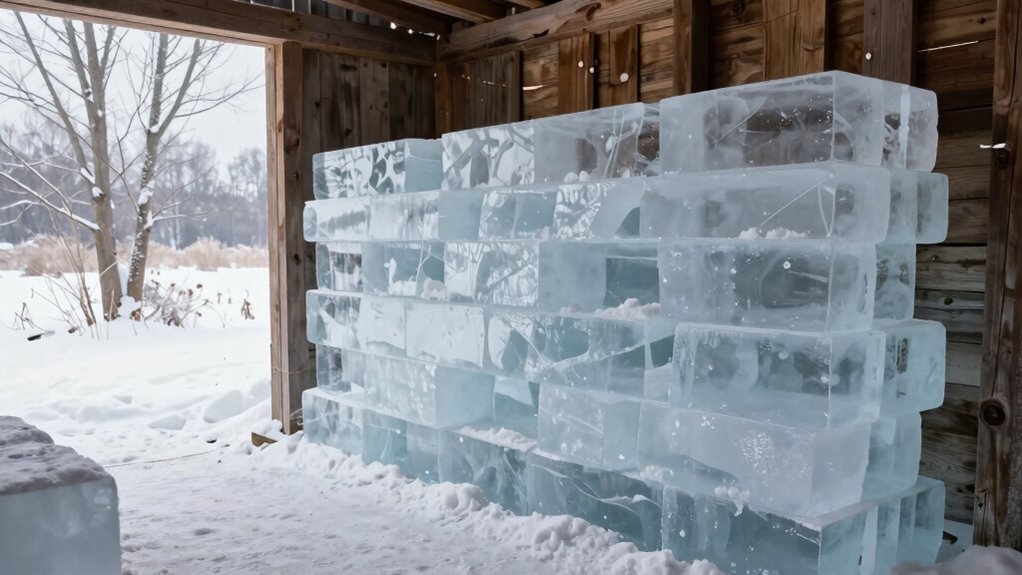

Before refrigerators, people used ice houses and harvested winter ice from lakes and rivers to keep food fresh. They cut ice into manageable blocks with saws, then stored it in insulated buildings made of thick stone or wood, often underground. Transport involved sleds, carts, or ships to move the ice to storage areas. These methods were basic but effective, building the foundation for modern cooling techniques—if you keep exploring, you’ll discover how these old methods evolved over time.
Key Takeaways
- Early ice harvesting involved cutting blocks from lakes and rivers using saws, axes, and specialized tools during winter.
- Insulated ice houses, often subterranean, stored harvested ice to slow melting using thick walls and layered packing.
- Traditional storage relied on natural insulation like straw and sawdust, with passive cooling methods to maintain low temperatures.
- Ice was transported via sleds, carts, and insulated ships, enabling large-scale distribution and supporting food preservation.
- These methods laid the groundwork for modern refrigeration by improving food storage and reducing waste before mechanical cooling technology emerged.

ICECON 30 Liter Dry Ice Storage Insulated Container Chest,27QT, 1 CU FT
- Material: Food-grade, UV resistant PE
- Sealing: Rubber sealing strip locks in cold air
- Portability: Lightweight with rubber buckle handle
As an affiliate, we earn on qualifying purchases.
As an affiliate, we earn on qualifying purchases.
How Did Early Cold Storage Keep Food Fresh?
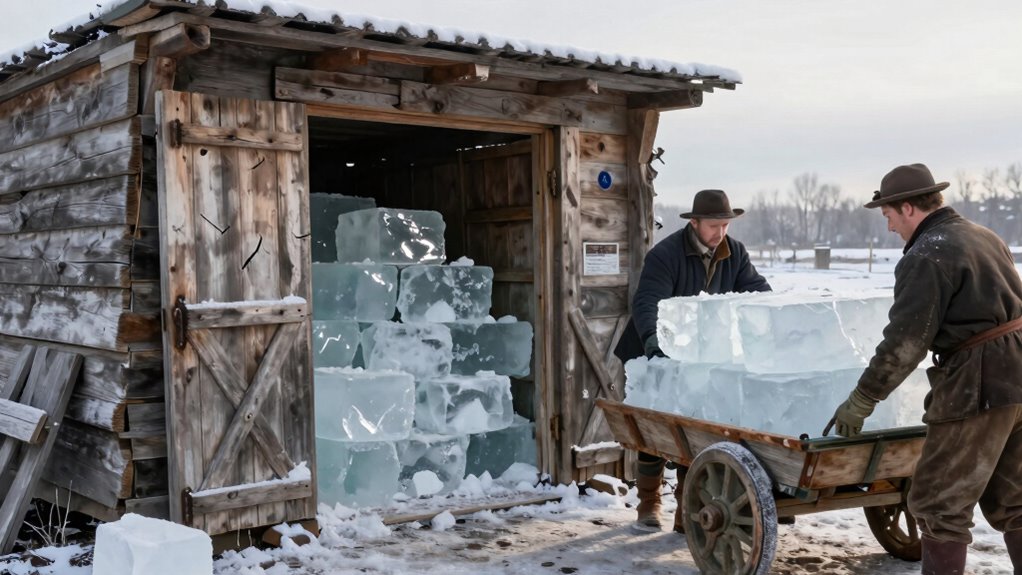
Before modern refrigeration, people relied on natural ice and specialized storage methods to keep food fresh. The ice trade played a essential role in this cold preservation, enabling large quantities of ice to be harvested and distributed. Once collected, ice was stored in ice houses, insulated structures designed to slow melting. These ice houses acted as early refrigeration units, allowing communities to extend the shelf life of perishable items like meat, dairy, and produce. By carefully managing the cold environment, people could store food for weeks or even months. This method was critical before electric refrigerators, providing a reliable way to preserve food during warmer months. The ice trade and cold storage practices revolutionized food preservation, laying the groundwork for modern refrigeration technology.
How Were Ice Harvested and Stored in the Past?

In the past, people harvested ice during the winter months when lakes and rivers froze solid. They used simple ice harvesting methods like saws and axes to cut blocks of ice from frozen surfaces. These blocks were then transported to ice houses, which featured thick insulating walls to preserve the ice. The ice storage innovations included layered packing with straw or sawdust, slowing melting and maintaining cold temperatures. To maximize efficiency, harvesters:
In winter, harvesters cut and store ice using simple tools and insulated ice houses.
- Chopped ice into manageable blocks.
- Loaded them carefully into insulated storage.
- Stacked them to optimize space and reduce melting.
These techniques allowed people to store harvested ice for months, providing refrigeration before modern appliances. This combination of ice harvesting methods and storage innovations revolutionized cold storage and food preservation. Additionally, understanding halal standards for equipment and storage is essential when utilizing traditional ice storage methods in food-related contexts. Moreover, the development of insulation techniques significantly extended the usability of stored ice, impacting food preservation practices. Improved insulation materials and methods further enhanced the efficiency and duration of ice storage, enabling more widespread and reliable cold storage solutions. Notably, innovations in temperature control helped maintain the desired cold environment over extended periods, further improving preservation techniques. Furthermore, advancements in refrigeration technology eventually replaced traditional ice storage, transforming food preservation and storage on a larger scale.
How Were Ice Houses Built and Maintained?

Ice houses were built with thick, insulating walls designed to keep the cold inside and prevent heat from entering. You’ll find that ice house architecture prioritized materials like stone, brick, or wood with layered insulation to resist temperature changes. Climate considerations played a vital role; in colder regions, less insulation was needed, while warmer areas required thicker walls and additional measures. Maintenance involved regularly repairing the structure to prevent drafts and moisture infiltration, which could cause melting or decay. You’d also monitor the building’s ventilation to control humidity and avoid mold. During the season, ice was carefully packed with sawdust or straw to enhance insulation. Proper construction and upkeep ensured the ice remained frozen until it was needed, often lasting through the summer months. Additionally, understanding insulation materials was crucial for maximizing the longevity of stored ice. To further improve preservation, some ice houses incorporated ventilation systems to help regulate internal humidity and temperature levels. Regular inspections of building integrity were essential to maintain optimal conditions for ice storage. Moreover, some ice houses used natural cooling techniques by taking advantage of underground or shaded locations to maintain lower temperatures naturally. Incorporating smart monitoring technology can also help in maintaining ideal storage conditions and prevent spoilage.
What Technologies Were Used to Cut and Transport Ice?
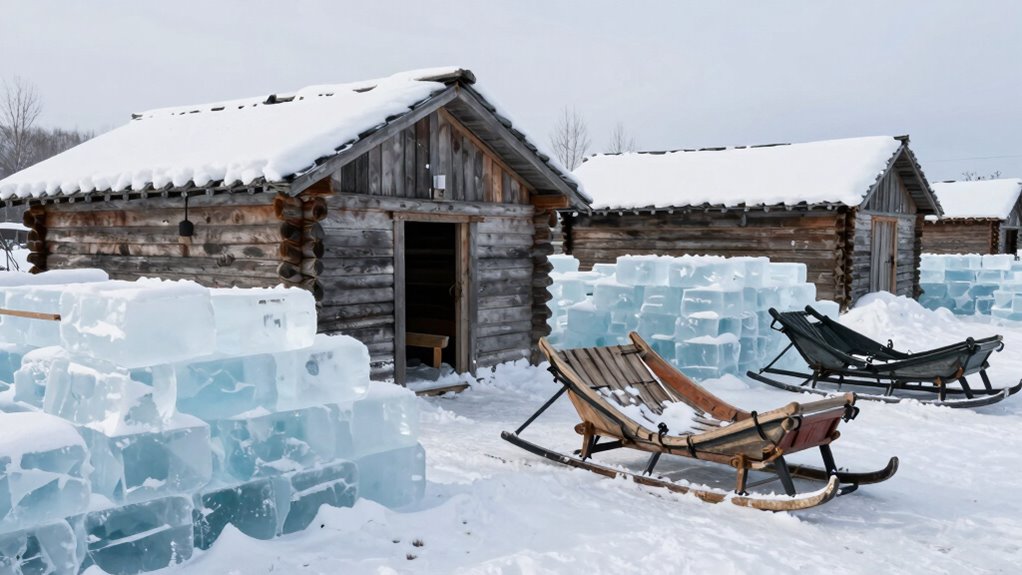
To harvest ice efficiently, people used specialized tools and techniques to cut large blocks from frozen lakes. Once cut, they relied on various transportation methods like sleds, carts, and boats to move the ice to storage sites. Understanding these methods helps you see how early industries managed to preserve and distribute ice before refrigeration technology existed.
Ice Cutting Techniques
During the height of ice harvesting, workers relied on a range of specialized tools and techniques to cut and transport thick blocks of frozen water. To efficiently harvest ice for storage, they used:
- Hand saws and pit saws to make precise cuts through thick ice sheets.
- Gads, large bar-shaped tools, to pry and lift blocks from the water.
- Ice tongs and hooks to grip and carry the harvested ice securely.
These tools allowed you to create uniform blocks that fit easily into ice storage facilities, minimizing waste. Cutting techniques focused on maximizing yield while maintaining ice quality. The methods guaranteed that you could harvest large quantities of ice quickly, preserving its integrity for shipping and storage throughout warmer months.
Transportation Methods Used
As soon as workers finished cutting the ice into manageable blocks, they relied on specialized transportation methods to move it efficiently. Ice delivery was a crucial part of the process, often involving horse-drawn wagons or sleighs that could handle the cold and uneven terrain. For longer distances, ships and barges played a vital role, especially along established shipping routes connecting ice harvesting regions to markets. These vessels were sometimes insulated or covered to prevent melting during transit. In colder months, ice was transported over frozen lakes and rivers, simplifying delivery and reducing costs. The development of reliable transportation methods made harvested ice accessible to cities far from the source, helping to expand the ice trade and support industries like food preservation and refrigeration.
How Do Ice Storage Methods Compare to Modern Refrigeration?
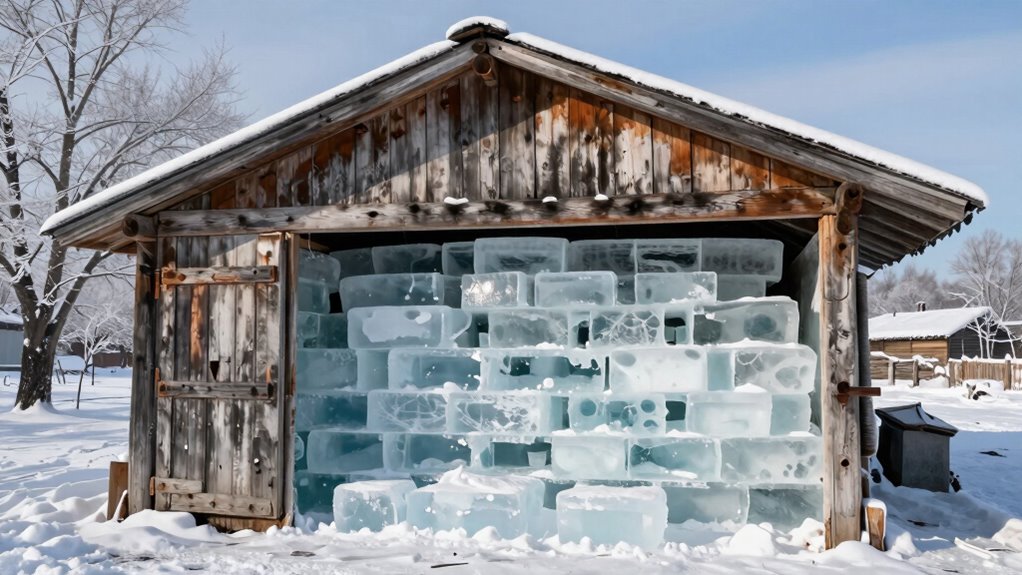
You’ll notice that traditional ice storage relied on thick walls, insulating materials, and natural cooling, unlike modern refrigeration that uses advanced temperature controls. Modern systems maintain consistent temperatures more precisely, ensuring better stability and safety. Additionally, contemporary appliances are more accessible and convenient, making ice storage easier and more reliable than ever before. Proper insulation techniques play a crucial role in enhancing the efficiency of traditional ice houses, similar to how modern insulation improves refrigeration performance. In fact, insulation quality directly impacts the energy and effectiveness of both traditional and modern cooling methods. Furthermore, advancements in temperature regulation technologies have significantly improved the safety and reliability of ice storage.
Storage Techniques and Materials
Ice storage methods from the past relied on natural materials and clever design to insulate and preserve harvested ice, whereas modern refrigeration uses advanced technology to maintain precise temperatures automatically. Back then, ice packaging and storage containers played vital roles in extending ice longevity. To understand their effectiveness:
- Natural insulation like straw and sawdust surrounded ice blocks, slowing melting.
- Storage containers, often built from wood or stone, minimized heat transfer.
- Ice houses used thick walls and subterranean locations to keep temperatures low naturally.
These techniques relied on passive cooling, making them less precise but effective for their time. Today’s refrigeration systems automatically control temperature and humidity, offering consistent, reliable storage that surpasses traditional methods in efficiency and convenience.
Temperature Control and Stability
Traditional ice storage methods relied on passive cooling techniques that provided only approximate temperature control, making them less reliable for maintaining consistent conditions. Ice house design played a pivotal role in temperature regulation, using thick walls, insulating materials, and strategic placement to slow heat transfer. Despite these efforts, fluctuations in temperature were common, especially during warm seasons or unexpected weather changes. Compared to modern refrigeration, which actively monitors and adjusts internal temperatures precisely, historic methods offered limited stability. While well-built ice houses could keep ice frozen for months, they couldn’t match the consistent, controlled environment of modern systems. This difference highlights how advancements in refrigeration technology dramatically improved temperature control and stability, ensuring food safety and extending storage periods beyond what passive techniques could achieve. Additionally, the insulation techniques used in ice houses evolved over time to improve temperature retention, though they still could not replicate the precision of modern refrigeration. Modern innovations, such as temperature monitoring, continue to enhance storage reliability, but the fundamental passive principles of ice houses laid the groundwork for these developments. Furthermore, the development of refrigeration technology has allowed for precise and reliable control of storage environments, revolutionizing food preservation and storage. As a result, the shift from passive ice storage to active refrigeration has significantly enhanced food safety, food preservation, and extended freshness.
Accessibility and Convenience
Modern refrigeration systems offer far greater accessibility and convenience compared to historic ice storage methods. With a well-designed ice house, you’d need to rely on ice harvesting tools and seasonal labor to collect and store ice manually. This process involved several challenges:
- Limited availability: Ice could only be harvested during winter, restricting access.
- Labor-intensive process: Cutting and transporting ice required significant effort and skill.
- Maintenance concerns: Ice houses needed constant upkeep to prevent melting and contamination.
Additionally, modern refrigerators are designed for efficiency and reliability, making food preservation more straightforward. In contrast, traditional ice storage demanded careful planning, manual labor, and seasonal timing to ensure a steady supply of ice. The advent of automated refrigeration technology revolutionized food storage, removing many of these limitations and providing year-round access, significantly improving overall convenience and accessibility. Furthermore, these advancements have also enhanced food safety by reducing risks of spoilage and bacterial growth. The development of nanotechnology in refrigeration components, such as advanced insulation materials, continues to push the boundaries of efficiency and safety in modern storage solutions.
What Is the Legacy of Pre-Refrigeration Cold Storage?
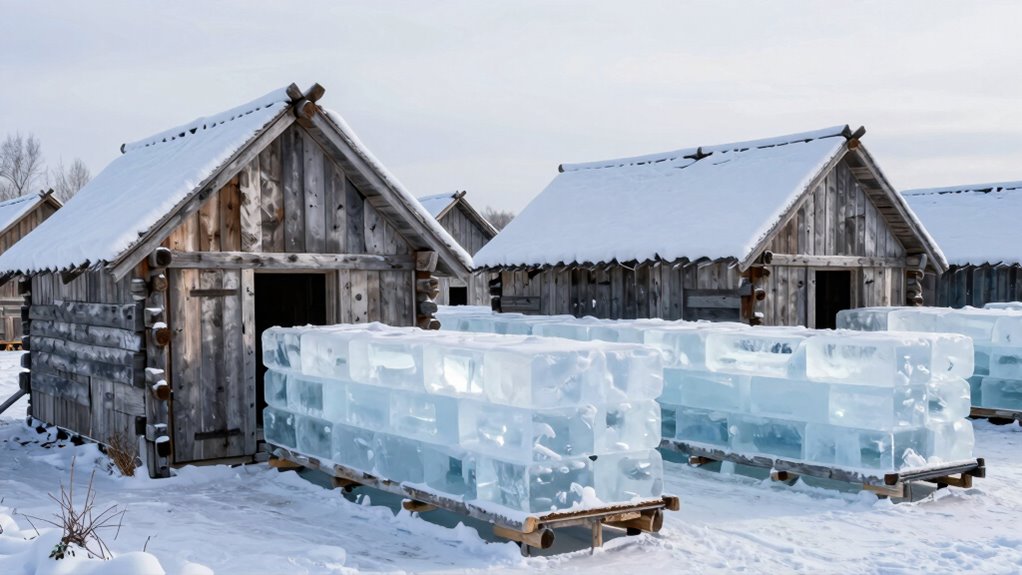
Pre-refrigeration cold storage revolutionized how people preserved food and extended its freshness, laying the groundwork for modern food infrastructure. Your understanding of ice harvesting innovations shows how early methods of collecting and storing natural ice influenced future cold storage technologies. These innovations led to more efficient ways to keep perishables fresh, reducing waste and expanding markets. The legacy of this era is clear: it set the stage for the development of mechanical refrigeration, transforming food preservation from seasonal to year-round. Additionally, essential oils for cold relief played a role in maintaining health during long storage periods, reflecting the broader importance of natural remedies in historical health practices. You can see how these advances fostered global trade and improved public health. As a result, modern cold storage systems owe much to the ingenuity of early ice houses and harvested ice, shaping the way we store and enjoy fresh food today.
Frequently Asked Questions
How Did Ice Houses Affect Local Economies Historically?
Ice houses markedly boosted local economies by creating jobs and supporting related industries like transportation and manufacturing. You’d see increased economic impact as communities relied on ice harvesting and storage to preserve food and supply markets. Labor dynamics shifted with the rise of ice harvesting, offering employment opportunities during winter months. This growth strengthened local commerce, fostering economic development in towns that specialized in ice production and trade.
Were There Regional Differences in Ice Harvesting Techniques?
Regional rifts reveal varied methods of ice harvesting, shaped by seasonal variations and local landscapes. In colder climates, you’d find more extensive, efficient techniques, while milder regions relied on simpler, seasonal strategies. Coastal communities often used shoreline sand and snow, whereas inland areas developed unique, region-specific practices. These differences highlight how geographic and climatic conditions dictated diverse regional methods, making ice harvesting a truly tailored, territory-specific tradition.
How Did Climate Variations Influence Ice Storage Practices?
Climate variations and seasonal variability directly impacted your ice storage practices. During colder periods, you relied on naturally frozen ponds and lakes, storing ice in ice houses to last through warmer months. Climate change, with milder winters, reduced ice formation, making harvesting more difficult and less reliable. You had to adapt by improving insulation and storage methods, but overall, changing climate patterns challenged traditional ice preservation techniques.
What Safety Measures Were in Place for Ice Workers?
You should wear protective gear like insulated gloves and sturdy boots to stay safe while working with ice. Safety protocols included monitoring weather conditions, using tools carefully, and avoiding thin ice that could break. These measures helped prevent accidents and injuries. By following proper safety procedures, you safeguard yourself from cold-related injuries and ensure the ice harvesting process stays safe and efficient.
How Did Ice Storage Impact Food Preservation Beyond Refrigeration?
You realize that ice storage revolutionized food preservation by allowing longer storage and transport beyond refrigeration. Ice transportation and trade routes enabled fresh perishables to reach distant markets, extending their freshness. This innovation reduced spoilage and wastage, making food more accessible and affordable. By supporting the ice trade, communities could store and ship perishable goods effectively, markedly impacting food availability and diet diversity during that era.
Conclusion
You’ve explored the fascinating history of frost-filled feats and frozen innovations. From harvesting and haphazardly storing ice to building sturdy ice houses, you see how people preserved perishables long before modern marvels. Though technology has transformed refrigeration, the legacy of labor, ingenuity, and icy ingenuity endures. Remember, the pioneering practices of past cold tech continue to carve a cool, creative corridor from craftsmanship to contemporary convenience.