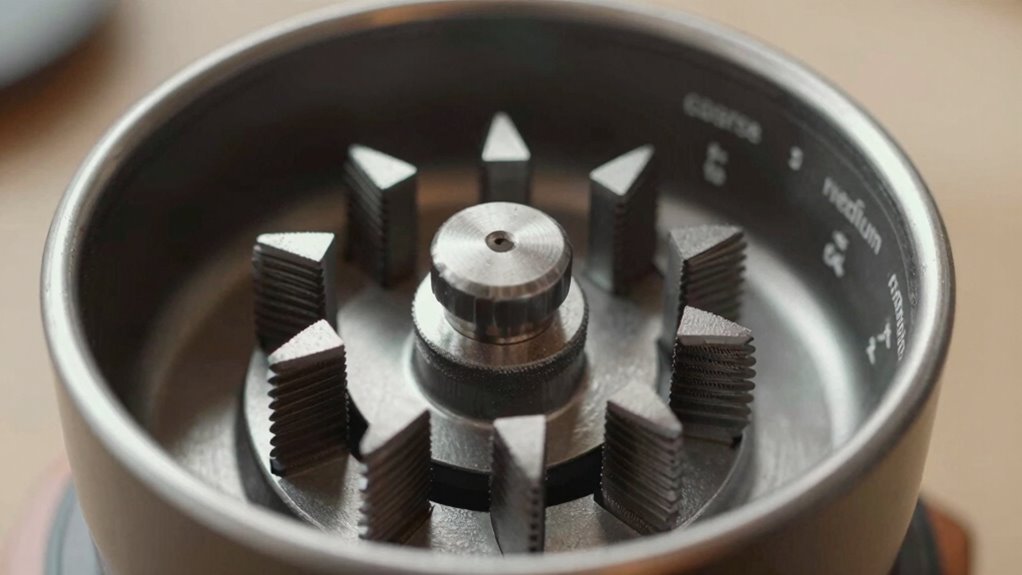

Grinder settings labeled as “fine” differ from one machine to another because each grinder’s mechanics and design influence how the ground size is achieved. Factors like burr type, motor power, and adjustment mechanisms affect what “fine” means in practice. This means a setting that’s perfect on one grinder might be too coarse or too fine on another. Understanding these differences helps you dial in the right grind. Keep exploring to learn how to optimize your specific grinder for the best brew.
Key Takeaways
- Different grinders have unique mechanisms, so what’s “fine” on one may be coarser on another.
- Burr size, shape, and motor power influence how fine a grind can be achieved.
- Calibration and testing are essential to find the correct “fine” setting for each grinder.
- The term “fine” is relative; it depends on specific machine mechanics and intended brewing method.
- Consistent grind size ensures optimal extraction, but the actual setting varies between devices.

Understanding grinder settings is essential for brewing the perfect cup of coffee, whether you prefer a French press or espresso. When it comes to achieving that ideal flavor, your grind size plays a crucial role, but it’s just as important to pay attention to your brew ratio and grind consistency. These factors work together to influence extraction, flavor balance, and overall quality. If you think “fine” is a universal setting, you might be missing out on the nuances that different grinders require. Each machine has its own mechanics, which means that what’s fine on one grinder could be too coarse or too fine on another. That’s why understanding how your specific grinder operates helps you dial in the perfect setting for your preferred brewing method.
Grind settings vary; understanding your grinder ensures perfect coffee every time.
The key begins with knowing your brew ratio, which is the proportion of coffee to water. A proper brew ratio ensures your coffee isn’t over-extracted or under-extracted, both of which can lead to undesirable flavors. When adjusting your grinder, keep this in mind because the grind size directly affects extraction. A finer grind increases surface area, which can lead to faster extraction but risks overdoing it if the grind is too fine. Conversely, a coarser grind might require a longer brewing time to extract enough flavor. The goal is to find that sweet spot where your grind size complements your brew ratio, resulting in a balanced, flavorful cup. Recognizing the importance of grind uniformity helps ensure consistent extraction and flavor development.
Grind consistency is another critical aspect that often gets overlooked. Even if you set your grinder to what you believe is the right “fine” setting, inconsistent grind sizes can cause uneven extraction. This inconsistency might lead to a cup with bitter, sour, or flat notes. Achieving uniform grind size ensures that all coffee particles extract at a similar rate, providing a more predictable and desirable flavor profile. Many grinders come with adjustable burrs or blades, so take the time to calibrate and test your grind repeatedly. A consistent grind size means fewer variables to manage during brewing, making it easier to replicate your ideal cup every time.
Ultimately, understanding that “fine” isn’t the same for every grinder empowers you to experiment and fine-tune your settings. Pay close attention to your brew ratio and work to maintain grind consistency, and you’ll be better equipped to craft the perfect coffee. It’s a process of trial and adjustment, but once you master how your grinder responds to different settings, you’ll open new levels of flavor clarity and balance—no matter your brewing method.
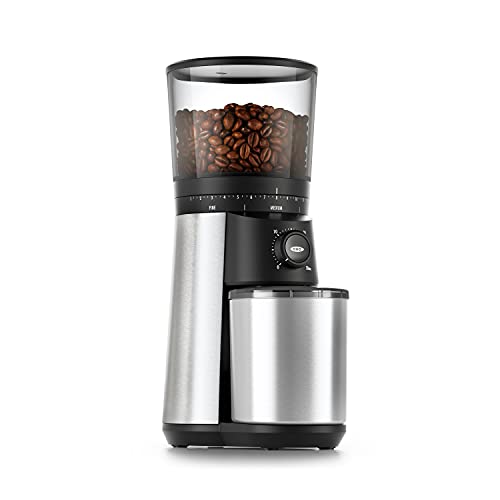
OXO Brew Conical Burr Coffee Grinder – Silver, Stainless Steel Burrs, One-Touch Automatic Smart Grind
- Burr Material: Stainless steel conical burrs for precision
- Grind Settings: 15 adjustable grind settings with micro-adjustments
- Ease of Use: One-touch start with memory of last setting
As an affiliate, we earn on qualifying purchases.
As an affiliate, we earn on qualifying purchases.
Frequently Asked Questions
How Do I Determine the Optimal Grind Size for My Brewing Method?
To find the ideal grind size for your brewing method, start with a recommended setting based on your brew ratio, then adjust gradually. Focus on grind uniformity to guarantee consistent extraction, which affects flavor and strength. Taste your coffee after each adjustment, aiming for a balanced flavor profile. Keep notes on your changes, and remember that small tweaks can make a big difference in achieving the perfect brew.
Can Adjusting the Grinder Affect the Flavor Profile of My Coffee?
Yes, adjusting your grinder can definitely affect your coffee’s flavor profile. When you change the grind size, it impacts grind size consistency, which influences how evenly flavors are extracted during brewing. A finer grind can enhance flavor extraction, making your coffee more robust, while a coarser grind might produce a milder taste. Experimenting with settings allows you to fine-tune flavor and achieve your perfect cup.
Are There Specific Brands Known for Consistent Grind Settings?
Certain brands are known for brand consistency and grind uniformity, making your brewing process more reliable. For example, Baratza and Breville maintain tight standards, ensuring you get predictable grind sizes. When you choose these brands, you’ll notice less variation between settings, helping you achieve consistent flavor profiles. Investing in reputable brands means your grinder performs reliably, giving you confidence that your grind size stays precise and your coffee tastes great every time.
How Often Should I Recalibrate My Grinder for Best Results?
Think of your grinder as a musical instrument; it needs tuning to stay in harmony. You should recalibrate it every few weeks or whenever you notice changes in grind consistency. Regular calibration frequency helps maintain ideal grind size, ensuring your coffee’s flavor stays consistent. Keep an eye on your results, and don’t hesitate to recalibrate when your grind feels off. This keeps your brew perfectly tuned every time.
Do Different Beans Require Different Grind Settings Even for the Same Brew?
Yes, different beans do require different grind settings even for the same brew. Freshness plays a key role—you might need a finer grind for older beans to extract maximum flavor. Keep your grinder well-maintained, as buildup can affect consistency, leading you to adjust settings more often. Experiment with small adjustments based on bean freshness, and recalibrate your grinder regularly for *ideal* results.
Conclusion
Remember, grinder settings aren’t universal—what’s “fine” for one machine might be too coarse for another. For example, a barista switching between grinders might find their espresso shot under-extracted on one and over-extracted on another, simply because the grind size differs. Always start with the manufacturer’s guidelines and adjust based on taste and extraction time. Fine-tuning your grind guarantees you get the perfect brew every time, no matter the grinder you’re using.