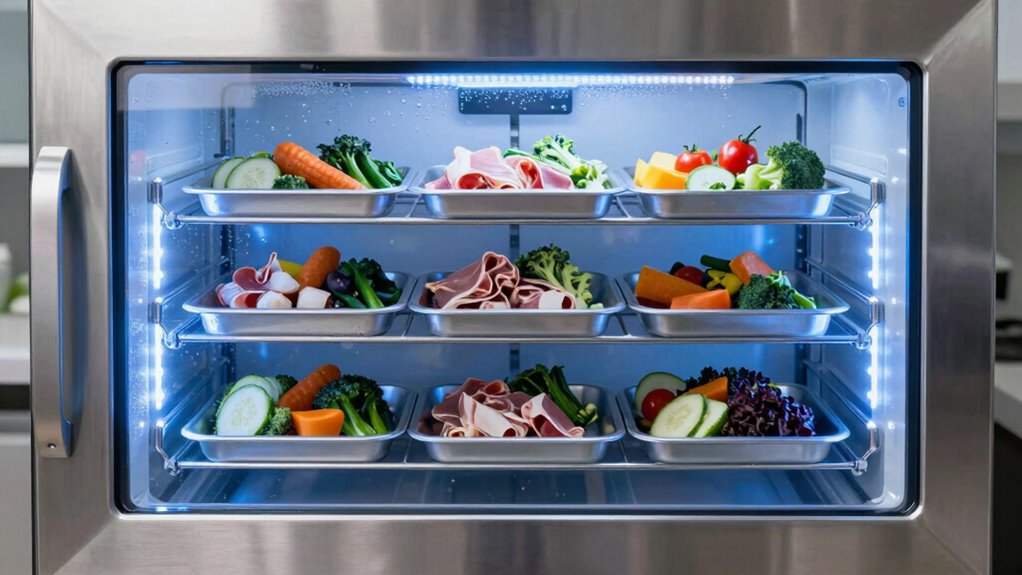

To use a blast chiller effectively, start by pre-cooling hot foods to reduce the load on the unit and prevent bacterial growth. When loading, avoid overcrowding and place items evenly to allow proper airflow, which helps prevent warm spots. Make certain foods aren’t stacked tightly and leave space between items. Regularly check temperatures during operation to ensure even cooling. Continue exploring these tips to guarantee ideal safety and food quality.
Key Takeaways
- Pre-cool hot foods to room temperature or lower before placing in the blast chiller to improve efficiency.
- Avoid overloading the chiller; distribute foods evenly to promote uniform airflow and cooling.
- Arrange items with space between them and avoid stacking to prevent warm spots and uneven cooling.
- Regularly monitor and verify the blast chiller’s temperature during operation for optimal performance.
- Cut large or thick foods into smaller pieces to accelerate cooling and prevent bacteria growth.
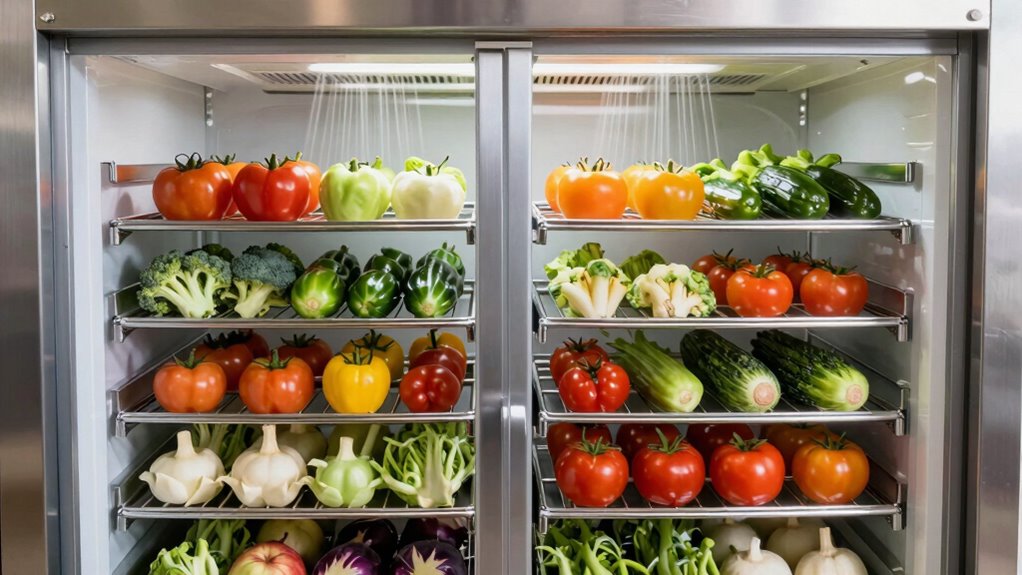
A blast chiller is an indispensable tool for quickly lowering the temperature of cooked foods, helping you preserve freshness and guarantee food safety. When used correctly, it minimizes the risk of bacteria growth, ensuring your meals stay safe for consumption. Proper pre-cooling is vital because it reduces the time food spends in the temperature danger zone (between 40°F and 140°F), where bacteria can multiply rapidly. By rapidly bringing down the temperature, you not only maintain food safety but also improve energy efficiency, as the chiller works more effectively when the food is cooled evenly and swiftly.
A blast chiller quickly cools cooked foods, enhancing safety, freshness, and energy efficiency.
Loading your blast chiller properly is key to maximizing its efficiency. You should avoid overloading it, which can lead to uneven cooling and create warm spots. Distribute items evenly and in small quantities to promote airflow around the food. This prevents hot spots—areas where the temperature remains higher during the cooling process—that could compromise safety and quality. When you carefully arrange your food, you allow the cold air to circulate effectively, ensuring each item cools uniformly. This approach minimizes energy consumption because the chiller doesn’t have to work harder to cool unevenly heated objects, making your operation more sustainable and cost-effective.
Pre-cooling your foods before placing them into the blast chiller can also enhance energy efficiency. For example, if you let hot foods cool slightly at room temperature or use other cooling methods beforehand, the blast chiller doesn’t have to work as hard to reach the desired temperature. Keep in mind that the goal is to bring hot foods down to safe storage temperatures as quickly as possible, ideally within four hours. Doing so not only preserves the texture and flavor of your dishes but also prevents bacteria from proliferating.
Avoiding warm spots is essential because they can be breeding grounds for bacteria and cause uneven cooling, which may lead to food spoilage. To prevent this, ensure your foods are cut into smaller pieces if large, and avoid stacking hot items directly on top of each other. Instead, place them with enough space for air to flow freely. Regularly monitor your blast chiller’s temperature during operation to verify it’s functioning correctly.

Kolice 5-Tray Commercial Blast Chiller -40°F | 130L Stainless Steel Heavy Duty Shock Freezer with AI Controller | Flash Freezer for Bakery Frozen Dough, Restaurant, School Kitchen | 1100W, 110V
- Rapid Freezing Technology: Freezes food in 1-4 hours to -40°F
- Large 5-Tray Capacity: Includes five adjustable stainless steel trays
- High-Quality Construction: Made with 304 stainless steel inside and out
As an affiliate, we earn on qualifying purchases.
As an affiliate, we earn on qualifying purchases.
Frequently Asked Questions
How Often Should Blast Chiller Maintenance Be Performed?
You should perform a maintenance schedule on your blast chiller at least once a month. During this time, conduct a thorough equipment inspection to identify any signs of wear or malfunction. Regular maintenance helps guarantee peak performance, prevents warm spots, and extends the lifespan of your machine. Don’t forget to clean filters and check temperature controls to keep everything running smoothly and maintain food safety standards.
Can Different Food Types Be Chilled Together Safely?
You can chill different food types together if you prioritize food compatibility and storage segregation. While mixing items might seem efficient, it can risk cross-contamination and spoilage. To guarantee safety, separate raw meats from cooked foods and dairy, and avoid combining high and low-temperature products. Proper segregation maintains food quality and prevents bacterial growth, making your blast chiller both safe and effective for a variety of items.
What Are the Energy Efficiency Tips for Blast Chillers?
To maximize energy savings with your blast chiller, focus on proper insulation techniques to reduce heat transfer and maintain efficiency. Regularly clean filters and check seals to prevent energy waste. Load the chiller correctly, avoiding overstuffing, which can cause uneven cooling and increase energy use. Additionally, pre-cool foods before loading to lessen the chiller’s workload. These practices keep your unit running efficiently, saving energy and extending its lifespan.
How Does Altitude Affect Blast Chiller Operation?
Imagine a mountain breeze cooling your skin—that’s how altitude affects blast chiller operation. Higher elevations reduce air pressure, requiring altitude adjustments to maintain ideal cooling efficiency. Without these tweaks, your chiller might struggle to reach desired temperatures, slowing down the process or risking uneven cooling. By adjusting settings for altitude, you guarantee consistent cooling efficiency, preventing warm spots and maintaining food safety and quality even at higher elevations.
Are There Specific Safety Certifications Required for Blast Chillers?
You need to guarantee your blast chiller meets safety standards and certification requirements. Look for certifications like NSF, UL, or CE, which verify the unit’s compliance with safety and performance regulations. These certifications help you operate the equipment safely and legally, protecting your staff and customers. Always check that your blast chiller has the appropriate certifications before purchase or use, ensuring it adheres to industry safety standards.
Conclusion
Just like a master chef perfects each dish, mastering your blast chiller guarantees food safety and quality. By pre-cooling properly, loading correctly, and avoiding warm spots, you’re wielding a powerful tool that keeps flavors vibrant and bacteria at bay. Think of it as your secret weapon in the culinary battlefield—turning raw ingredients into safe, delicious creations. Embrace these basics, and watch your kitchen rise to legendary status, much like heroes of old who mastered their craft.