Low vacuum errors in your freeze dryer usually mean there’s an issue with the pump or its oil. Contaminated, degraded, or insufficient oil can reduce vacuum efficiency, while leaks or worn seals also hinder performance. Regularly checking oil quality and levels, replacing oil as recommended, and inspecting for leaks can help prevent these errors. Keep an eye on these factors—there’s more to uncover about maintaining peak system performance.
Key Takeaways
- Low vacuum errors often indicate contaminated, degraded, or insufficient oil in the pump.
- Worn seals or leaks in the system can also cause vacuum loss.
- Regularly inspecting and replacing oil helps maintain optimal vacuum performance.
- Using the correct, manufacturer-recommended oil prevents contamination and damage.
- Proper pump maintenance and leak checks are essential to prevent low vacuum issues.

Proper maintenance of your freeze dryer’s oil and pump is vital to guarantee reliable performance and prolong the equipment’s lifespan. When it comes to the vacuum pump, which is central to the drying process, neglecting oil maintenance can lead to efficiency issues and unexpected errors. Low vacuum readings are among the most common problems you’ll encounter, and they often point to issues within the pump or its oil system. Understanding what these low vacuum errors mean and how to address them can save you time and prevent costly repairs.
Regular oil and pump maintenance prevent low vacuum errors and extend your freeze dryer’s lifespan.
A vacuum pump relies heavily on clean, well-maintained oil to create and sustain the necessary vacuum levels. When oil becomes contaminated, degraded, or insufficient, it hampers the pump’s ability to generate a proper vacuum. This results in a low vacuum error, which might manifest as incomplete drying, longer cycle times, or alarms from your freeze dryer. Regular oil maintenance is essential to keep the pump operating at peak efficiency. This means checking oil levels daily, ensuring the oil is clean and free of debris, and replacing it according to your manufacturer’s guidelines. Using the correct type of oil recommended by the manufacturer is equally important, as incompatible oils can cause damage or reduce the pump’s effectiveness.
Low vacuum errors often stem from issues like oil degradation or contamination. Over time, the oil can become thick, dirty, or contaminated with moisture or debris, which diminishes its lubricating and sealing properties. When this happens, the pump cannot maintain the necessary vacuum, triggering alarms. Additionally, leaks in the vacuum system or worn-out seals can contribute to low vacuum readings, but these problems are often compounded by poor oil maintenance. If you notice persistent low vacuum errors, it’s a good idea to inspect the oil first—drain and replace it if it appears dark, cloudy, or thick. Keep an eye on oil levels and top off or change the oil regularly to prevent these issues from occurring.
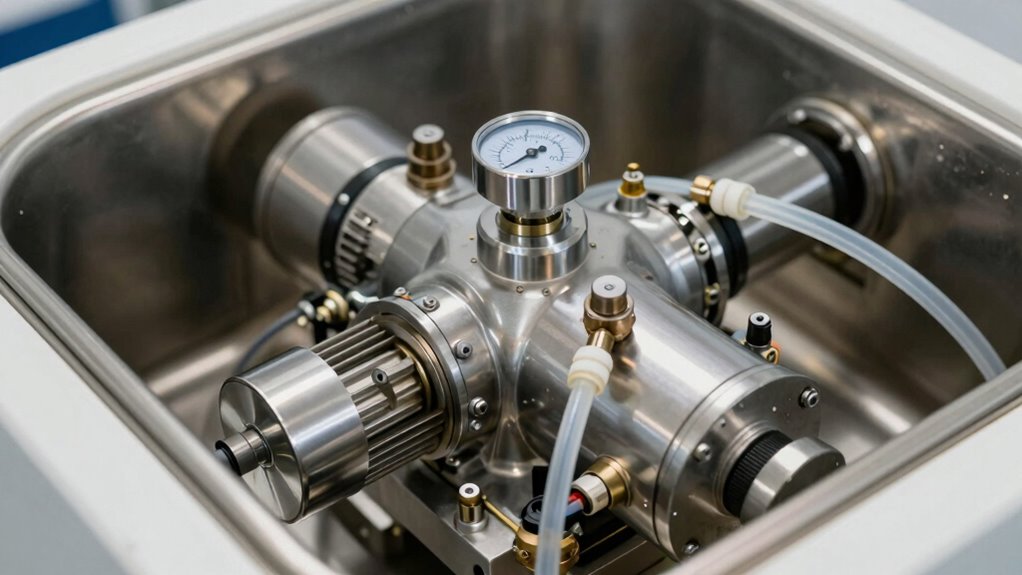
Another common cause of low vacuum errors is a malfunctioning vacuum pump. If your pump isn’t running smoothly or has internal wear, it won’t create the required vacuum level. In such cases, even with proper oil maintenance, you might need to service or replace the pump. Always consult your user manual for troubleshooting tips specific to your model, but remember that well-maintained oil and a clean, functional vacuum pump are your best defenses against low vacuum errors. By paying close attention to oil quality, maintaining proper levels, and promptly addressing any pump issues, you ensure your freeze dryer performs reliably and lasts longer. Additionally, understanding the free floating nature of your pump’s components can help in diagnosing issues related to internal wear or misalignment, which often contribute to vacuum failures.
Frequently Asked Questions
How Often Should I Replace the Vacuum Pump Oil?
You should replace the vacuum pump oil every 3 to 6 months, depending on usage and manufacturer recommendations. Regular oil replacement is essential for effective pump maintenance, preventing low vacuum errors and ensuring peak performance. Check the oil level and condition regularly—if it’s dark or has debris, it’s time for a change. Consistent oil replacement keeps your freeze dryer running smoothly and extends the lifespan of your pump.
What Are Common Signs of Pump Failure?
A stitch in time saves nine, so recognizing signs of pump failure helps you avoid costly downtime. Common signs include increased noise, prolonged vacuum buildup, or inconsistent pressure levels. During pump maintenance, if oil appears dark, frothy, or has a burnt smell, it indicates oil lifespan issues. Regularly inspecting these signs and maintaining your pump guarantees peak performance and helps catch problems early before they escalate.
Can Low Vacuum Cause Product Contamination?
Yes, low vacuum can cause product contamination because it compromises vacuum integrity, allowing airborne particles or moisture to enter the chamber. When the vacuum isn’t strong enough, it can lead to uneven drying and potential contamination risks. Maintaining proper vacuum levels is essential to prevent these issues, ensuring your product stays pure and free from unwanted contaminants during the freeze-drying process.
How Do I Calibrate My Vacuum Gauge?
Think of your vacuum gauge as a precise musical instrument needing tuning. To calibrate it, use a known pressure standard or calibration device. Carefully follow pressure measurement techniques, guaranteeing the gauge reads accurately across its range. Adjust the calibration screw or knob as needed, and then verify the readings against the standard. Regular calibration keeps your vacuum system singing in harmony and ensures reliable, accurate measurements every time.
Is It Safe to Run the Pump Without Oil?
No, it’s not safe to run the pump without oil. Operating without oil can cause contamination, damage, and increased wear, making pump maintenance more difficult. Without oil, the pump’s seals and components can overheat or break down, leading to low vacuum errors. Always ensure your pump has the correct amount of clean oil to maintain ideal performance, protect against contamination, and extend its lifespan.
Conclusion
Properly caring for your freeze dryer oil and pump can prevent frustrating “low vacuum” errors. Regular maintenance keeps your machine running smoothly and extends its lifespan. Did you know that neglecting pump care can reduce efficiency by up to 30%? Staying on top of oil levels and pump upkeep isn’t just good practice; it saves you time and money. So, keep a close eye on your equipment, and your freeze drying process will stay reliable and efficient.