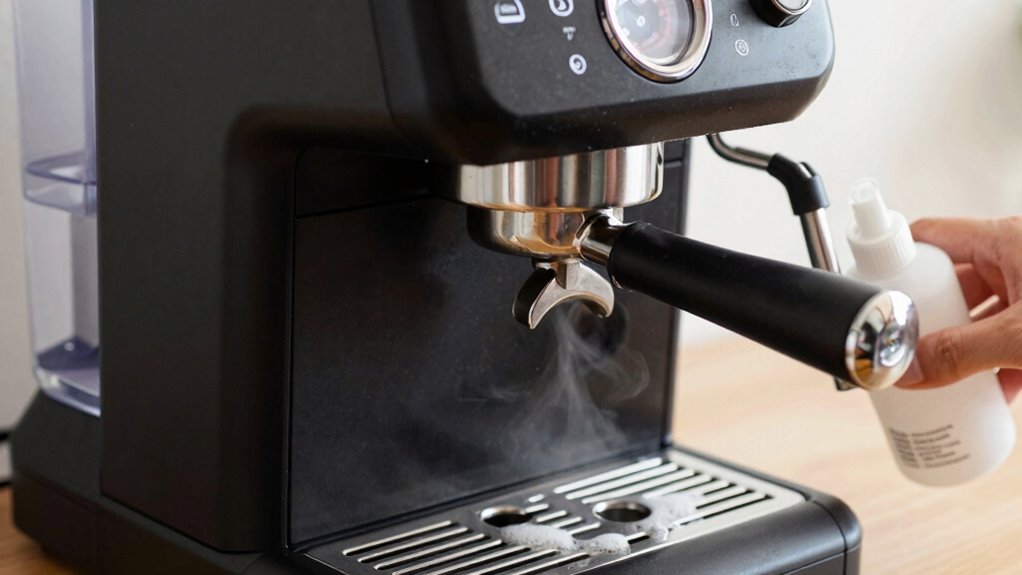

To safely descale your espresso machine without risking damage, follow your manufacturer’s instructions carefully. Use properly diluted commercial descaling solutions or natural options like vinegar or citric acid, and run them through the machine as directed. Always flush with clean water afterward to remove any residue. Regular descaling based on your water’s hardness keeps your machine working smoothly and your coffee tasting great. Keep going to discover more tips for a safe, effective descaling process.
Key Takeaways
- Follow the manufacturer’s instructions carefully and use recommended descaling solutions to avoid damaging internal components.
- Dilute descaling agents properly, such as vinegar or citric acid, to prevent corrosion or bricking the machine.
- Run the descaling solution through the machine gradually, ensuring even distribution without overloading the system.
- Flush thoroughly with clean water after descaling to eliminate residual chemicals and prevent damage or flavor contamination.
- Regularly assess water hardness and schedule descaling accordingly to maintain safe, effective cleaning and machine longevity.

If you want your espresso machine to continue brewing delicious, high-quality coffee, regular descaling is essential. Over time, mineral deposits from water, especially in areas with hard water, build up inside your machine. Water hardness directly influences how often you need to descale; the harder the water, the more frequently you should perform this maintenance. Ignoring these deposits can lead to clogged pipes, reduced water flow, and ultimately, machine malfunctions. To keep your espresso consistent and your machine running smoothly, understanding your water’s hardness and sticking to an appropriate descaling frequency is key.
Regular descaling prevents mineral buildup, ensuring your espresso machine runs smoothly and brews high-quality coffee.
The first step is to determine your water hardness level. You can do this by testing your tap water with a simple test kit or consulting your local water provider. Knowing whether you have soft, medium, or hard water helps you establish a realistic descaling schedule. For instance, if your water is particularly hard, you might need to descale every 1-2 months. Conversely, softer water may only require descaling every 3-6 months. Following a consistent descaling frequency tailored to your water hardness prevents mineral buildup from becoming problematic, ensuring your espresso machine operates at peak performance.
When it’s time to descale, always follow your machine manufacturer’s instructions. Most machines accept descaling solutions that are either commercially available or homemade with vinegar or citric acid. Be cautious not to use harsh chemicals that could damage internal components. Always dilute the solution properly and run it through your machine as per the recommended process. This method ensures the deposits dissolve safely without risking damage to your boiler, pipes, or sensors. After descaling, run several cycles of clean water through your machine to flush out any residual solution. Doing so prevents any unpleasant taste or future buildup.
Regular descaling isn’t just about keeping your machine running; it’s about maintaining the quality of your coffee. Mineral deposits can alter water flow, reduce pressure, and impact extraction, leading to weaker, less flavorful espresso. By adhering to a proper descaling schedule based on your water hardness and using the right solutions, you protect your investment and enjoy consistently excellent coffee. Remember, the key is to stay vigilant about your descaling frequency—don’t wait until you notice signs of clogging or performance drops. Instead, schedule regular maintenance, and your espresso machine will reward you with years of delicious brews.
Additionally, knowing about Free Floating systems can help you better understand how deposits might settle or circulate within your machine, influencing your descaling approach.

Descaler (2 Pack, 2 Uses Per Bottle) – Made in the USA – Universal Descaling Solution for Keurig, Nespresso, Delonghi and All Single Use Coffee and Espresso Machines
- Pack Size: 2 bottles for 4 uses
- Made in USA: High-quality formula from the USA
- Universal Compatibility: Suitable for Keurig, Nespresso, Delonghi
As an affiliate, we earn on qualifying purchases.
As an affiliate, we earn on qualifying purchases.
Frequently Asked Questions
Can I Use Vinegar Instead of Commercial Descaling Solutions?
You can use vinegar as a DIY cleaning alternative, but it’s not always recommended for descaling your espresso machine. Vinegar is acidic and can break down mineral buildup, yet it might harm rubber seals and internal components over time. For safe and effective descaling, stick to commercial solutions designed for espresso machines or follow manufacturer instructions. This helps prevent potential damage and ensures your machine stays in top shape.
How Often Should I Descale if I Have Hard Water?
If you have hard water, you should descale your espresso machine every 1 to 2 months, depending on water hardness and usage. Hard water increases mineral buildup, so more frequent descaling prevents damage and maintains peak performance. Monitor your machine for signs like slower extraction or changes in taste, and adjust your descaling frequency accordingly. Regular maintenance keeps your espresso machine running smoothly and extends its lifespan.
Is Descaling Necessary for All Types of Espresso Machines?
Yes, descaling is necessary for all types of espresso machines, but the process depends on machine compatibility. Check your user manual to see if descaling solutions are suitable for your model. Typically, you should follow the recommended descaling frequency based on your water hardness and usage. Regular descaling helps maintain performance and extends your machine’s lifespan, preventing mineral buildup that can damage internal components.
What Are Signs Indicating My Machine Needs Descaling?
You’ll notice your espresso machine needs descaling when you see signs like longer brewing times, weak coffee, or inconsistent flavor. Scale buildup from poor water quality can clog the system and reduce performance. If the water flow slows down or you detect strange tastes, it’s time to descale. Regularly checking for these signs helps prevent damage and keeps your machine running smoothly, ensuring great-tasting espresso every time.
Can Descaling Damage the Machine’s Internal Components?
Descaling, if done properly, won’t damage your machine’s internal components. However, using harsh or overly concentrated descaling solutions can lead to machine corrosion or component failure over time. Always follow the manufacturer’s instructions and use recommended descaling products. Properly maintaining your espresso machine reduces the risk of corrosion and component failure, ensuring longevity and consistent performance without risking internal damage.
Conclusion
By following these gentle steps, you’ll keep your espresso machine humming smoothly for years to come. Regular descaling is like giving your machine a soothing spa treatment—helping it perform at its best without any hiccups. Just remember, a little care goes a long way in preserving its charm and flavor. So, embrace this simple routine, and enjoy those perfect shots of espresso with peace of mind, knowing your machine is happy and healthy.