To keep your chamber vacuum sealer functioning properly, regularly inspect and clean the chamber and seals, making certain they’re free of debris and damage. Check gaskets and O-rings for wear and replace them as needed to maintain airtight seals. Use proper sealing techniques and avoid harsh chemicals during cleaning. Keep the vacuum pump maintained and lubricated, and monitor chamber material quality for signs of corrosion. If you want to guarantee your sealer stays in top shape, there’s more to uncover.
Listen free for 30 days with Audible
Thousands of audiobooks and originals — cancel anytime.
As an affiliate, we earn on qualifying purchases.
Key Takeaways
- Regularly inspect and replace worn gaskets and seals to prevent leaks and ensure airtight sealing.
- Keep the vacuum chamber clean, especially around seals and edges, using mild cleaning agents.
- Check the vacuum pump and filters periodically, replacing or cleaning to maintain optimal airflow.
- Avoid harsh chemicals on chamber surfaces; use soft cloths and food-safe lubricants for maintenance.
- Monitor chamber material integrity for dents, corrosion, or damage that could compromise performance.
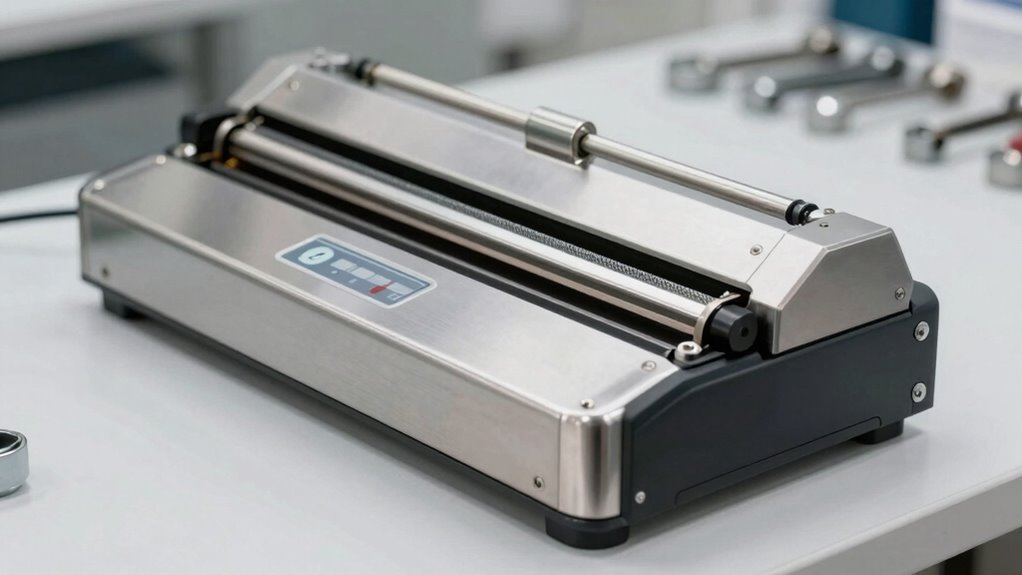
Chamber vacuum sealers are powerful tools that allow you to package food more efficiently and securely. They create a perfect seal by removing air from the entire chamber and then compressing the bag to guarantee freshness and longevity. To keep your sealer functioning at its best, understanding sealing techniques and the importance of vacuum chamber materials is essential. Proper sealing techniques involve ensuring the bag is correctly positioned and free of wrinkles or folds that could compromise the seal. Applying even pressure during sealing prevents weak spots, and using the appropriate vacuum pressure settings ensures the bag is airtight without crushing delicate items. Mastering these techniques helps you avoid common issues like leaks or incomplete seals, which can jeopardize food preservation.
Equally important is paying attention to the vacuum chamber materials. The chamber itself is usually made of stainless steel or other durable metals, designed to withstand repeated use and maintain a tight seal. Regular inspection of the chamber materials is vital because any dents, corrosion, or damage can affect the vacuum quality. If the chamber walls are scratched or compromised, air might seep in, leading to ineffective sealing. Keep the chamber clean and free of debris, especially around the seals, to prevent contamination and maintain a strong vacuum. Using the correct vacuum chamber materials also extends the lifespan of your sealer, as high-quality metals resist wear and corrosion better over time. Additionally, understanding the materials used in vacuum chambers can help you select the best equipment for your needs and ensure durability. Maintenance should be a routine part of your sealing process, even if it’s often overlooked. Regularly check the seals for wear or damage, replacing gaskets or O-rings as needed. Lubricate moving parts with food-safe lubricants to ensure smooth operation. Keep the vacuum pump clean and change filters periodically to maintain maximum airflow and vacuum strength. When cleaning the chamber, avoid harsh chemicals that could damage the materials; instead, use mild cleaning solutions and soft cloths to wipe down surfaces. Proper maintenance not only prolongs the life of your chamber vacuum sealer but also guarantees that each seal remains airtight.
chamber vacuum sealer replacement gaskets
As an affiliate, we earn on qualifying purchases.
As an affiliate, we earn on qualifying purchases.
Frequently Asked Questions
How Often Should I Replace the Sealing Gaskets?
You should replace the gasket during gasket replacement every 1 to 2 years or when you notice sealing issues. Regularly inspect the gasket for cracks, tears, or hardening, which can compromise sealing durability. Proper gasket maintenance ensures your chamber vacuum sealer maintains ideal performance. Don’t wait until it fails; proactively replacing the gasket helps sustain sealing strength and prevents costly repairs, keeping your sealing process efficient and reliable.
What Cleaning Agents Are Safe for Chamber Vacuum Sealers?
Think of your chamber vacuum sealer as a trusted steed; you wouldn’t use just any potion on it. Stick to mild, non-abrasive cleaning agents like soapy water or manufacturer-approved cleaners. Always follow safety precautions—wear gloves, avoid harsh chemicals, and make certain thorough rinsing. These steps keep your machine running smoothly and extend its lifespan, much like maintaining a trusty steed for many adventures ahead.
How Do I Troubleshoot Uneven Sealing Issues?
To troubleshoot uneven sealing issues, first check the sealing temperature; if it’s too low, seals may be inconsistent. Make certain the vacuum pressure is adequate, as insufficient pressure can cause gaps. Clean the sealing bar and check for debris or damage. Adjust the sealing time if needed, and verify the gasket’s condition. Maintaining proper sealing temperature and vacuum pressure consistently helps achieve even, reliable seals every time.
Can I Use My Vacuum Sealer for Liquids?
You can absolutely use your vacuum sealer for liquids, but it’s like walking a tightrope. To prevent messy spills, freeze wet foods first, creating a solid block for better liquid sealing. This way, you avoid leaks and ensure a tight seal. Just remember, liquid sealing requires careful handling, but with patience, your vacuum sealer can handle wet foods efficiently without turning your kitchen into a flood zone.
What Is the Typical Lifespan of a Chamber Vacuum Sealer?
Your chamber vacuum sealer typically lasts around 5 to 10 years, depending on usage and maintenance. To maximize vacuum sealer longevity, follow a consistent maintenance schedule, including cleaning and inspecting seals and gaskets regularly. Proper upkeep prevents wear and tear, ensuring your machine continues to perform well over time. By staying attentive to maintenance, you can extend its lifespan and get the most out of your investment.
Conclusion
Think of your chamber vacuum sealer as a trusted companion on your culinary journey. Just like a car needs regular tune-ups to run smoothly, your sealer requires consistent maintenance to perform at its best. Neglecting the checklist is like ignoring the engine’s oil change — it might work today, but trouble’s lurking around the corner. Stay vigilant, follow the maintenance routine, and your sealer will keep sealing in freshness, keeping your kitchen running like a well-oiled machine.
Flea & tick season Picks
flea and tick prevention
As an affiliate, we earn on qualifying purchases.