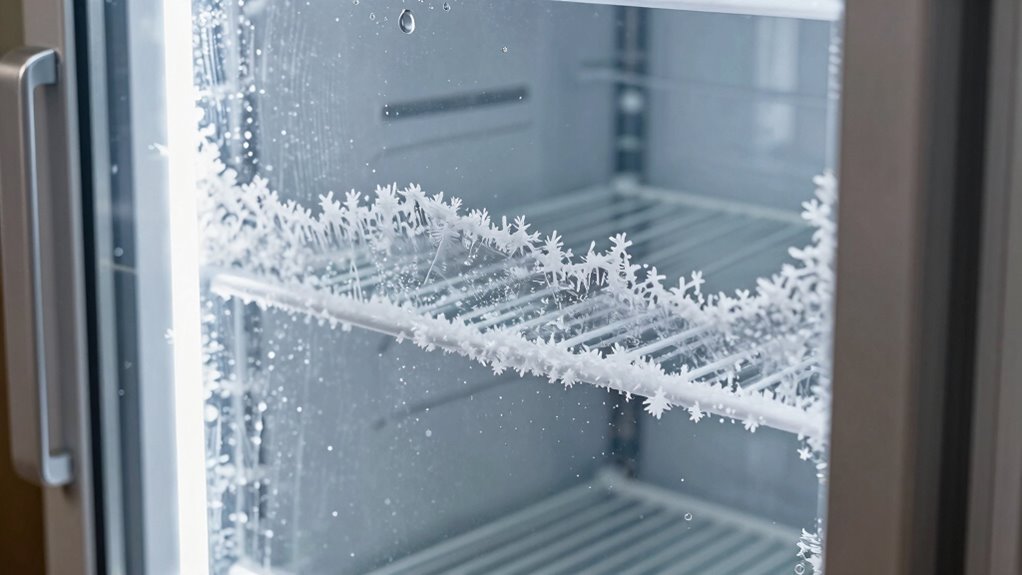

The main mistake that causes your display freezer to frost up early is poor control of temperature, airflow, and door handling. If you set the temperature too cold or too warm, it stresses the system and promotes frost formation. Frequent door openings or damaged seals let in warm, humid air that condenses on cold surfaces. Additionally, restricted airflow or neglecting routine maintenance can accelerate frost buildup. Keep these factors in check, and you’ll better prevent early frosting—learn more to keep your freezer working at its best.
Key Takeaways
- Setting the thermostat too cold causes the compressor to work harder, increasing frost buildup.
- Poor air circulation allows moisture to settle and freeze, leading to early frost formation.
- Damaged door seals let warm, humid air inside, causing moisture to condense and freeze quickly.
- Frequently opening the freezer introduces humidity, accelerating frost development.
- Neglecting routine maintenance like cleaning coils and checking seals promotes early frost accumulation.
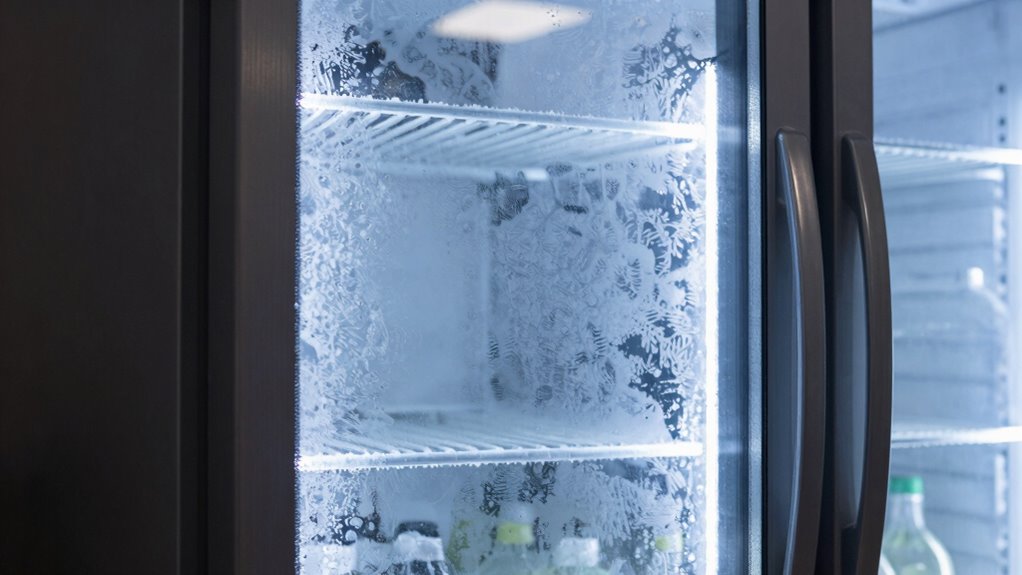
Have you ever noticed unexpected frost buildup on display freezer surfaces? This common issue can be frustrating, especially when it seems to occur suddenly and without explanation. More often than not, the root cause comes down to how well you’re managing temperature control and maintaining the door seal. These two factors are essential in preventing early frosting and keeping your freezer running efficiently.
Start by considering your temperature control settings. If your display freezer is set too cold, it forces the system to work harder to maintain the desired temperature. This excessive cooling causes moisture in the air to freeze on surfaces, leading to frost buildup. Conversely, if the temperature is too warm, the freezer may struggle to keep items frozen, and the compressor will cycle more frequently, which can also promote frost formation. It’s important to regularly check and calibrate the thermostat to guarantee it’s within the ideal range—usually around -18°C (0°F). Proper temperature control helps minimize ice accumulation and improves energy efficiency. Ensuring the air circulation inside the freezer is unobstructed also helps in evenly distributing the cold and preventing frost pockets. Additionally, maintaining proper airflow is crucial because restricted airflow can cause uneven temperatures that encourage frost formation.
Properly calibrate your freezer’s thermostat to prevent frost buildup and enhance efficiency.
Another key element is your door seal, or gasket. A damaged or worn seal allows warm, humid air to enter the freezer every time the door opens. That moisture quickly condenses on cold surfaces, forming frost and ice. Over time, seals can deteriorate, crack, or become loose, reducing their effectiveness. You should routinely inspect your door gasket for any signs of damage or gaps. If you notice cracks or if the seal doesn’t snugly fit when the door is closed, it’s time to replace it. Guaranteeing an airtight seal prevents excess humidity from entering, which is essential for controlling frost buildup. Additionally, humidity levels inside the environment can influence frost formation, so managing ambient moisture is also beneficial.
In addition to maintaining proper temperature control and a good door seal, it’s important to minimize how often and how long the door stays open. Each time you open the freezer, warm air rushes in, increasing moisture levels inside. This added humidity accelerates frost formation. Train staff or yourself to open the door only when necessary and close it promptly afterward.
Finally, scheduling regular maintenance checks can help catch issues before they become serious. Clean the condenser coils, check the temperature settings, and inspect door seals regularly. Doing so keeps your display freezer operating at ideal conditions, reducing the chances of early frost buildup. Remember, the key to avoiding the frost mistake is a combination of proper temperature control and a well-maintained door seal. When these elements are in harmony, your freezer stays frost-free longer, runs more efficiently, and keeps your products in perfect condition.
display freezer temperature control thermostat
As an affiliate, we earn on qualifying purchases.
As an affiliate, we earn on qualifying purchases.
Frequently Asked Questions
How Often Should I Defrost My Display Freezer?
You should defrost your display freezer whenever frost buildup exceeds a quarter-inch, typically every 3 to 6 months. Regular defrosting boosts energy efficiency and simplifies maintenance. Use simple maintenance tips like unplugging the unit, removing food, and letting the ice melt naturally. Avoid scraping or using sharp tools, which can damage the freezer. Staying consistent helps prevent early frost buildup and keeps your display freezer running smoothly.
Can Improper Shelving Cause Early Frosting?
Imagine your freezer as a busy city, where proper shelving placement acts like well-planned roads, guiding air circulation smoothly. If shelves are improperly placed or cluttered, they block airflow, like traffic jams, causing cold spots and early frost buildup. You can prevent this by ensuring shelves are correctly positioned, allowing consistent air circulation. Keep the pathways clear, and your freezer will stay frost-free longer, functioning efficiently like a well-organized city.
Does Ambient Temperature Affect Frost Buildup?
Yes, ambient temperature affects frost buildup. Higher ambient humidity increases moisture around your freezer, leading to faster frost accumulation. When the surrounding air is warmer, your freezer works harder, but if airflow efficiency is poor, excess moisture condenses and freezes inside. To prevent early frosting, keep the environment cool and dry, ensure good airflow around the unit, and regularly defrost to maintain peak operation.
Are Certain Foods More Likely to Cause Frost?
Certain foods, like unfrozen liquids or moist items, are more likely to cause frost buildup, especially if your freezer isn’t well-organized. Proper food storage and good freezer organization help prevent frost from forming prematurely. Don’t worry—by keeping foods properly wrapped and avoiding overloading, you’ll reduce moisture exposure. This way, you maintain a frost-free freezer, ensuring efficient operation and easy access to your stored items.
How Does Door Seal Integrity Influence Frost Formation?
Door seal integrity plays a vital role in preventing frost formation. If there are seal leaks, warm air enters, disrupting proper air circulation inside the freezer. This moisture condenses and freezes, leading to early frost buildup. To avoid this, regularly check the door seals for damage and make certain they’re airtight. Maintaining seal integrity keeps cold air in and moist air out, reducing frost and keeping your freezer running efficiently.
Conclusion
To keep your display freezer frost-free and running smoothly, avoid the common mistake of leaving the door open too long or frequently. This small oversight can lead to early frost buildup, causing inconvenience and potential damage. Remember, a stitch in time saves nine—regularly checking and maintaining your freezer helps prevent frost from taking over. Stay vigilant, and your freezer will stay efficient, saving you time and money in the long run.