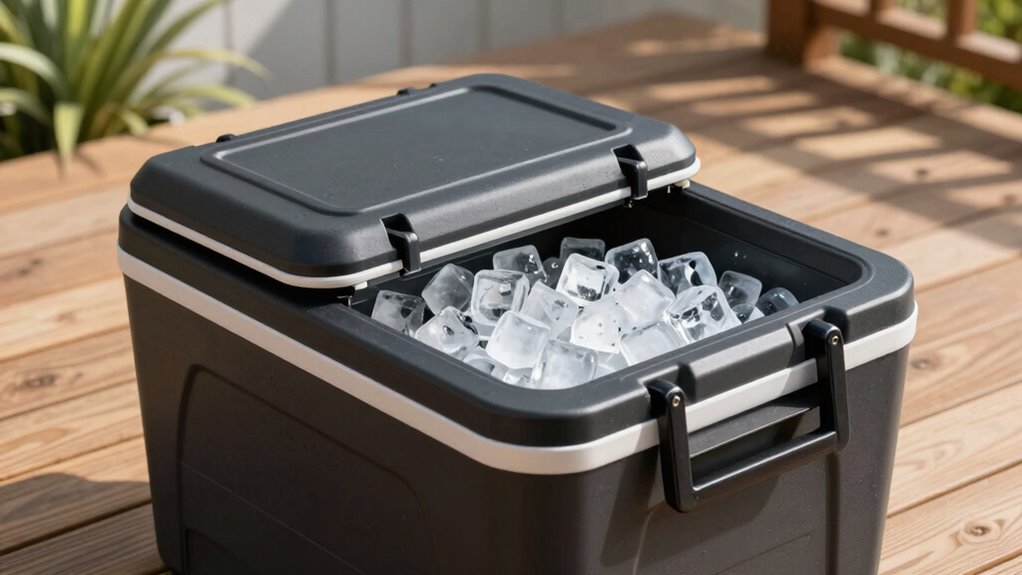

To make your patio cooler hold ice longer, keep it closed as much as possible, just like a sealed treasure chest. Opening it frequently lets warm air in, speeding up melting. Pre-chill it before loading with ice and drinks, and place it in shade away from heat sources. Sealing it tight and minimizing opening times helps retain cold, so your ice lasts longer. If you want more tips to maximize ice retention, you’ll find useful ideas ahead.

Get baking supplies delivered free with Prime
- Fast, free delivery on millions of items
- Prime Video, Amazon Music and more included
- Member-only deals all year
Key Takeaways
- Minimize frequent openings to prevent warm air from entering and melting the ice faster.
- Keep the cooler closed as much as possible to maintain internal cold temperatures.
- Pre-chill the cooler and fill it to capacity to reduce air space and insulate the ice.
- Place the cooler in shaded, cool areas away from heat sources for better ice retention.
- Ensure tight seals and proper insulation to prevent heat transfer and prolong ice life.
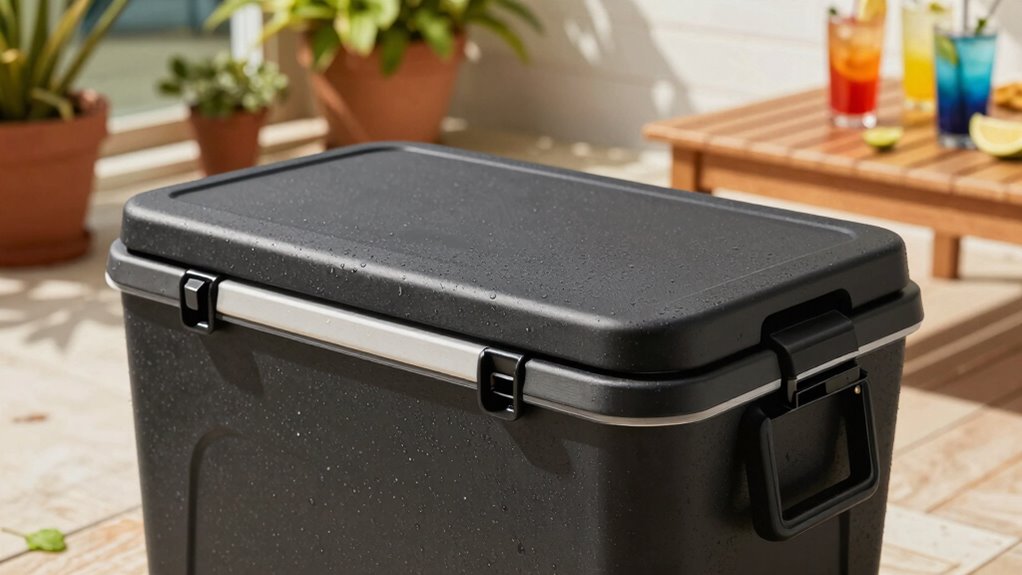
If you want your patio cooler to keep ice longer, the key is how often and how you open it. Every time you lift the lid or door, you let warm air rush in, which accelerates melting. To maximize ice retention, you need to adopt effective ice retention techniques that minimize air exchanges. One of the most important cooler maintenance tips is to open it only when necessary. Keep it closed as much as possible, and open it quickly when you do need access. Think of your cooler as a sealed environment; the less you disturb that seal, the better your ice will stay.
Keep your cooler closed and minimize opening to preserve ice longer and stay cool all day.
When using your cooler, consider pre-chilling it before loading it with ice and beverages. This reduces the temperature differential and helps maintain cold conditions for longer. Additionally, filling the cooler to capacity can help insulate the ice, as less air space means less room for warm air to circulate. Use block ice instead of ice cubes when possible, since blocks melt more slowly and keep the internal temperature steady for an extended period. Wrapping the ice in a towel or insulating material can also prolong its lifespan by reducing heat transfer. Proper cooler placement is crucial to maintain optimal cooling performance and prevent unnecessary heat transfer from the environment. A well-placed cooler can make a significant difference in how long your ice lasts.
Another essential ice retention technique involves proper cooler placement. Keep it in a shaded area away from direct sunlight, which can significantly raise the internal temperature. Also, avoid placing your cooler near heat-generating appliances or in hot environments. Elevating the cooler off the ground on a table or platform can help prevent heat transfer from the surface beneath it. Proper cooler insulation and maintenance are crucial to extending ice life and ensuring your beverages stay cold longer. Regular maintenance of your cooler, including checking the seals, is vital to keep it working efficiently. Clean the interior and drain any accumulated water after use, as standing water can promote mold and bacteria growth, which might affect the cooler’s insulation properties. Check the seals around the lid or door regularly; a tight seal prevents warm air from seeping in. If you notice any damage or gaps, replace or repair the seals promptly. Additionally, inspecting the cooler periodically can help identify potential issues before they compromise its performance.
Finally, consider adding a layer of ice on top of your beverages rather than just at the bottom—this keeps the cooler cold from the top down and helps maintain a more consistent internal temperature. Using cooler accessories like ice packs or insulating mats can further enhance ice retention by providing additional barriers against heat transfer. To further improve efficiency, consider using insulating materials around the cooler to boost its thermal barrier. By practicing these ice retention techniques and cooler maintenance tips, you’ll enjoy colder drinks for longer periods, making your outdoor gatherings more enjoyable and less wasteful of ice. Remember, the key is not just what you put into your cooler but how you handle it afterward. Keep it closed, insulated, and well-maintained, and your ice will last much longer.
As an affiliate, we earn on qualifying purchases.
Frequently Asked Questions
How Long Can a Patio Cooler Keep Ice Without Opening?
You can expect a patio cooler to keep ice for about 2 to 5 days without opening, depending on insulation quality and outdoor heat. To maximize ice preservation and coolant efficiency, avoid opening it frequently, as every lid lift lets warm air in. Keep it in a shaded spot, and make certain the cooler is well-insulated. This way, you’ll prolong ice life and maintain cold temperatures longer.
What Are the Best Materials for Patio Coolers?
Think of your cooler as a fortress for your ice. The best materials for ice preservation are thick, high-density foam or roto-molded plastic, which act like armor to insulate and keep cold air in. These materials provide superior insulation, preventing heat transfer and extending ice longevity. Roto-molded coolers, in particular, are durable, leak-proof, and excellent at maintaining consistent low temperatures, making them your best choice for lasting freshness.
Does the Size of the Cooler Affect Ice Retention?
Yes, the size of your cooler affects ice retention. A larger cooler with better insulation holds more ice volume, which helps keep your items cold longer. When you choose a bigger cooler, it reduces the frequency of opening, maintaining the internal temperature. Proper insulation also plays a vital role. So, selecting a larger cooler with quality insulation guarantees your ice lasts longer, making your outdoor gatherings more enjoyable.
Can Temperature Outside Impact Ice Melting?
Sure, outside temperature definitely impacts ice melting, even if you think your cooler is well-insulated. Ironically, climate adaptation becomes essential—hotter weather challenges insulation efficiency, causing ice to melt faster. So, when the sun blazes, your cooler’s insulation struggles, and your icy stash turns to water quicker. To keep your drinks cold longer, position your cooler in the shade and minimize opening it, giving your insulation a fighting chance.
Are There Any Maintenance Tips for Longer Ice Retention?
To extend ice retention, you should regularly check your cooler’s seal integrity and guarantee it’s airtight. Maintain a cleaning routine by removing any debris or mold, which can compromise insulation. Avoid leaving the lid open for extended periods, and pre-chill the cooler before use. Proper sealing and cleanliness keep cold air in longer, helping your ice last longer and keeping your drinks cool for hours.
Conclusion
Think of your patio cooler as a fortress guarding its icy treasure. Every time you open it, you’re letting in the heat and giving evaporation a chance to sneak in, weakening your ice’s reign. Keep it shut, and you’ll see your ice last longer—like a stronghold maintaining its defenses. So, be the vigilant guardian of your cooler, and enjoy chilled drinks for hours. Less opening means more cold, and that’s a victory worth celebrating.
Halloween Picks
halloween
As an affiliate, we earn on qualifying purchases.