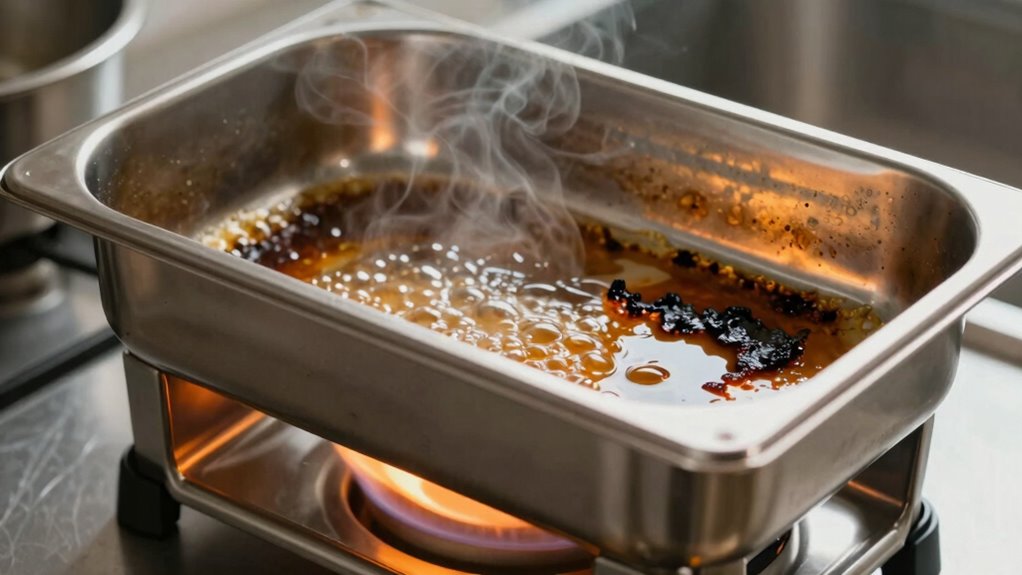
When your sauce warmer is only half full, uneven heat distribution can create hot spots and concentrate heat at the bottom, increasing the risk of burning. Thicker sauces or low fill levels hinder circulation, while cooler temperatures or inadequate mixing can also lead to scorching. Proper filling, regular stirring, and adjusting your thermostat help prevent this problem. If you want to know more about how to keep your sauces warm without burning, keep exploring these tips.
Key Takeaways
- Half-full warmers create uneven heat distribution, leading to hot spots that can burn the sauce.
- Insufficient product volume concentrates heat at the bottom, increasing the risk of scorching.
- Thick sauces hinder circulation, causing localized overheating and burning at the warmer’s base.
- Higher temperatures or improper settings at low fill levels can cause the sauce to overheat and burn.
- Poor maintenance or uneven heat flow in the warmer can exacerbate burning when not filled adequately.
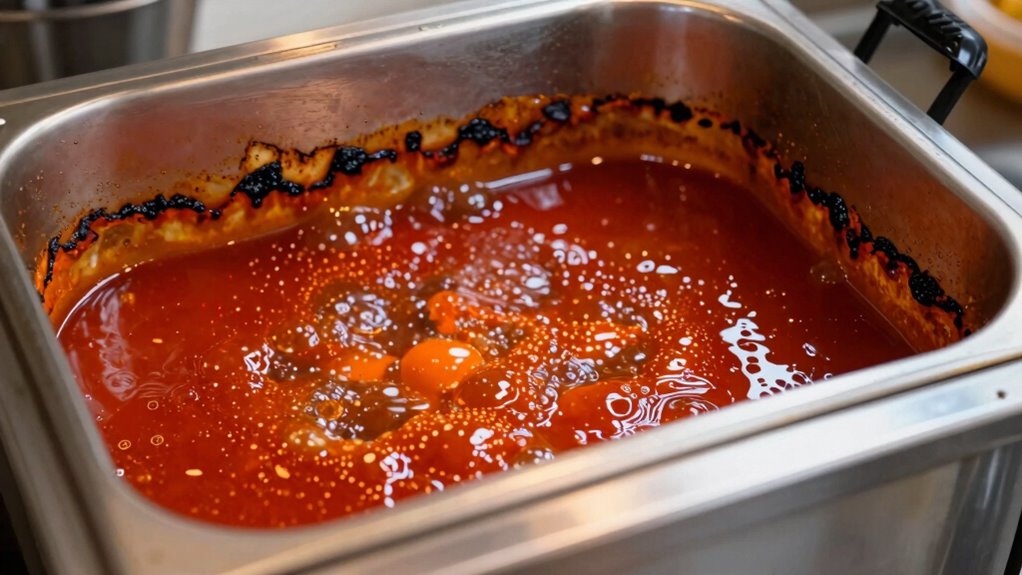
Sauce warmers are essential in many food service settings, but they can pose a safety risk if not used properly. One common issue you might encounter is burning the product when the warmer is only half full. This problem often comes down to how the sauce’s consistency and heat regulation are managed within the warmer. When you don’t fill the unit adequately, it can lead to uneven heat distribution, causing certain areas of the sauce to get hotter than others. If the sauce becomes too thick or if the warmer isn’t set to the right temperature, it’s easy for the sauce to scorch or burn, especially at the bottom where heat concentrates.
The key to preventing burnt product lies in maintaining proper sauce consistency and effective heat regulation. When the sauce is too thick, it doesn’t circulate well inside the warmer, which means it’s more likely to stick to the bottom and burn. Conversely, if the sauce is too thin, it can overheat quickly, also increasing the risk of burning. You need to find that ideal middle ground—thick enough to stay stable but fluid enough to move freely. Regular stirring or agitation can help keep the sauce consistent, preventing it from settling and burning at the bottom. Ensuring proper heat distribution can significantly reduce hot spots that cause burning. Additionally, selecting a warmer with a uniform heat dispersion system can further help prevent uneven heating. Proper maintenance and cleaning of the warmer also contribute to consistent heat flow and prevent buildup that might cause hot spots. An often overlooked factor is the importance of regular temperature checks, which can help catch any fluctuations before they lead to burning. Proper insulation of the warmer can also help maintain a steady temperature and prevent heat loss that might cause uneven heating.
Heat regulation is equally vital. Many warmers have adjustable thermostats, so it’s important to keep the temperature at a moderate level. If you set the warmer too high, especially when it’s only half full, the heat can become concentrated at the bottom, causing the sauce to scorch. When the warmer is full, heat is distributed more evenly, reducing this risk. But when it’s only half full, the heat can become localized, leading to burning if you’re not careful. It’s advisable to monitor the temperature closely and adjust the thermostat as needed, particularly when the warmer isn’t full.
Another factor is the design of the warmer itself. Some models have better heat distribution systems than others, so investing in a high-quality unit can help prevent hot spots that cause burning. Additionally, make sure to follow manufacturer instructions regarding filling levels and temperature settings. Remember, even if the warmer is designed to keep sauces hot, it’s your responsibility to manage the heat properly and monitor sauce consistency. Doing so will keep your sauces warm, smooth, and free from burning, regardless of how full the unit is. Proper temperature control is essential for maintaining sauce quality and avoiding accidents.

Groviia Electric Sauce Warmer Dispenser Commercial, Stainless Steel Warmer with 3 Removable Heated Squeeze Bottle Adjustable Temperature 86-185°F for Nacho Cheese, Chocolate, Ketchup
[Efficient Water Bath Heating]: This electric sauce warmer uses water bath heating to transfer heat quickly and evenly…
As an affiliate, we earn on qualifying purchases.
As an affiliate, we earn on qualifying purchases.
Frequently Asked Questions
How Do I Prevent My Sauce Warmer From Burning the Product?
To prevent your sauce warmer from burning the product, make sure it’s properly maintained and always filled at least halfway. Use low heat settings to preserve flavor and avoid scorching. Regularly clean your equipment to prevent buildup that can cause uneven heating. Stir the sauce frequently to distribute heat evenly, which helps with flavor preservation and keeps the warmer functioning properly. Proper maintenance and mindful operation are key to avoiding burnt sauces.
What Types of Sauces Are Most Prone to Burning?
You should watch out for sauces with delicate flavor variations, like cheese or cream-based ones, as they’re more prone to burning. These sauces tend to scorch easily, especially if stored improperly or kept warm for too long. To prevent this, use proper storage methods and stir frequently. Additionally, keep the warmer at a lower temperature and avoid overfilling to maintain the sauce’s quality and flavor.
Can Adjusting the Temperature Settings Reduce Burning?
Did you know improper temperature regulation causes over 60% of sauce burner issues? Adjusting the temperature settings can indeed reduce burning. Proper heat distribution ensures the sauce heats evenly, preventing hot spots that scorch the product. By carefully controlling the temperature, you maintain consistent warmth, especially when the warmer is only half full. Always monitor and fine-tune the heat to keep your sauces smooth and delicious without risking burning.
What Safety Precautions Should I Take When Using a Sauce Warmer?
When using a sauce warmer, you should always follow safety precautions like avoiding overfilling and keeping the unit stable. To prevent burning and maintain sauce consistency, consider alternative heating methods if needed. Never leave the warmer unattended, and regularly check the temperature to avoid overheating. Using a thermometer helps guarantee safe operation. These steps protect you from burns and help keep your sauce at the perfect consistency.
How Often Should I Clean My Sauce Warmer to Prevent Burning?
Consistently clean your sauce warmer to prevent burning and maintain perfect sauce consistency. Aim to wipe and wash it at least once a day, especially after high-volume use. Regular warmers maintenance keeps the interior free of residue and buildup, ensuring even heat distribution. This prevents scorching, preserves flavor, and prolongs your warmer’s lifespan. Skipping cleaning sessions risks uneven heating and burnt products, so stay diligent with your cleaning routine.

Macevia 0.12QT Mini Sauce Pan, 18/10 Stainless Steel Butter Warmer, Small Pot with Handle, Ideal for Kitchen, Restaurant, Camping & RV Use (4 Inch) – Silver
ULTRA-COMPACT: 4" diameter x 0.9" height with a 3.7" handle. This mini saucepan is ideal for single servings…
As an affiliate, we earn on qualifying purchases.
As an affiliate, we earn on qualifying purchases.
Conclusion
So, next time you notice your sauce warmer scorching your product, remember, it’s all about keeping it at the right level. Don’t let it sit half empty—think of it like a vintage car needing proper oil to run smoothly. By filling it appropriately and stirring regularly, you keep things from turning to cinders. Trust me, avoiding this mistake saves you from a greasy mess and keeps your sauces tasting just as divine as a secret recipe from grandma’s cookbook.

Warming Mat for Food Extra Large 32"x15", Electric Silicone Food Warmer Trays for Chafing Dishes & Buffet,Portable Countertop Food Warmers for Parties, 7-Level Temp 8-Hour Timer, Blue
【One-Touch MAX Warm】Experience instant warmth in just 8 seconds and reach MAX heating temperature in only 7 minutes—all…
As an affiliate, we earn on qualifying purchases.
As an affiliate, we earn on qualifying purchases.

Popfoodex Commercial Electric Sauce Warmer – Stainless Steel Chocolate Warmer w/Independent Temp Control, Cheese Warmer Dispenser for Hot Fudge & Nacho Cheese, Includes 2×650ml Bottles (110V)
360° Uniform Warming: This sauce warmer uses circular heating cylinders for 360° water-bath heating, maximizing surface contact for…
As an affiliate, we earn on qualifying purchases.
As an affiliate, we earn on qualifying purchases.