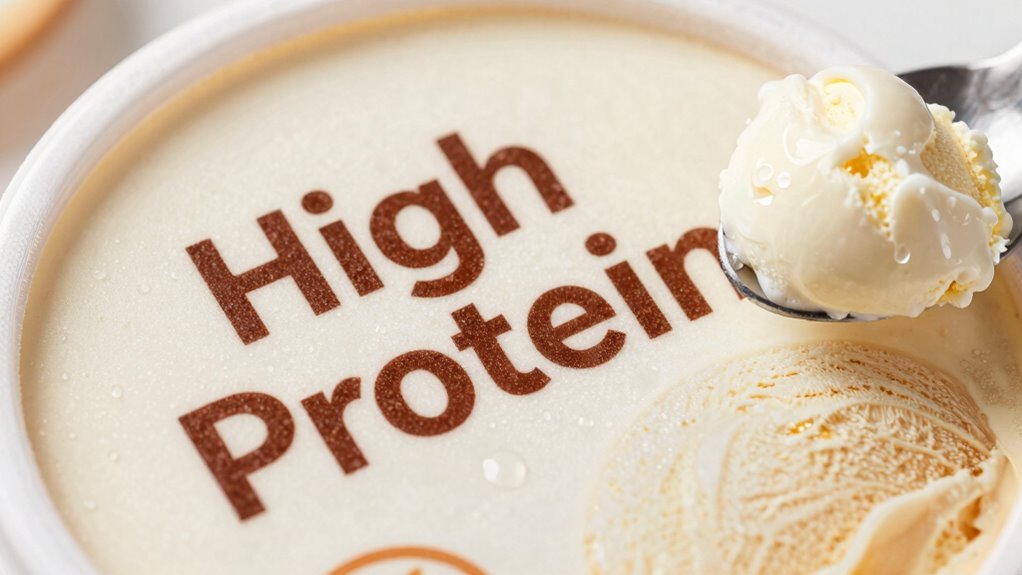

When you see “high protein” on frozen dessert labels, it means the product has more protein than traditional options like ice cream or sorbet. Manufacturers often boost protein by adding dairy or plant-based ingredients such as almond, coconut, or soy milk, and sometimes use protein isolates or concentrates. Keep in mind, higher protein doesn’t always mean healthier—there may still be added sugars or additives. To understand what really fits your goals, there’s more to uncover if you look closer.

Get baking supplies delivered free with Prime
- Fast, free delivery on millions of items
- Prime Video, Amazon Music and more included
- Member-only deals all year
Key Takeaways
- “High Protein” indicates the product contains more protein than traditional ice creams or sorbets.
- It often includes added dairy or plant-based protein sources like isolates or concentrates.
- The label may show elevated protein content per serving, but not necessarily low sugar or calories.
- Some products use protein powders or fillers, which can affect ingredient quality.
- Always check nutrition labels to confirm protein levels and assess overall nutritional balance.
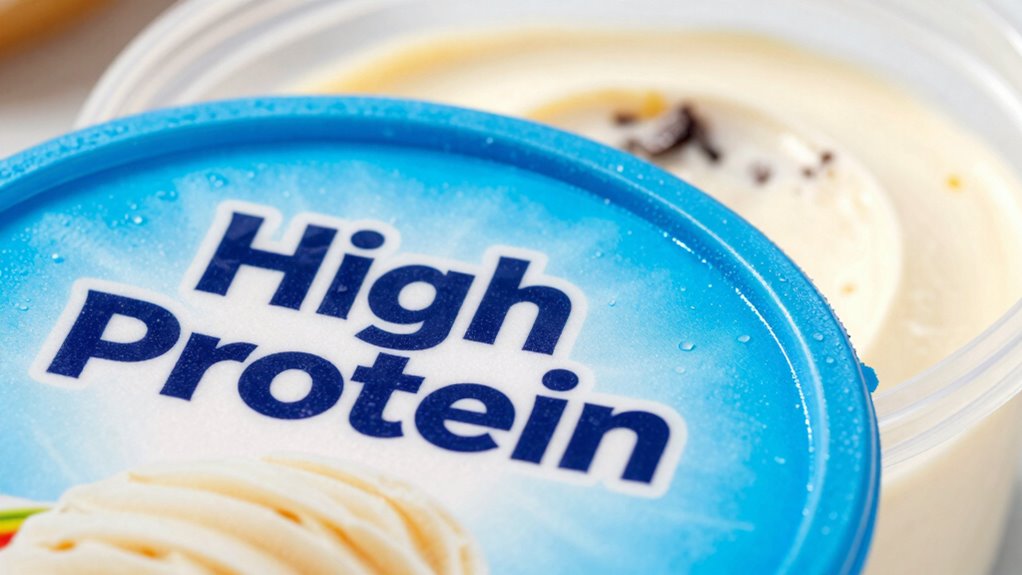
Many frozen dessert brands now highlight their high protein content on labels to appeal to health-conscious consumers. When you see “high protein” on a package, it often suggests that the product has been formulated to support your dietary goals, especially if you’re aiming to increase your protein intake without sacrificing the pleasure of a treat. But what does “high protein” really mean in the context of frozen desserts? Usually, it indicates that the product contains markedly more protein than traditional ice creams or sorbets, often achieved by adding ingredients like dairy alternatives or plant-based proteins. These dairy alternatives, such as almond milk, coconut milk, or soy, are common in vegan or dairy-free options and can be fortified with extra protein to boost the overall content. They help create a creamy texture while allowing manufacturers to increase protein levels without relying on dairy, which is especially important for those with lactose intolerance or dairy allergies.
Additionally, some products incorporate protein isolates or concentrates to further elevate their protein content, which can sometimes lead to the inclusion of additional fillers or additives. While checking for high protein claims, you also want to pay attention to the sugar content. Many products labeled as “high protein” tend to compensate with added sugars to improve taste and texture, which can undermine your health goals if not monitored. Some brands add natural sweeteners like honey or agave, while others rely on refined sugars, which can quickly spike your calorie intake and impact your blood sugar levels. It’s helpful to look at the nutrition label to assess the overall nutritional profile, especially the balance between protein and sugar. For health-conscious consumers, it’s important to compare the sugar content on the nutrition label and choose options that balance high protein with lower sugar levels. This way, you get the benefits of increased protein without the unwanted side effects of excessive sugar consumption.
In many cases, “high protein” on frozen dessert labels doesn’t necessarily mean the product is low in sugar or free from unhealthy additives. Some brands incorporate protein isolates or concentrates, which greatly elevate protein levels but may also come with added ingredients or fillers. When you’re selecting a frozen dessert, consider not just the protein amount but also how it fits into your overall nutritional profile. Look for products that use wholesome ingredients, minimize added sugars, and incorporate dairy alternatives that align with your dietary preferences. It’s also helpful to be aware of the processing methods, as highly processed products might contain artificial additives or preservatives. Furthermore, understanding the labeling regulations can help you better interpret what “high protein” claims actually entail, ensuring you make informed choices. Being aware of nutritional claims can also help you identify products that truly meet your dietary needs and avoid misleading marketing. Ultimately, “high protein” should be a part of a balanced treat, providing nourishment without extra calories or sugar overload. By reading labels carefully, you can enjoy frozen desserts that satisfy your sweet tooth while supporting your health.
As an affiliate, we earn on qualifying purchases.
Frequently Asked Questions
How Is Protein Content Calculated on Frozen Dessert Labels?
You determine protein content on frozen dessert labels by analyzing the product’s nutritional data, often through laboratory testing, ensuring nutritional accuracy. Manufacturers follow label regulations that require accurate ingredient and nutrient declarations. The protein amount listed reflects the total grams of protein per serving, based on lab results or calculated from ingredients. Always check the label for detailed nutritional info, and trust that it complies with regulatory standards for transparency and accuracy.
Does “High Protein” Mean Healthier Overall?
You might think “high protein” means healthier overall, but that’s not always true. While protein can aid in satiety and muscle repair, 60% of consumers perceive high-protein foods as healthier, regardless of overall nutritional balance. So, don’t rely solely on labels; check the full nutrition facts. Often, high-protein frozen desserts contain added sugars or fats, making them less nutritious than they seem, despite the label’s promise.
Are Plant-Based Proteins Included in These Labels?
Yes, plant-based proteins are often included in these labels, especially for vegan options. When a frozen dessert claims to be high in protein, it may contain ingredients like pea, soy, or other plant-based proteins. These options cater to vegans and those seeking plant-based diets, making it easier to meet protein needs without animal products. Always check the ingredient list to confirm the source of protein in your dessert.
How Much Protein Is Considered “High” on Labels?
A penny saved is a penny earned, and with “high protein” labels, you should aim for at least 10 grams per serving. This amount typically indicates a substantial protein source. Keep in mind, label accuracy varies, so check the ingredients for quality protein sources like dairy, nuts, or plant-based options. The key is balancing protein content with overall nutritional value, ensuring you’re making informed choices.
Can High Protein Desserts Contain Added Sugars?
Yes, high protein desserts can contain added sugars. While they emphasize protein content for nutritional balance, sweetening claims might include added sugars to enhance flavor. Always read labels carefully, as some products prioritize protein but still have significant sugar levels. Balancing your intake means choosing options with minimal added sugars, ensuring you get the benefits of high protein without compromising on overall nutritional health.
Conclusion
So, next time you see “high protein” on a frozen dessert label, remember it might just be a clever marketing trick. While you’re expecting a health boost, you could be indulging in a sweet treat packed with sugar and empty calories. It’s ironic how “high protein” can sometimes mean “more flavor, less nutrition.” So, enjoy your dessert, but don’t let those labels fool you into thinking it’s a health food in disguise.
Halloween Picks
halloween
As an affiliate, we earn on qualifying purchases.